3 Qs for QI | An Interview with Amanda Hoffman, MS, OTR/L, BCPR
Nov 21, 2025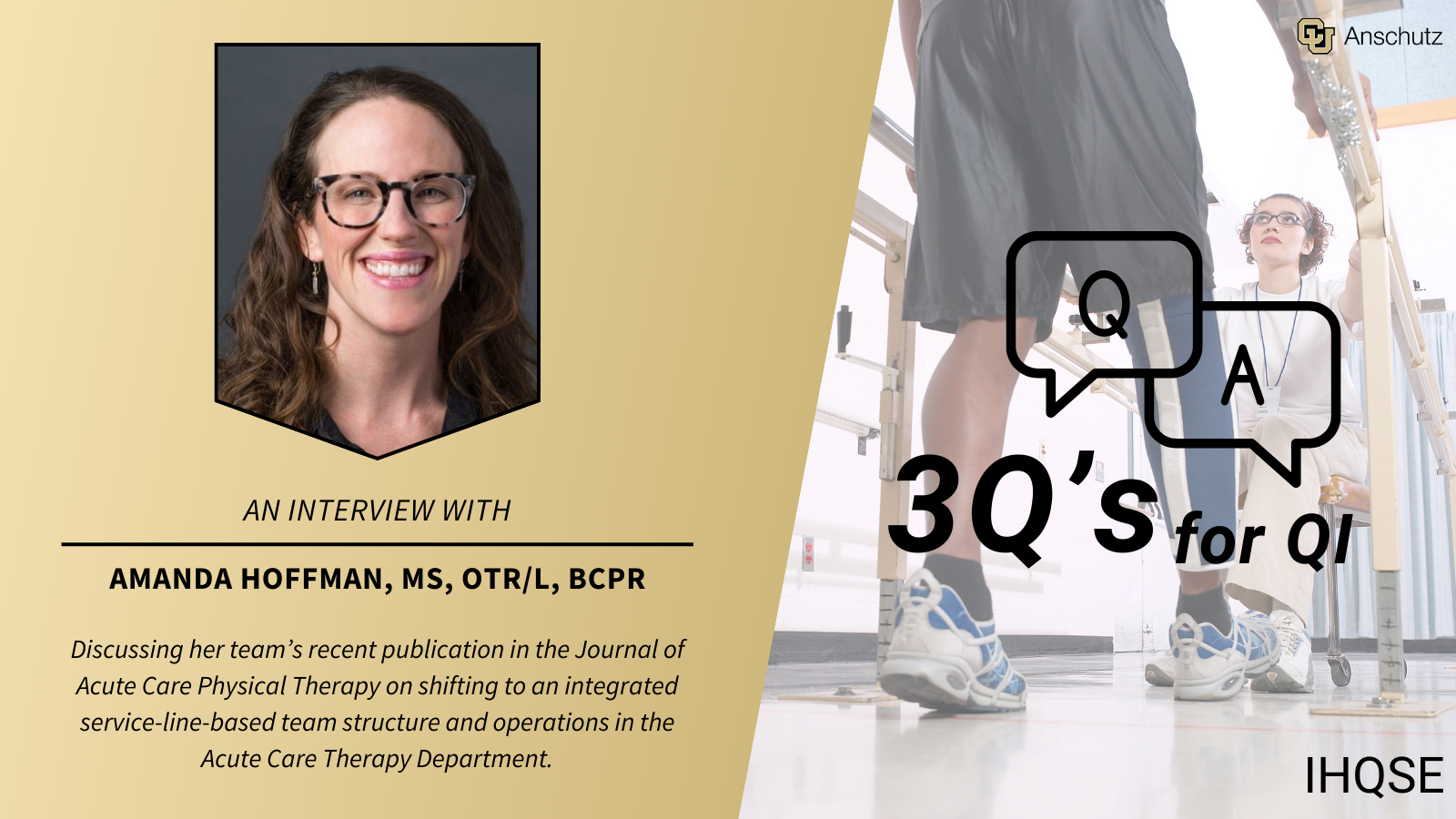
A large academic acute care therapy department successfully transformed from discipline-based teams to an interdisciplinary service-line structure, achieving measurable improvements in staff productivity, morale, and operational efficiency. Led by IHQSE-trained leaders including Amanda Hoffman, Meghann Griffin, Emily Hagburg, and Danielle King, this quality improvement project followed Kotter’s 8 Steps for Leading Change and was implemented over the course of a year. Outcomes included improved staff-to-supervisor ratios, direct patient assignments, and an increase in staff engagement. This work offers a blueprint for other health systems navigating growth, burnout, and operational challenges through structured, data-informed change.
Tell us about your approach to this project.
We applied Kotter’s 8 Steps for Leading Change as the foundation for redesigning our department’s structure. We began with establishing urgency—recognizing that our existing model could not scale with hospital growth and was contributing to burnout and inefficiency. A guiding coalition, including supervisors and frontline staff, co-developed the vision of interdisciplinary service-line teams. We engaged in deep listening sessions, transparent communication, and an inclusive rollout to ensure every voice was heard and staff remained central to the process.
Why is this work important?
As healthcare systems expand, leaders must evolve team structures and operations to remain agile, efficient, and supportive. Our department had outgrown its leadership and workflow structure. Without intervention, we risked worsening morale and care coordination. This project demonstrates that intentional, system-aligned restructuring can improve the day-to-day experience of clinicians while enhancing operational metrics. Crucially, it shows that adding administrative support—when done right—can be productivity neutral or even positive.
How do you think this will impact healthcare?
This model serves as a replicable framework for other departments and systems facing similar scale and burnout challenges. By shifting to interdisciplinary service-line teams, we fostered deeper expertise, better team cohesion, and more consistent communication with providers. Our outcomes—improved productivity, staff satisfaction, and direct patient care—support a compelling case for how structure influences value. As hospitals strive for reliability and efficiency, this project provides actionable insights into operational transformation that centers both staff and patients.