

Empowering Ideas for Measurable Change
Through the Faculty Well-Being Innovation Awards, we fund innovative projects that improve efficiency, strengthen culture, and support individual faculty development across CU Anschutz School of Medicine.
 Lightening the In-basket
 Supporting Nocturnists
 Harnessing AI for Documentation
 Streamlining Physician Communications
 Dr. Kristin Jensen, a pediatrician and internist, saw how much time her colleagues spent after hours answering electronic messages. Through a CU Thrive Innovation Award, her team is developing a new system for inbox management and out-of-office coverage with the goal of more time for patients during the day and more time for family at night.
Impact Demonstrated: 22,865 messages | 74 clinicians | 95-99% positive experience
APP-led out-of-office inbox coverage has moved from pilot to a two-year operational commitment, while generating national presentations and a People's Choice poster award.
 Dr. Jennifer Caragol, a family medicine physician, also supported by a CU Thrive Innovation Award, and her team is collaborating with healthcare team members to reduce the in-basket burden. Together, they are redesigning workflows and empowering staff to work at the top of their scope to cut down on administrative load.
Implemeted + Measuring: 4 clinics implementing tailored workflows
Clinic-adapted protocols, SmartPhrases, and top-of-scope routing are shifting inbox work across team roles. Epic Signal and experience outcomes are in analysis.
 Hospitalists who work overnight face unique challenges—fatigue, high patient loads, and isolation. Dr. Alexandra Kilinsky is testing a new “swing shift” model through CU THRIVE support to explore if this change is easing the cognitive load on night teams and making a demanding schedule more sustainable—improving both care and retention.
Impact Demonstrated: Improved well-being & job satisfaction
A swing-shift redesign improved nocturnist task load, burnout, and job satisfaction without significant worsening among non-nocturnist colleagues. A manuscript in development.
 Paperwork and electronic charting are major sources of stress for clinicians. With CU THRIVE’s help, Dr. Aakriti Pandita and her team launched Project AIDA, an AI-driven tool that helps doctors retrieve critical patient information instantly. The team is testing to see if the innovation reduces burnout, saves time, and lets clinicians focus more on their patients.
Live Pilot + Leveraged Funds: 106,250 in follow-on funding secured
Project AIDA is live in Epic and testing whether AI-assisted information retrieval and documentation save time and reduce cognitive burden. Recruitment and evaluation are underway.
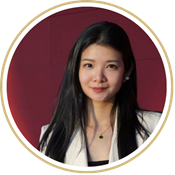
Responding to patient portal messages is a major source of stress and burnout for clinicians. With support from UCHealth, Dr. Yanjun Gao and her team are developing a web-based AI platform that uses advanced prompt engineering and retrieval-augmented generation (RAG) to help providers quickly draft high-quality responses to patient messages. The team is testing whether this innovation reduces documentation burden, saves time, and improves clinician well-being across multiple departments.
Impact + Reusable Infrastructure: 10.4% use | 6,046 AI-assisted messages
Optimized prompts more than doubled early utilization. The framework is now supporting additional work on EHR optimization and seure-chat administrative burden.