

The course is a full day of immersive simulation education. It has been designed to accommodate between 4 and 6 participants who will be facilitated by a minimum of 2 faculty members. Participants be familiarized with the high-fidelity mannequin
in the simulated peri-anesthesia environment and will be asked to manage realistic anesthesia-inspired critical events.
The simulated scenarios will focus on the process of decision-making in anesthesiology. In addition, it
will also cover aspects of crisis and resource management including communication and teamwork skills. Participants may also be asked to participate in the scenarios as co-workers or other OR staff. State-of-the-art audiovisual equipment
is used to enhance the event debriefing which takes place after every simulated event. This course is NOT an assessment where candidates may pass or fail. It has been designed to fulfill one requirement of the American Board of Anesthesiology's
(ABA) Maintenance of Certification in Anesthesiology. Participation in the course, along with completion of the ASA online evaluation and follow-up survey, will satisfy the MOCA 2.0 Part IV-Improvement in Medical Practice.

Advances in the practice of medicine are challenging the way in which we educate future anesthesiologists. The apprentice model of ‘see one, do one, teach one’ with close supervision by a ‘master’ has become unrealistic in the face of changes to working hours and rules governing reimbursement and liability. Patients and trainees spend less time in hospital and educational opportunities are harder to predict or access. We are finding ourselves having to do more with less.
Medical simulation grew out of the movement to improve quality and safety for both patients and trainees by providing consistency in training. Simulation gives trainees the opportunity to master skills and encounter problems in a safe, reproducible environment. Simulation can be used to teach individuals and teams, assess performance and evaluate systems.
While resuscitation and airway mannequins have been around since the 1960s, medical simulation has recently experienced a period of rapid growth. Current technologies include task trainers, screen-based simulation, virtual reality simulation, patient mannequins and standardized patients. Often a mixture of modalities can be used to teach.
The Department of Anesthesiology has entered into a partnership with the Center for Advancing Professional Excellence (CAPE) to help train future and present anesthesiologists.
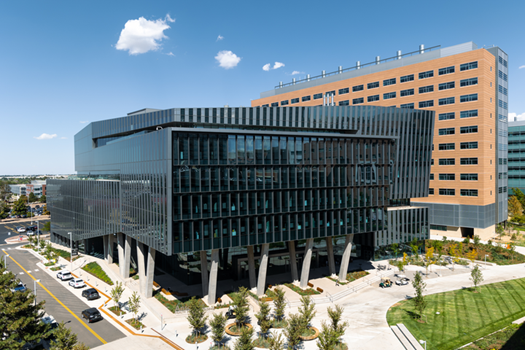
The CAPE is an 18,000 square foot, state-of-the art simulation center on the Anschutz Medical Campus and provides us with an excellent location to fulfill the ACGME requirement for mandatory simulation training in resident education.
Ongoing accreditation by the American Society of Anesthesiologists (ASA) enables us to extend our educational expertise to the recertification of American Board of Anesthesiology (ABA) diplomats in the Maintenance of Certification in Anesthesiology (MOCA) process.