Our skull base team provides patients with the safest and most effective surgery by combining our expertise with the latest technological advancements.
Skull base surgery is a highly specialized, minimally invasive surgical technique for evaluating, diagnosing, and treating benign or cancerous growths located on the underside of the brain, the base of the skull, or the upper vertebrae of the spinal column.
Skull base surgery can be done endoscopically or by open surgery, depending on the type and location of the tumor. Endoscopic or minimally invasive skull base surgery does not require a large incision. Working with colleagues in the Department of Otolaryngology, the ENT surgeon makes a small opening in the nose to allow a neurosurgeon to then remove the tumor using a thin, lighted tube called an endoscope. Magnetic resonance imaging (MRI) is used during the procedure to ensure the entire tumor is removed.
Traditional or open skull base surgery may require incisions in the facial area and in the skull. Parts of bone may be removed during surgery to reach the tumor. During an open skull base procedure, a surgical microscope is used.
Some of the tumors and growths that may be treated by skull base surgery include:
In addition to surgery, the following treatments may be needed depending on the type of tumor:
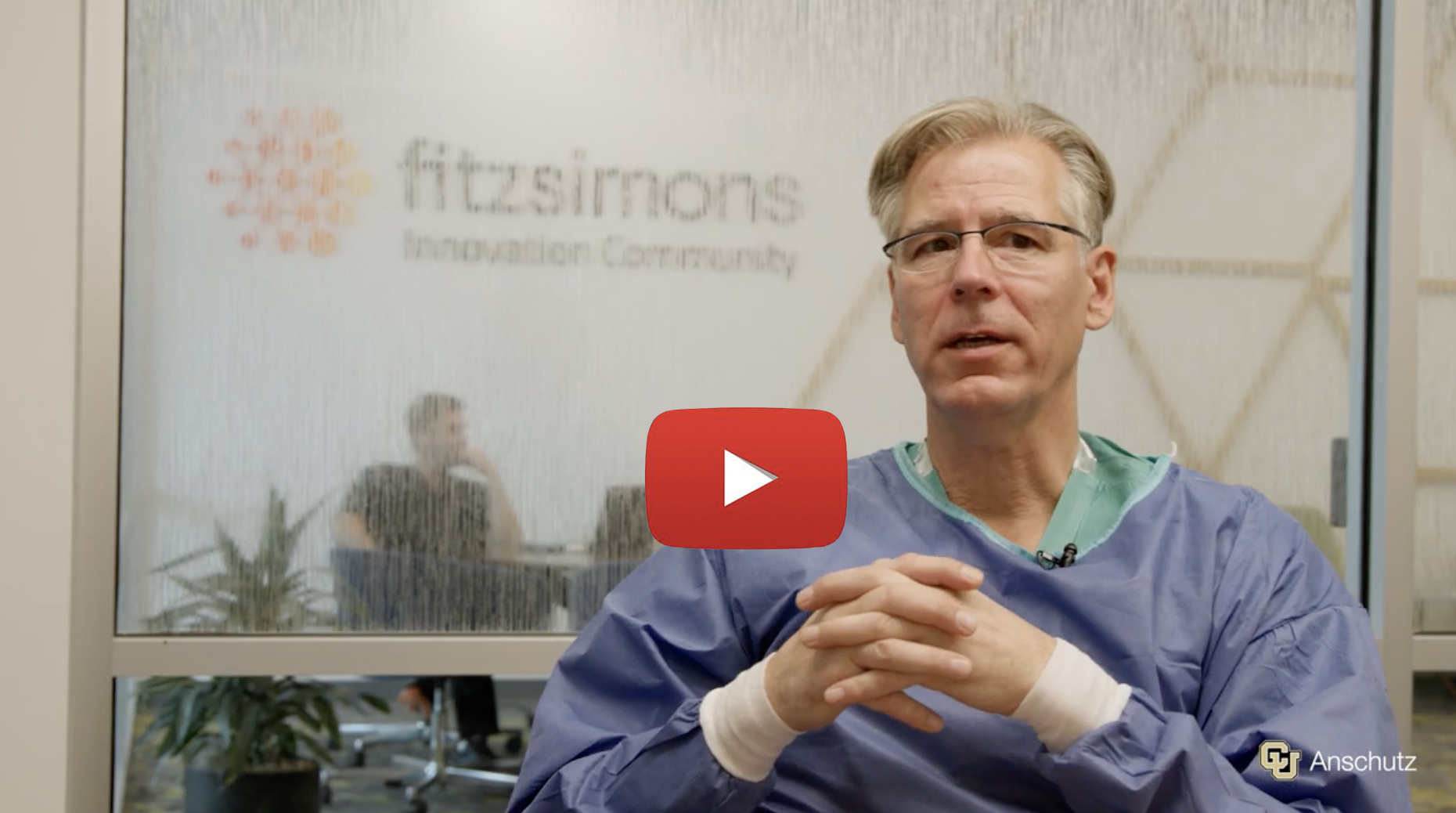
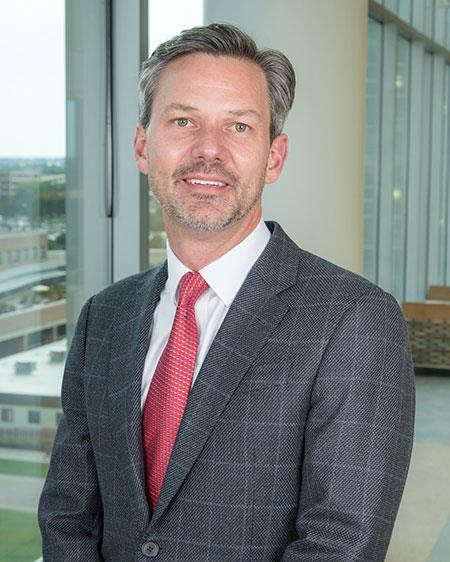
The skull base program is led by Samy Youssef, MD, PhD, a board-certified and fellowship-trained neurosurgeon with an international reputation in the treatment of complex brain tumor and vascular surgery.
An acoustic neuroma, or vestibular schwannoma, is a rare, benign tumor that develops on the cranial nerve connecting the inner ear to the brain. As the tumor grows it puts pressure on the brain.
Signs of an acoustic neuroma include:
The Acoustic neuroma program is the only program of its kind in the Rocky Mountain region, with expert practitioners dedicated to offering the most comprehensive and up-to-date treatment for acoustic neuromas. The team offers microsurgical and stereotactic radiosurgical treatment options. Our microsurgical approaches focus on hearing and facial nerve preservation. Surgical procedures are performed by both a neurosurgeon and a neuro-otologist to ensure precision.
The multidisciplinary team discusses each patient's case during skull base tumor board meetings comprised of highly trained specialists to determine the best course of treatment for each patient. Our state-of-the-art facilities allow our physicians to practice at the forefront of medicine.
The program is comprised of neurosurgeons, neuro-otologists, radiation oncologists, neuro oncologists, and radiologists, and is equipped with a designated patient care coordinator.
Our surgeons use three different surgical approaches for acoustic neuromas:
The translabyrinthine approach is performed through a curved incision behind the ear. This approach is used when hearing has been severely damaged by the tumor or when hearing preservation is not possible.
The middle fossa approach is used to preserve hearing while removing a small acoustic neuroma. A curved incision is made in the scalp above the ear, and is hidden by the patient's hair after surgery.
The retrosigmoid approach is used on acoustic neuromas of all sizes when there is a possibility of hearing preservation. A curved incision is made behind the ear. The incision heals surrounded by hair-bearing scalp tissue.

| Provider | Specialty |
| Brian Cervenka, MD | Otolaryngology |
| Anne Getz, MD | Otolaryngology |
| Adam Terella, MD | Otolaryngology |
| Geoffrey R. Ferril, MD | Otolaryngology |
| Eric Hink, MD | Ophthalmology |
| Sophie Liao, MD | Ophthalmology |
| Prem Subramanian, MD, PhD | Ophthalmology |
| Ashley Nassiri, MD, MBA | Otology |
| Maria Espinosa, MD | Rhinology |
| Denise Damek, MD | Neuro oncology |
| Corinna Fukushima, MD | Neuro oncology |
| Brian Kavanagh, MD | Radiation oncology |
| Ryan Lanning, MD | Radiation oncology |
| Timothy Waxweiler, MD | Radiation oncology |
| David Zander, MD | Neuroradiology |
| Jody Tanabe, MD | Neuroradiology |
| Tom Borges, MD | Neuroradiology |
| Justin Honce, MD | Neuroradiology |
| Lidia Nagae, MD | Neuroradiology |
| Eric Nyberg, MD | Neuroradiology |
| Helen French, PA-C | Neurosurgery |