

‘Shrinking’ Highlights Lesser-Known Symptoms of Parkinson’s Disease
John Thompson, PhD, is part of a research team exploring ways to manage sleep dysfunction, a common symptom of Parkinson’s disease, using deep brain stimulation.
Makenzie Hardy Apr 24, 2026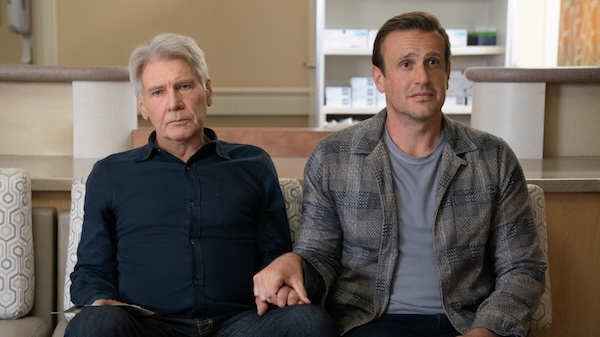
Harrison Ford’s performance in the beloved comedy-drama “Shrinking” showcases the many motor and non-motor symptoms of Parkinson’s disease, including hand tremors, pain, sleep dysfunction, hallucinations, and dehydration. John Thompson, PhD, professor of neurosurgery at the University of Colorado Anschutz School of Medicine, says researchers have made remarkable strides in managing motor symptoms and should now turn their attention to non-motor symptoms.
The Apple TV series “Shrinking” depicts the progression of Parkinson’s disease and brings much-needed awareness to the many symptoms unrelated to movement. At one point in the show, Ford’s character struggles with visual hallucinations, highlighting the cognitive disruptions caused by the disease.
Thompson, from the CU Anschutz Movement Disorders Center, is exploring how deep brain stimulation (DBS) could help manage the cognitive symptoms of Parkinson’s disease, starting with sleep dysfunction, through his research at the center.
“Non-motor symptoms are a real quality of life issue that often manifest long before the motor symptoms,” Thompson says. “These issues can come to the forefront once their motor symptoms are managed.”
What is DBS?
If levodopa, the gold standard of medication used to treat Parkinson’s disease, stops managing movement symptoms, many neurologists evaluate surgical options. DBS is the primary surgical option and involves implanting electrodes into the brain that send continuous electrical pulses to targeted areas of the brain. A pulse generator is implanted under the skin of the chest near the collarbone. After surgery, a patient receives a handheld patient programmer that allows patients to turn the system on and off or adjust stimulation levels within the parameters set by their neurologist.
“The two most significant developments in Parkinson’s treatment are the discovery of levodopa and the invention of DBS,” Thompson says.
Thompson has conducted DBS research on the CU Anschutz campus since 2014. While there was very little innovation in the field at the start of his career, DBS has drastically improved with technological advancements and extensive research studies designed to help clinicians efficiently locate and target the optimal areas of the brain over the past 10 years. DBS helps manage motor symptoms, but it is not a cure.
Helping Parkinson’s patients sleep
According to the Parkinson’s Foundation, approximately 1 million people in the U.S. are living with Parkinson’s disease and more than 75% of patients have some form of sleep dysfunction. Thompson worked closely with Aviva Abosch MD, PhD, a surgeon-scientist at Miami Neuroscience Institute, on research focused on sleep dysfunction in Parkinson’s patients, collaborating with researchers from Stanford University, the University of Pennsylvania, and the University of Nebraska.
Now, he supports similar research with neurologists Alex Baumgartner, MD, and Amy Amara, MD, PhD, continuing to explore DBS as a way to help patients get a better night’s sleep. Improved sleep could lead to improved cognition.
“Early indications show that DBS could be efficacious for sleep,” Thompson says. “We want to push the field and try to understand how best to optimize DBS for sleep dysfunction.”
Thompson and Baumgartner’s research is still highly exploratory, but early results are promising. The adaptive DBS (aDBS) technology allows for multiple “settings” called programs. Thompson says the program designed for sleep can be switched on by a patient when they are ready to sleep.
“Before aDBS, the clinician had to give patients one setting that would manage them while they were away from clinic,” Thompson says. “Now, the handheld patient programmer can offer up to four different programs, and patients can select among the different programs depending on the activity they are doing, like sleep.”
Parkinson’s patients still need to meet the current standard of care criteria to be approved for DBS surgery. Since the criteria for the device is based on motor symptoms, patients cannot request DBS surgery to manage sleep alone. However, because many patients with a DBS device also experience sleep dysfunction, there is opportunity to research the potential of programming to help patients sleep better.
Thompson explains that each person has a very distinct sleep pattern. But if they can help with sleep, they may be able to manage other cognitive disruptions, including Parkinson’s disease dementia.
Parkinson’s may be a preventable disease
Thompson says there is emerging evidence that in many cases, environmental factors contributed to the development of Parkinson’s disease. To substantiate his claims, Thompson points to the research of Michael Okun, MD, and Ray Dorsey, MD, MBA, neurologists and co-authors of “The Parkinson’s Plan.”
Dorsey is a long-time researcher and advocate for Parkinson’s disease, and an author of many academic publications on how Parkinson’s disease is predominately an environmental disease. He claims exposure to certain pesticides, air pollution, weed killers, and a chemical called trichloroethylene used in dry cleaning may be the most prominent causes of Parkinson’s.
“Less than 10%-15% of patients have hereditary Parkinson’s disease,” Thompson says. “As a country, we need to do a better job of protecting people from the things that we have strong evidence are likely contributing to idiopathic Parkinson’s disease.”
Finding a cure
While advances have been made in managing symptoms over the course of Thompson’s career, there is still no cure for Parkinson’s disease.
“I would love to be out of business, because at the end of the day, DBS is a symptom manager; it is not a disease modifier,” Thompson says. “There’s a real need for gene therapy or something that is going to fundamentally change the mechanisms in the brain that are not working correctly.”
Thompson is optimistic that a cure will come due to the promising gene therapy research happening both at CU Anschutz and around the globe. In the meantime, he hopes DBS will be the answer to managing some of the non-motor symptoms impacting a patient’s quality of life and that steps will be taken to eliminate the environmental factors linked to Parkinson’s.
“There are a lot of open questions about how far this technology will take us and the symptoms we can manage,” he says. “The results are promising so far, and there is hope on the horizon.”