
-web.png?sfvrsn=20cbb8b4_1&MaxWidth=175&MaxHeight=175&ScaleUp=false&Quality=High&Method=ResizeFitToAreaArguments&Signature=090E9734AF8E7CDA7D061AD395DD70E54492B161 "Sean O'Leary - high res (2) web")
.jpg?sfvrsn=80d7c4b4_0&MaxWidth=175&MaxHeight=175&ScaleUp=false&Quality=High&Method=ResizeFitToAreaArguments&Signature=C57765EEC1C2B2CB06C30BC43AF2E275970FC6E5 "Sean oser (ec)")


92.9%
Of surveyed partner respondents agree or strongly agree that the research topics proposed to them can influence their interest in participating in PBRN research.

In an exciting new collaboration, the Colorado Ambulatory Partnership for Health Innovation and Research Excellence (CAMPHIRE) is comprised of the Practice Innovation Program (PIP) and the State Networks of Colorado Ambulatory Practices & Partners (SNOCAP), and is an integrated partnership of innovators, scientists, and clinicians who produce and translate evidence in ambulatory care and community settings. We work with practices, partners, and communities to conduct and foster collaborative practice- and community-based research, education, and innovation in real-world clinical practice to improve the health and well-being of communities, across the lifespan.

CAMPHIRE is a single entity consisting of eight methodological and functional teams:
These teams fall under the purview of the Leadership Council and Team Leads, with input from both our partners and advisors.
Care to share? Download and print our informational one sheeter.

Sarah Brewer, PhD, MPA
Dr. Brewer is an Assistant Professor of Family Medicine and a qualitative and mixed methods researcher at ACCORDS. She also holds leadership roles with the ACCORDS TEaM Core and COCONet, a statewide pediatric primary care research network. With over 15 years of experience in primary care research and more than 70 publications, her work focuses on vaccine hesitancy, vaccination delivery, and community-engaged research. Her expertise spans a wide range of quantitative and qualitative methodologies, as well as dissemination and implementation science. She specializes in partnering with communities and primary care practices to address complex health challenges and improve preventive care.
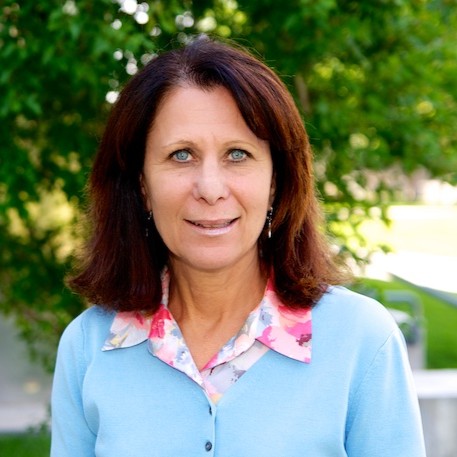
Bonnie T. Jortberg, PhD, RDN, CDCES
What sets CAMPHIRE apart?
CAMPHIRE combines diverse expertise, strong cross-sector partnerships, and deep real-world primary care experience to support meaningful and practical research. We serve as a trusted bridge between research, practice, communities, and policy, while ensuring patients are engaged throughout the research process.
92.9%
Of surveyed partner respondents agree or strongly agree that the research topics proposed to them can influence their interest in participating in PBRN research.97.6%
Of surveyed partner respondents agree or strongly agree that their participation in PBRN research is due to the belief that it is beneficial to patients.The Practice Innovation Program (PIP)* is improving the quality of health and healthcare. We are a team of clinicians, researchers, health information technology experts, practice facilitation experts, and program staff members from the University of Colorado, Department of Family Medicine.
The result is better health and healthcare for Colorado and beyond.
*Eventually, the information from PIP will be full merged into this new webpage. In the meantime:
Visit Our PIP Pages
SNOCAP* stands for State Networks of Colorado Ambulatory Practices and Partners. SNOCAP is the overarching name for the collaborative affiliation of practice-based research networks in Colorado that joined together to improve communication, facilitate joint research projects, and share research staff and resources. We are leading the charge for healthier communities.
Because of the variation in size, location, populations served, and organizational structure, research conducted across SNOCAP is more generalizable than that conducted in more uniform Practice-Based Research Networks (PBRNs) elsewhere.
*Eventually, the information from SNOCAP will be full merged into this new webpage. In the meantime:
Visit Our SNOCAP Pages