

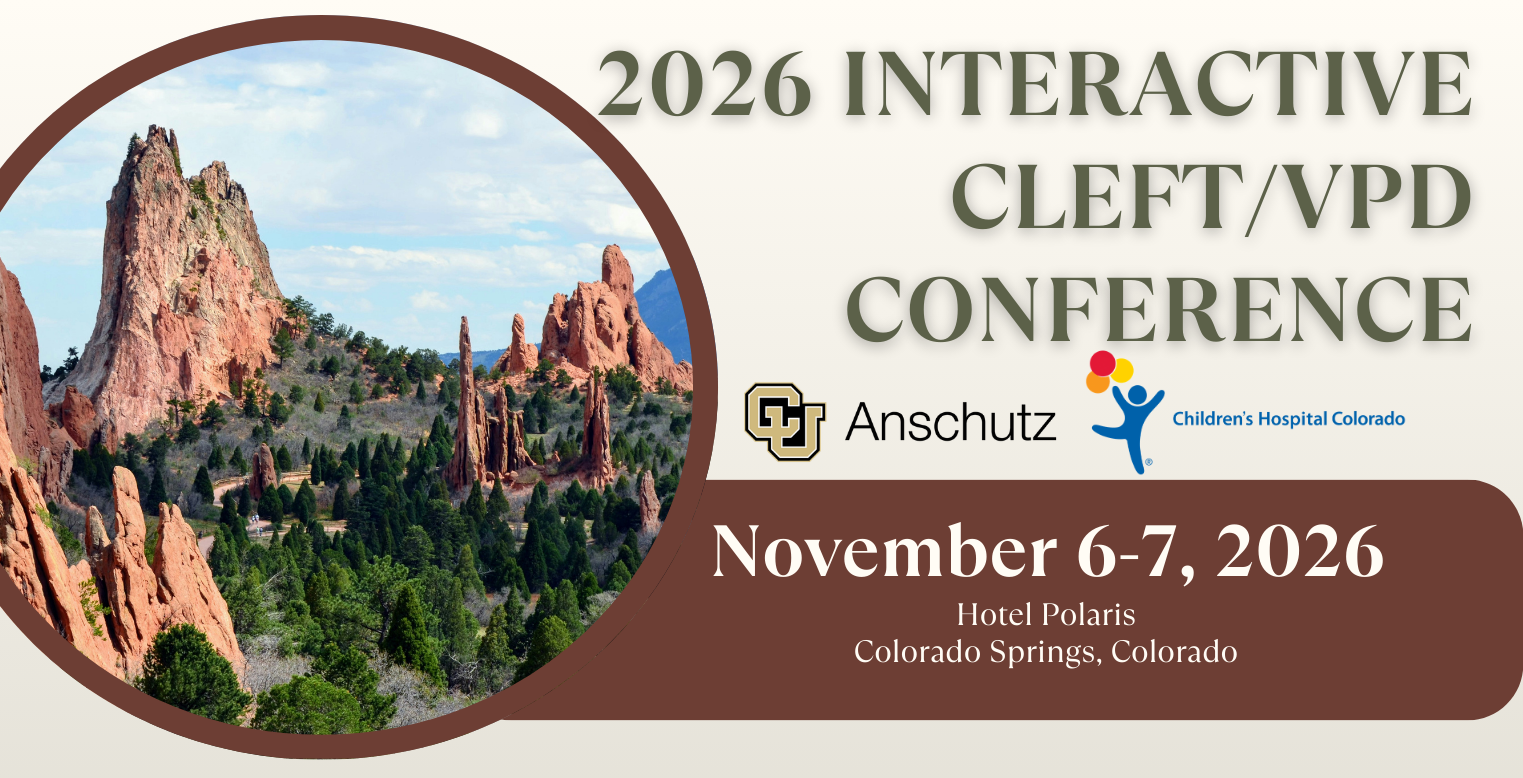
This intermediate course explores contemporary assessment and management of cleft lip and palate, velopharyngeal insufficiency (VPI), and craniofacial conditions across the lifespan. Participants will review surgical and speech outcomes, diagnostic technologies, interdisciplinary care, and complex case applications to support evidence-based clinical decision-making.
Target Audience
This activity is intended for physicians, physician assistants, and nurses engaged in the care of patients with cleft lip and palate, velopharyngeal dysfunction (VPD), and related craniofacial conditions, with a focus on multidisciplinary evaluation, diagnosis, treatment, and ongoing management.
Educational Objectives
After completing this activity, the participant should be better able to:
● Assess cleft lip/palate and velopharyngeal insufficiency (VPI).
● Coordinate interdisciplinary care for patients with craniofacial differences.
● Evaluate surgical and speech management options.
● Optimize functional and aesthetic outcomes for patients with craniofacial differences.

In support of improving patient care, this activity has been planned and implemented by the Postgraduate Institute for Medicine and University of Colorado Anschutz. Postgraduate Institute for Medicine is jointly accredited by the Accreditation Council for Continuing Medical Education (ACCME), the Accreditation Council for Pharmacy Education (ACPE), and the American Nurses Credentialing Center (ANCC), to provide continuing education for the healthcare team.
Physician Continuing Medical Education: Postgraduate Institute for Medicine designates this live activity for a maximum of 14 AMA PRA Category 1 Credit(s)™. Physicians should claim only the credit commensurate with the extent of their participation in the activity.
Continuing Nursing Education: the maximum number of hours awarded for this Continuing Nursing Education activity is 14 contact hours.
Continuing Physician Assistant Education: Postgraduate Institute for Medicine has been authorized by the American Academy of PAs (AAPA) to award AAPA Category 1 CME credit for activities planned in accordance with AAPA CME Criteria. This activity is designated for 14 AAPA Category 1 CME credits. PAs should only claim credit commensurate with the extent of their participation.

In order to obtain your CE certificate, please follow the steps below at the conclusion of the activity:
This course offers 1.5 ASHA CEUs (intermediate level; professional area)
Learning Outcomes:
SATISFACTORY COMPLETION REQUIREMENTS | In order to claim ASHA CEUs, participants must complete the following:
ASHA CE Provider approval and use of the Brand Block does not imply endorsement of course content, specific products, or clinical procedures.
You will be able to view speaker disclosures by clicking here.
We would like to thank DePuy Synthes, Karl Storz, KLS Martin, Mectron, Smith & Nephew, and MedEl for their financial support of this educational program.