

Serving as Chair of the CU Department of Neurology has been the greatest privilege of my professional career. I am grateful to former UCHealth CEO Bruce Schroffel and SOM Dean Richard Krugman for giving me this opportunity after more than sixteen years in this role, and for UCH President and CEO Thomas Gronow and UCHealth CEO Elizabeth Concordia for supporting Neurology during my tenure. Following many thoughtful conversations with Dean Sampson, I have decided that the time is right to step aside as Chair. I am extremely gratified that our Executive Vice-Chair, Victoria Pelak, has agreed to serve as the interim Chair, effective September 1st, as the SOM initiates a national search for my successor. I won’t disappear entirely as I plan to continue my laboratory research program, my clinical and research-related VA roles, and my role as Editor-in-Chief of Annals of Neurology.
During my tenure as Chair the Department’s clinical program has expanded remarkably with 5 to 8-fold increases in virtually all metrics of clinical activity. In FY09 we had just over 8,000 annual clinic visits at UCH, and this number has now reached over 65,000 (with CCMC included). Our work relative value units (wRVUs), a universally used metric of clinical activity, have grown from 56,000 in FY09 to over 255,000 in FY26. Our clinical charges in FY09 were less than $8 million and the associated clinical collections just over $3 million; in FY26 these numbers exceeded $57 million in charges and $18.5 million in collections. Virtual visits have gone from non-existent before the COVID19 pandemic to now encompassing about 30% of our outpatient activities, amounting to over 18,000 visits yearly. Our inpatient services were once staffed by a rotating series of attendings in a traditional attending rotation, and we were one of the first academic programs nationally to transition into the current neurohospitalist model. It’s difficult to believe that our Neurohospitalist program was initially fully staffed by only three faculty (William Jones, Jennifer Simpson, and Matthew West) and now encompasses Vascular (Sharon Poisson) and General (Brian Sauer) subservices with 16+ physician faculty.
We have dramatically expanded the depth and breadth of subspecialty care we offer and have been at the forefront nationally in developing emerging subspecialties in Neurology as exemplified by Neurohospitalism, Neuropalliative Care, Neuroinfectious disease, and most recently Autoimmune Neurology. Traditional subspecialties have grown as dramatically as emerging ones with the addition of many new faculty and associated subspecialized expertise. We achieved now longstanding accreditations as both a JCAHO/AHA Comprehensive Stroke Center and a National Association of Epilepsy Centers (NAEC) Level 4 (Highest-Level) site. We now have numerous designated “Centers of Excellence” or equivalent, including those in ALS treatment, Muscular Dystrophy, Parkinson Disease, Huntington Disease, Ataxia, Lewy Body Dementia, Multiple Sclerosis and Rare Neuroimmune Disorders. Among the nearly unique clinical programs we started were our Mobile Stroke Treatment Unit (William Jones, Director) and our Non-Epileptic Seizure (NES) Clinic (Directed by Laura Strom with Jared Woodward). Our remarkable clinical expansion and development would not have occurred without the leadership of a succession of notable clinical leaders including Steve Ringel, John Corboy and Victoria Pelak as Executive Vice Chairs, Samantha Holden and William Jones as Vice-Chairs and Directors of In-Patient and Out-Patient services, Ramsey Antoun as Neurosciences Service Line Director; and the leadership of our many Section Chiefs, several of whom founded their Sections, and have recently become emeritus including Steve Ringel (Neuromuscular), Richard Hughes (Vascular), Mark Spitz (Epilepsy), Christopher Filley (Behavioral Neurology), Maureen Leehey (Movement Disorders), and John Corboy (Neuroimmunology/MS). Others, including Marius Birlea (Headache & Pain), have reduced activities but continue to provide outstanding service to the Department.
A new generation of Section leaders has now emerged to build on the accomplishments of the “founding generation” including Dianna Quan (Neuromuscular), Enrique Alvarez (Neuroimmunology/MS), Amy Amara (Movement Disorders), Danielle Wilhour (Headache/Pain), Christina Vaughan (Neuropalliative Care), Victoria Pelak (interim, Behavioral Neurology), Sharon Poisson (Vascular), Brian Sauer (General Neurology), Amanda Piquet (Auto-Immune Neurology), Daniel Pastula (NeuroInfectious Disease & Global Neurology), Lesley Kaye (interim, Epilepsy) and most recently Olga Taraschenko (Epilepsy). The overwhelming majority of our Section Chiefs are now women, as are a majority of our Vice-Chairs and holders of endowed Chairs and Professorships. We have developed a variety of interdepartmental programs including those with Ophthalmology, Infectious Diseases, Pediatric Neurology (transitions of care in many specialties, neuroimmunology, etc.), and most recently Neurosurgery (cooperative agreements to support faculty in Neuro-Oncology, Movement Disorders/DBS, and Epilepsy). A goal for the future in the clinical arena will be how to expand access to care and continue our clinical growth trajectory in the face of persistent outpatient clinical space limitations on the Anschutz Campus.
We continue to deliver an extraordinary quality of care that we all can be tremendously proud of. In the most recent (Q3 FY26) UCH data set our Observed to Expected Mortality Index was a near SOM best of 0.11 (reflecting two deaths instead the expected 18 for the severity of cases treated); and our 30-day Unplanned Readmission Rate was also a SOM best at 3.25% (40 readmissions among 1229 discharges). Our focus on quality and patient safety began with Steven Ringel’s tenure and has expanded significantly under Jennifer Simpson’s subsequent leadership with the assistance of Adam Hartman and Anna Shah as Inpatient and Outpatient QI and Patient Safety Directors. In addition to programs in Quality/Patient Safety, we have developed Programs focused on Wellness (Directed initially by Marius Birlea and more recently Katherine Alpogianis and Abigail Anderson) and on Health Advocacy and Engagement (previously Diversity, Equity and Inclusion) Directed by Nicole Gonzales (previously with Karen Orjuela).
We have been blessed with a remarkable series of faculty leaders in Education including Augusto Miravalle, Alan Anderson, Pearce Korb, Douglas Ney, and more recently Aaron Carlson and Elizabeth Matthews. Hannah Daniels has been a mainstay of our administrative staff in this area. Under their leadership we have grown from 15 residents and three fellows when I started as Chair to the point we will have ~40 residents in 2027/28 and now consistently have at least 15 Fellows, and in some years over 20, across a remarkable number of subspecialties. The newest entries are Fellowships in Autoimmune Neurology (Amanda Piquet Director) and a novel APP Neurology Fellowship (Victoria Pelak, Program Director, Morgan Farley & Darcy O’Banion Associate Program Directors). Whenever possible, we have accredited our fellowships through organizations including ACGME, UCNS, and subspecialty societies in Neurohospitalism and Neuro-Ophthalmology. We routinely receive ~700 applications for 9 (soon 10) positions in our ACGME-accredited residency training program, and nearly 500 applications from U.S. allopathic medical school seniors, representing close to 2/3rds of U.S. medical school seniors applying for neurology residency positions nationally. Elizabeth Matthews has done a terrific job as our current Residency Program Director assisted by Setareh Omran, Nicole Caunt, Robert Pratt, and Matthew West as Associate Directors. Aaron Carlson has done a remarkable job guiding us through the SOM’s curriculum redesign, assisted by the many faculty and staff on our education team.
Our trainees are our longest lasting legacy, and I am proud of the dozen PhD students, 16 postdoctoral Research Fellows, and 14 Neuroinfectious Disease Fellows I have trained and mentored. Two of my former research fellows now serve as Division Chiefs of Infectious Disease Divisions at Children’s National Medical Center (Roberta DeBiasi) and at Southwestern Medical Center. (David Beckham). Obviously, Fellowship training is a group effort, and I was lucky to have extraordinary faculty colleagues who shared equally in this process. I’d be remiss if I didn’t specifically thank Penny Clarke and Jennifer Smith Leser for their longstanding roles keeping my laboratory running and funded, and to Daniel Pastula, Amanda Piquet, Lakshmi Chauhan and David Beckham for their integral roles in developing and leading our Neuroinfectious Disease and Autoimmune Neurology Fellowships.
Our Research program has also grown considerably and now regularly exceeds $20 million/year per Office of Grants and Contracts data. When I first arrived at CU there were no clinical research studies in Neurology, and the Department has now transformed into one of the leading and largest clinical research entities in the SOM with over 360 studies and over 5000 patient visits in 2025, numbers comparable to the CU Cancer Center. We are NINDS NeuroNEXT (Jeffrey Bennett, Lead PI) and StrokeNET (Sharon Poisson, Site PI) participating sites. Our clinical research growth began with Timothy Vollmer and has continued to expand under Enrique Alvarez’s leadership. This would not have been possible without the expert administrative support of Haley Steinert, Anabel Adler and other members of the research administrative team including the IT support provided by David Vu and his team and the statistical work of Stefan Sillau. Despite the challenges in the current funding environment, we have managed to maintain, and in several cases expand, our NIH-funded basic science research portfolio under the guidance of Huntington Potter and more recently Jeffrey Bennett as Vice-Chairs for Basic Research. We remain recognized nationally and internationally for the depth and breadth of our basic research programs in neuroimmunology and neurovirology but have expanded NIH funded research into several additional areas including sleep, neuroinflammation, movement disorders, neuromuscular diseases and dementia. Growing and expanding our basic research program further to match the growth trajectory of our clinical and clinical research programs will be an important and exciting future challenge.
Our clinical, research and academic missions have been possible in no small part because of philanthropy, and in this area we have been ably assisted by Carrie Radant Flynn and more recently Marti Laule of the CU Anschutz Development team. We have been blessed with regular and consistent annual support and partnership from organizations like the Rocky Mountain MS Society and from dedicated individual donors. Royalty payments related to intellectual property underlying the development of the Shingrix vaccine have supported our research faculty and their projects. One of the more visible examples of philanthropy has been the expansion in our number of endowed Chairs and Professorships, which now number eleven, with two additional Chair endowments in pending bequest commitments. Our endowed lectureships have grown from the original James Stephens lectureship to now include five additional awards eponymously honoring former faculty including Donald Gilden, Steven Ringel, Christopher Filley, Frederick Horner, and most recently Stuart Schneck. As Federal funds become less predictable and our hospital partners face increasing clinical competition from large for-profit national systems the importance of philanthropy will only increase to support our faculty in their missions.
Dean Sampson has set a dramatic new goal for the SOM of being “top ten in ten years”. This time horizon obviously extends well beyond my plausible professional horizon. To accomplish this goal the Department will almost certainly require an influx of substantial new resources including more clinical space, augmented clinical funds flow from UCHealth, and additional wet and dry lab research space and support. These types of commitments are standard parts of any new chair package and are vitally needed to ensure the Department’s future growth and active contribution to achieving the Dean’s vision. New departmental leadership can partner with UCHealth as it emphasizes and prioritizes areas like virtual and community neurology, and with the SOM as it builds out and develops new initiatives including in neuromodulation. The SOM is developing more widespread data analytics, dashboards, and related initiatives designed to more accurately characterize the components of faculty effort (FTE) and to link compensation and incentive programs closer to productivity and other quantifiable deliverables. Our future leaders will have the challenge of utilizing these new tools to improve predictability and objective data-driven decision-making in ways that enhance all the components of our tripartite mission of clinical care, research, and education.
None of the accomplishments I have mentioned would be possible without the efforts of current and past faculty and administrative staff. Alexander (“A.J.”) Stein has been a remarkable partner in all this and helped keep the financial and administrative ship afloat including during existential challenges such as the COVID19 pandemic, and the more mundane annual adventures related to shifting UCH funds flow and challenges in UCHealth contract support. Administrative leadership has been provided not only by A.J. but also by Joseph Nguyen-Daniels, Angela Kirkpatrick, and their extended team. Many of my administrative duties would not have been possible or would have been even more poorly performed were it not for the years of support provided by Diane Strong as my Executive Assistant, and following her recent retirement by Simeon Petrov.
Naturally it’s hard in naming names to avoid errors of omission and I apologize for this but wanted to make it clear that what we have accomplished during my tenure is the work of an army of dedicated faculty and staff and not of an individual. While I may be stepping away from the Chair's office, I will always be proud to have been part of this remarkable Department. Thank you for your partnership, your friendship, and your unwavering commitment to our patients, learners, and the scientific mission. I am stepping down knowing that the future of Neurology at CU has never been brighter, and excited to see where the next steps in our journey lead.
Sincerely,
Kenneth L. Tyler, M.D.
Louise Baum Endowed Chair in Neurology
Department of Neurology
University of Colorado School of Medicine
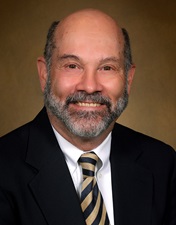
Kenneth L. Tyler, M.D.
Louise Baum Endowed Chair in Neurology
Reuler-Lewin Family Professor
(2001-2017)
Department of Neurology
University of Colorado School of Medicine