Research Fellowship
This Society for Academic Emergency Medicine (SAEM) accredited fellowship is designed to train the fellow in the ethical conduct of clinical research and to provide the skills necessary to obtain extramural funding and to become an independent physician-scientist in emergency medicine. The program will consist of: (1) intensive mentorship by a team of highly-skilled, independently-funded scientists; (2) obtaining a master-level degree in epidemiology, clinical sciences, health services, biostatistics, public health, or related discipline in conjunction with the Colorado School of Public Health, the University of Colorado Denver, and the Colorado Clinical and Translational Sciences Institute; (3) initiating and completing a substantial research project, selected on the basis of the project’s educational value, its clinical or scientific merit, and on the fellow’s long-term research interests; and (4) working as an attending physician in the emergency department at Denver Health Medical Center or the University of Colorado Hospital.
This fellowship requires a two-year commitment to complete both the advanced degree and other research training requirements. The successful candidate will be a recent graduate of an accredited emergency medicine residency program who wishes to pursue a career in clinical research.
Program Leadership
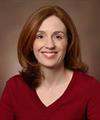
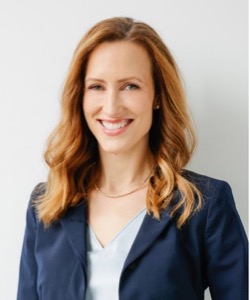 Elizabeth Goldberg, MD, ScM, FACEP
Co-Fellowship Director
Clinical Site: University of Colorado Hospital
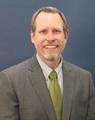 Jason Haukoos, MD, MSc
Co-Fellowship Director
Denver Health, Director of Research, Denver Health Department of Emergency Medicine
Fellowship Details
The objectives of this program are to:
- Leverage and expand the existing Denver Health-based fellowship to include a high-quality pre-K award research fellowship program fully integrated within the academic CU Department of Emergency Medicine
- Leverage departmental and institutional infrastructure for research training and mentorship, and activities to support fellows
- Establish a process for consistent recruitment of high-quality fellowship candidates
- Create individualized career development plans for each fellow, including specific goals for education and mentorship, and milestones for research project completion, publications, and future grant funding
- Prepare fellows with requisite skills in research methods, and effective scientific communication and collaboration for successful transition to career development funding
- Prepare fellows to successfully compete for academic faculty positions following fellowship and to successfully obtain individual K series funding
- Provide foundational training for ultimate transition to independence as an investigator
Each fellow will be embedded in a mentorship team specifically tailored to his or her career development needs and scientific interests. Each team will consist of individuals with extensive experience successfully mentoring early-stage investigators, but with complimentary expertise. Fellows will be paired with a primary mentor and two to four additional mentors who will focus specifically on career development, the fellow’s content area, and research methods. Under the direction of Drs. Haukoos and Ginde, the Colorado Emergency Medicine Clinical Research Fellowship has been organized into two distinct, but complementary, mentorship platforms, including Academic & Career Development Mentorship and Scientific & Research Methods Mentorship.
Fellows will be required to hold a doctoral degree (i.e. M.D., D.O., or Ph.D.), and those with clinical-based doctoral degrees, will have to have completed an MD or DO-approved Accreditation Council for Graduate Medical Education (ACGME) residency training program. Therefore, fellows will include predominantly individuals emerging from residency training although early-stage faculty (i.e. within the first two years of a faculty appointment) may also be considered.
In addition, non-clinical scientists (i.e. Ph.D.) entering the postdoctoral phase of their development will also be considered, although it is recognized that these individuals do not necessarily meet qualifications outlined by SAEM; if this scenario occurs, Drs. Haukoos and Ginde will request approval, on a case-by-case basis, from SAEM. Also, all fellows will register and maintain active membership with SAEM for the duration of the fellowship.
The Department of Emergency Medicine at the University of Colorado School of Medicine, with its two nationally-recognized academic hospitals, Denver Health Medical Center and the UCHealth University of Colorado Hospital, propose a structured two-year clinical research fellowship training program aimed at physicians completing emergency medicine residency training who desire a career as a scientist. Fellows will ultimately be trained, over the course of the two-year curriculum, to design and conduct high-quality, practice changing research. Integration with existing institutional scientific development programs (e.g. institutional T and K grants), a robust community of individual K award scholars and independent (R funded) investigators, and a highly successful departmental research-in-progress program will create synergy between this fellowship, fellows, and mentors within the larger Colorado scientific community. Finally, close collaboration with the Colorado Clinical Translational Sciences Institute (CCTSI) Education, Training, and Career Development programs and involvement with several national clinical trials networks will enhance the experience of our fellows by leveraging other established institutional resources for the development of scientists.
The fellowship will provide robust individualized career development and scientific mentorship, formal training in advanced research methods and statistics culminating in a Master-level research degree, applied research activities, including development and completion of a substantive research project with the fellow as principal investigator (PI), and scientific and grant writing experience. During the fellowship, fellows will be appointed as instructors or fellows in the department and will devote at least 75% of their effort to research training with the balance of effort working as an attending physician in the emergency department supervising residents and providing clinical teaching. At the conclusion of the training program, fellows will be poised to successfully compete for career development (K series) funding and an academic faculty position at the assistant professor rank.
The fellowship will provide robust individualized career development and scientific mentorship, formal training in advanced research methods and statistics culminating in a Master-level research degree, applied research activities, including development and completion of a substantive research project with the fellow as principal investigator (PI), and scientific and grant writing experience. During the fellowship, fellows will be appointed as instructors or fellows in the department and will devote at least 75% of their effort to research training with the balance of effort working as an attending physician in the emergency department supervising residents and providing clinical teaching. At the conclusion of the training program, fellows will be poised to successfully compete for career development (K series) funding and an academic faculty position at the assistant professor rank.
Curriculum
This research fellowship is a two-year program, with the option to extend to a third year, designed to prepare fellows for careers in academic clinical research. Fellows complete a research-focused Master’s degree (or equivalent advanced coursework), lead at least one clinical research study as principal investigator, and receive comprehensive mentorship and training in research methods, grant writing, and academic career development.
Throughout the program, fellows build skills across the full spectrum of clinical research, from study design and data analysis to manuscript development and funding acquisition, while actively engaging in scholarly work, presenting at scientific meetings, and maintaining clinical practice.
Primary Research Project
Using the fellow’s specific content area interests, our fellowship team will leverage the strengths described above to develop a scientifically sound primary research project for each fellow, to be completed during the two-year fellowship period with the fellow serving as the principal investigator. He or she will be responsible for oversight, planning, enrollment, data collection and management, analyses, and reporting in conjunction with his or her mentorship team and other ancillary research support staff, as needed. In general, three specific aims will be used to frame the project with the added goal of using the project as substrate for early grant submissions (see Section 4.2). The research project will also be specifically planned with thought towards a future K-series career development award application. We anticipate the primary fellowship project resulting in several scientific abstracts and peer-reviewed publications.
Secondary Research Projects
During the fellowship period, each fellow will also participate in several secondary research projects, specifically and strategically selected by the fellow’s primary mentor to augment the fellow’s training. Acquisition of applied research skills is a critical driver of research success; as such, in close conjunction with the fellow’s mentors, each fellow will actively participate in additional projects, including methodological consultation, data management, statistical analyses, and reporting in both abstract and publication form, to strategically supplement his or her research development. This approach will not only provide an extended applied learning experience for the fellow but will also accelerate his or her publication track record, with multiple publications expected by the end of fellowship.
Regular educational and mentor meetings will be an integral component of the fellowship training program. These meetings will be held for the duration of the fellowship to provide ongoing instruction in the fundamentals of research and to ensure that the study and fellowship training objectives are achieved in a timely fashion. The fellow will actively participate in all aspects of these meetings as a facilitator and presenter.
These meetings and educational opportunities will include:
- Weekly meetings with the fellow’s primary mentor
- Weekly research administrative meetings
- Monthly meetings with the career development team
- Monthly meetings with secondary mentors
- Monthly emergency medicine scientist training and intensive mentorship meetings
- A variety of seminars provided by the Colorado Clinical and Translational Sciences Institute (CCTSI), collaborative study group meetings, and national emergency medicine research groups and conferences.
Weekly meetings with the fellow’s primary mentor and monthly or twice-monthly meetings with the fellowship director (if not the primary mentor as well) will be held both to monitor study progress and to provide ongoing mentorship and instruction in the fundamentals of all phases of the research process, including data collection, statistical analysis, manuscript preparation, and overall study management. The educational program for the fellow will encompass both formal training in research design and methods and mentored departmental, institutional, regional and national research and educational opportunities. This multi-faceted approach is intended to afford each fellow with comprehensive education in the fundamentals of research design and methods, and to provide the skills necessary to succeed as an independently-funded scientist.