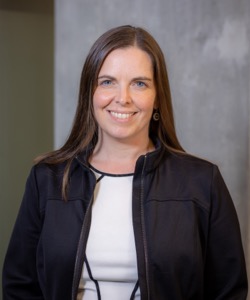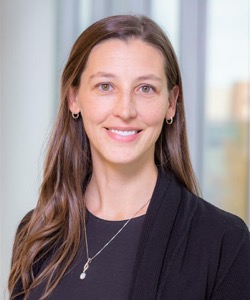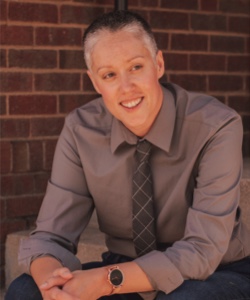
The EMBHR team is led by Dr. Bethany Kwan, a social health psychologist, health services researcher, and dissemination and implementation (D&I) scientist.
EMBHR encompasses research that focuses on the advancement of methods for engaging patients, practices, and other health system representatives in co-design, testing, implementation, and dissemination of evidence-based approaches to improving mental and behavioral health. With particular emphasis on quality of life, disease-related distress, and promoting healthy lifestyles, EMBHR seeks to improve health and health equity for people living with chronic conditions such as diabetes and cancer.
EMBHR follows principles and methods for “designing for dissemination, sustainability, and equity” including community and partner engagement throughout research planning, conduct, and dissemination and application of behavioral science and D&I theories, models, and frameworks. EMBHR leads and collaborates on research funded by the National Institutes of Health (NIH) and the Patient Centered Outcomes Research Institute (PCORI).
For students: we often have student research opportunities which may be open to graduate and upper-division undergraduate students both within and outside the University of Colorado system. Please contact us if you are interested in working with us as a student.
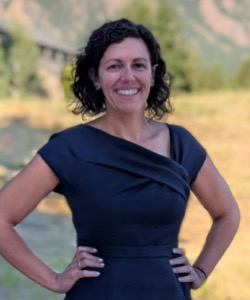
Sarah Kautz, PhD, LCSW

Shelby West, MPH

Justin Shrader, BA
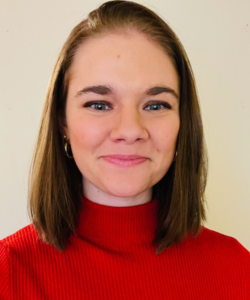
Chelsea Hoffman, MPH
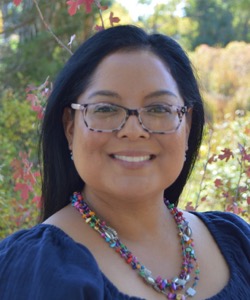
Amanda Skenadore, MPH, CHES
OPTIMUM
The OPTimIzing engageMent in Discovery of Molecular Evolution of Low Grade Glioma (OPTIMUM) project is a Research Center funded by the National Cancer Institute as part of the Participant Engagement and Cancer Genome Sequencing (PE-CGS) Network and the Cancer Moonshot Initiative.
In partnership with Yale University and the International Low Grade Glioma Registry, the EMBHR team is leading the Engagement Optimization Unit (EOU), which includes community partners and collaborators from ACCORDS, the CU Center for Bioethics and Humanities, and Beth Israel Deaconess Medical Center.
Living Well with Brain Cancer
Funded by the US Department of Defense (as part of the Congressionally Directed Medical Research Programs Patient Well-Being and Survivorship Award), this project is using participatory co-design methods to adapt existing targeted self-management interventions to develop the Living Well with Brain Cancer (LWBC) intervention for mental and behavioral health in people with brain cancer. The LWBC intervention will be tested in a pilot and feasibility trial of LWBC compared to an education control in 60 people living with brain cancer.
CHEER
Funded by PCORI, the “CHaracterizing Engagement and Equity in Research” (CHEER) project will answer priority Science of Engagement questions related to characterization, fit, and comparative effectiveness of engagement methods. CHEER is using a rigorous prospective multiple-cohort study design with mixed methods to conduct a comparative study of engagement methods in planning health-equity oriented patient-centered outcomes research. Open Science Framework protocol can be found here: https://osf.io/fu9rm.
STEP
In collaboration with the Goldberg GAPcare Lab, the Scaling Trusted Evidence-based Prevention (STEP) project will strengthen statewide fall prevention program adoption, implementation, and sustainability infrastructure. Funded by the Department of Health and Human Services’ Administration for Community Living, STEP is using the Fit to Context Framework to identify and address contextual factors underpinning potential for broad adoption, implementation, and sustainability, in addition to evaluating the impact of the STEP intervention. Key components of STEP will include co-designed referral navigation tools, education and outreach to providers and individuals at risk of falls, partnerships, telehealth, and wrap-around services.
OPEL
The OPtimizing Engagement of Latino Communities to Promote Equity in Low Grade Glioma Genomic Research (OPEL) project adapted and extended participant engagement for the OPTIMUM (parent grant) project to optimize engagement with Hispanic/Latino (H/L) people with low grade glioma.
OPTIMUM’s OPEL supplement provided for the linguistic/cultural adaptation of participant engagement strategies and materials from the OPTIMUM parent grant, and the user-centered development, pilot testing and implementation of a community health worker education program designed for the unique needs and perspectives of H/L people with LGGs and the care providers and community service organizations who support them.
Invested in Diabetes
The Invested in Diabetes study was a PCORI-funded pragmatic trial comparing two models of diabetes shared medical appointments.
Study findings and materials can be found here.
Designing for Dissemination and Sustainability
Designing for dissemination and sustainability (D4DS) refers to the process of ensuring that the products of research are likely to be adopted, implemented, and sustained in the context of intended use.
D4DS involves use of methods such as participatory co-design, active dissemination planning, and pragmatic trial designs to develop evidence that “fits the context” and can be readily adopted in real-world settings.
The Fit to Context Framework for D4DS is a novel process framework to guide planning, conduct, and dissemination of research, based on a narrative review of the literature on D4DS. Tools to support application of the Fit to Context Framework can be found at https://app.d4dsplanner.com/.
Engagement Navigator
DICEMethods.org is an interactive web-based tool for education and selection of methods for engaging patients and other potential adopters and influencers of research.
CTSA Compendium of D&I Catalogs
The CTSA Compendium of D&I Catalogs, a listing of external D&I resources, provides a curated list of resource catalogs relevant to the conduct of Dissemination & Implementation (D&I) science. Developed by the Clinical & Translational Science Awards (CTSA) Program’s “Advancing Dissemination and Implementation Sciences in CTSAs” working group.
Pragmatic Research in Health
Pragmaticresearch.org brings together established and emerging pragmatic methods, measures, and models, many of which come from the blossoming field of dissemination and implementation (D&I) science, to help ensure that pragmatic research is not seen as messy or poorly done research, but rather as both relevant and rigorous.
Kwan BM, Barnard J, Ritger C, Staton EW, Perkins I, Gonzalez-Fisher R, Lennox LA, Gay N, Johnson KC, Verhaak RGW, Claus EB, Decamp M, Salmi L. Community perspectives on the return of research results and ownership of data and specimens for brain tumor genomic research. SSM Qual Res Health. 2026;9:100741. https://doi.org/10.1016/j.ssmqr.2026.100741
Nederveld AL, Gurfinkel D, Reedy J, Glasgow RE, Waxmonsky JA, Kwan BM, Holtrop JS. Sustaining Diabetes Shared Medical Appointments After a Pragmatic Trial. J Am Board Fam Med. 2025 Sep-Oct;38(5):886-898. https://doi.org/10.3122/jabfm.2024.240319R1
Crossnohere NL, Schuster ALR, Blair CK, Bland H, Carpten JD, Claus EB, Colditz GA, Diehl D, Ding L, Drake BF, Fields RC, George S, Janeway K, Kim H, Lenz HJ, Mack JW, Ricker C, Stern MC, Sussman A, Trent J, Van Allen E, Verhaak R, Willman C, Bridges JFP, Mishra SI, Kwan BM; PE-CGS Network. Optimizing participant and community engagement in cancer genomic sequencing research. Genet Med. 2025 Sep;27(9):101483. https://doi.org/10.1016/j.gim.2025.101483
DeCamp M, Barnard JG, Ritger C, Helmkamp LJ, Begum A, Garcia-Hernandez S, Fischmann R, Gay N, Gonzalez-Fisher R, Johnson KC, Lennox LA, Lipof GR, Ostmeyer J, Perkins I, Pyle L, Salmi L, Thompson T, Claus EB, Verhaak R, Kwan BM. Engagement Methods in Brain Tumor Genomic Research: Multimethod Comparative Study. J Particip Med. 2025 Aug 21;17:e68852. https://doi.org/10.2196/68852
Lennox LA, Shelton RC, Rohweder CL, Kwan BM. The Clinical and Translational Science Award compendium of dissemination and implementation science resource catalogs: Capacity building tools for clinical and translational scientists. J Clin Transl Sci. 2025;9(1):e154. Published 2025 Jun 30. https://doi.org/10.1017/cts.2025.10087
Kwan BM, Hosokawa P, Resnick-Ault D, Michael SS, Sungar WG, Mendes M, Bookman K. A learning health systems approach to implementation and evaluation of an academic emergency department single shared note workflow. Learn Health Syst. 2025 May 13;9(4):e70017. https://doi.org/10.1002/lrh2.70017
Kepper MM, L'Hotta AJ, Shato T, Kwan BM, Glasgow RE, Luke D, Graham AK, Baumann AA, Brownson RC, Morse B. Supporting teams with designing for dissemination and sustainability: the design, development, and usability of a digital interactive platform. Implement Sci. 2024 Dec 31;19(1):82. https://doi.org/10.1186/s13012-024-01410-7
Kwan BM, Sobczak C, Fish LE, et al. Rapid methods for multi-level dissemination of neutralizing monoclonal antibody treatment for COVID-19 outpatients: designing for dissemination using the fit to context framework. Front Public Health. 2024;12:1412947. Published 2024 Nov 21. https://doi.org/10.3389/fpubh.2024.1412947
Holtrop JS, Gurfinkel D, Nederveld A, Reedy J, Rubinson C, Kwan BM. What Works in Implementing Shared Medical Appointments for Patients with Diabetes in Primary Care: A Qualitative Comparative Analysis from the Invested in Diabetes Study. Implementation Science Communications. 2024 Jul 24;5(1):82. https://doi.org/10.1186/s43058-024-00608-6
Kwan BM, Dickinson LM, Dailey-Vail J, Glasgow RE, Gritz RM, Gurfinkel D, Hester CM, Holtrop JS, Hosokawa P, Lanigan A, Nease DE, Nederveld A, Phimphasone-Brady P, Ritchie ND, Sajatovic M, Wearner R, Begum A, Carter M, Waxmonsky JA. Comparative Effectiveness of Patient-Driven vs Standardized Diabetes Shared Medical Appointments: A Pragmatic Cluster Randomized Trial. Journal of General Internal Medicine. 2024 Jun 28. http://doi.org/10.1007/s11606-024-08868-7
Salmi L, Otis-Green S, Hayden A, Taylor L, Reblin M, Kwan BM. Identifying Research Priorities and Essential Elements of Palliative Care Services for People Facing Malignant Brain Tumors: A Participatory Co-Design Approach. Neuro-Oncology Practice. 2024 Jun 19;11(5):556-565. https://doi.org/10.1093/nop/npae052
Hamer MK, Sobczak C, Whittington L, Bowyer R, Lum H, Koren R, Begay J, Ginde AA, Wynia MK, Kwan BM. Real World Data to Evaluate Effects of a Multi-Level Dissemination Strategy on Access, Outcomes, and Equity of Monoclonal Antibodies for COVID-19. J Clin Transl Sci. 2023 Nov 13;7(1):e258. https://doi.org/10.1017/cts.2023.679
Reno JE, Ong TC, Voong C, Morse B, Ytell K, Koren R, Kwan BM. Engaging Patients and Other Stakeholders in "Designing for Dissemination" of Record Linkage Methods and Tools. Appl Clin Inform. 2023 Aug;14(4):670-683. https://doi.org/10.1055/a-2105-6505
Morse B, Allen M, Schilling LM, Soares A, DeSanto K, Holliman BD, Lee RS, Kwan BM. Community Engagement in Research and Design of a Transgender Health Information Resource. Appl Clin Inform. 2023 Mar;14(2):263-272. https://doi.org/10.1055/s-0043-1763290
Nederveld A, Phimphasone-Brady P, Gurfinkel D, Waxmonsky JA, Kwan BM, Holtrop JS. Delivering diabetes shared medical appointments in primary care: early and mid-program adaptations and implications for successful implementation. BMC Prim Care. 2023 Feb 17;24(1):52. https://doi.org/10.1186/s12875-023-02006-8
Holtrop JS, Gurfinkel D, Nederveld A, Phimphasone-Brady P, Hosokawa P, Rubinson C, Waxmonsky JA, Kwan BM. Methods for capturing and analyzing adaptations: implications for implementation research. Implement Sci. 2022 Jul 29;17(1):51. https://doi.org/10.1186/s13012-022-01218-3
Kwan BM, Brownson RC, Glasgow RE, Morrato EH, Luke DA. Designing for Dissemination and Sustainability to Promote Equitable Impacts on Health. Annu Rev Public Health. 2022 Apr 5;43:331-353. https://doi.org/10.1146/annurev-publhealth-052220-112457
Kepper MM, Walsh-Bailey C, Brownson RC, Kwan BM, Morrato EH, Garbutt J, de Las Fuentes L, Glasgow RE, Lopetegui MA, Foraker R. Development of a Health Information Technology Tool for Behavior Change to Address Obesity and Prevent Chronic Disease Among Adolescents: Designing for Dissemination and Sustainment Using the ORBIT Model. Front Digit Health. 2021;3:648777. https://doi.org/10.3389/fdgth.2021.648777
Kwan BM, Ytell K, Coors M, DeCamp M, Morse B, Ressalam J, Reno JE, Himber M, Maertens J, Wearner R, Gordon K, Wynia MK. A stakeholder engagement method navigator webtool for clinical and translational science. J Clin Transl Sci. 2021;5(1):e180. PubMed Central PMCID: PMC8596067. https://doi.org/10.1017/cts.2021.850
Mehta P, Moore SL, Bull S, Kwan BM. Building MedVenture - A mobile health application to improve adolescent medication adherence - Using a multidisciplinary approach and academic-industry collaboration. Digit Health. 2021 Jan-Dec;7:20552076211019877. https://doi.org/10.1177/20552076211019877
Kwan BM, Pyrzanowski J, Sevick C, Wagner NM, Resnicow K, Glanz JM, Dempsey AF. Exploring mechanisms of a web-based values-tailored childhood vaccine promotion intervention trial: Effects on parental vaccination values, attitudes, and intentions. Appl Psychol Health Well Being. 2021 Aug 16. https://doi.org/10.1111/aphw.12296
Kwan BM, Rementer J, Richie N, Nederveld AL, Phimphasone-Brady P, Sajatovic M, Nease DE Jr, Waxmonsky JA. Adapting Diabetes Shared Medical Appointments to Fit Context for Practice-Based Research (PBR). J Am Board Fam Med. 2020 Sep-Oct;33(5):716-727. https://doi.org/10.3122/jabfm.2020.05.200049
Kwan BM, Dickinson LM, Glasgow RE, Sajatovic M, Gritz M, Holtrop JS, Nease DE Jr, Ritchie N, Nederveld A, Gurfinkel D, Waxmonsky JA. The Invested in Diabetes Study Protocol: a cluster randomized pragmatic trial comparing standardized and patient-driven diabetes shared medical appointments. Trials. 2020 Jan 10;21(1):65. https://doi.org/10.1186/s13063-019-3938-7
Kwan BM, McGinnes HL, Ory MG, Estabrooks PA, Waxmonsky JA, Glasgow RE. RE-AIM in the real world: use of the RE-AIM framework for program planning and evaluation in clinical and community settings. Frontiers in public health. 2019 Nov 22;7:345. https://doi.org/10.3389/fpubh.2019.00345