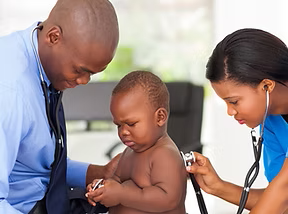
All children who have experienced maltreatment deserve access to high quality medical evaluations and behavioral health screenings. Expertise in conducting medical evaluations and behavioral health screenings in suspected cases of child maltreatment is extremely limited. Increased access to proper evaluation, diagnosis and care will improve children’s physical and mental health and safety. The CARE Network was established in 2019 to increase capacity throughout the state by establishing a standardized and coordinated response to suspected cases of child maltreatment. You can join a designated network of providers around the state who are committed to providing quality care for children within their communities. We ensure support for network providers through education and training opportunities, mentorship, financial reimbursement and other resources.
CARE Network providers are committed to ensuring that children with suspected abuse or neglect have timely, accessible care from professionals skilled in evaluation, diagnosis, and treatment. Designated CARE Network providers are:
|
Community Resources |
Contact Us |
I've been the "child abuse physician" for the six counties that make up the 7th Judicial District for 33 years. I'm also a general Pediatrician in a busy practice. I used conferences, reading, and "the school of hard knocks" to access training. The CARE Network program has been a game changer for me. Through this program, I have access to a mentor to review my cases and that I can call for consultation. All of the members receive great education through the ECHO programs and case presentations this program provides. There is also an annual training that I feel is specifically tailored to our skill levels. It provides good research proven material in a manner that is practical for practice. I feel fortunate to have this available to me and the children of Colorado. I'm encouraging my partners and our SANE providers to access this program as well. It is absolutely worth the time spent. - Dr. Mary Vader, CARE Network Provider
Expertise to conduct medical exams and behavioral health evaluations to evaluate suspected cases of child abuse and neglect is extremely limited. There are only six board-certified specialists in the field of child abuse pediatrics in Colorado – five in Denver and one in Colorado Springs. Distances limit access to expert evaluations in most of the state’s 64 counties, resulting in a serious problem with a lack of support for providers to be able to conduct medical exams and behavioral health evaluations for suspected physical and sexual abuse or neglect.
The CARE Network's aim is to increase local capacity by building appropriate infrastructure to provide technical assistance and resources through a state-funded program that develops and maintains a standardized, coordinated response to suspected child abuse and neglect through a network of designated healthcare providers. CARE Network eligible cases are limited to children 5 years and under for concerns of physical abuse/neglect and children 12 years and under for sexual abuse. The program includes compensation for providers.
Under contract with the Colorado Department of Public Health & Environment, The Kempe Center serves as The Resource Center for these designated CARE Network providers to offer the following support:
CARE Network providers are physicians, psychologists, physician assistants, nurse practitioners, nurses, and licensed behavioral health providers that have made a commitment to providing children, for which abuse or neglect is suspected, easy access to proper diagnosis and care by completing the CARE Network new provider training and participating in continuing education and mentorship.



Case level data for program evaluation is maintained temporarily in a system called REDCap. Case level data may be reviewed for feedback, mentorship, and quality assurance. Mentor reviews of case level data are based on limited information and do not replace the provider’s professional judgment. The review does not establish a clinician-patient relationship, is not considered clinical supervision, nor does it imply ongoing responsibility for treatment.
“CARE Network eligible cases are limited to children 5 years and under for concerns of physical abuse/neglect and children 12 years and under for sexual abuse.”
Submitting Your First EvaluationStep-by-step instructions and video tutorial for submitting your first CARE Network evaluation for review. | Submitting Subsequent EvaluationsReturn to the site you bookmarked in the “Submitting Your First Evaluation” and select the “Add Evaluation” button. | Need Help?Reach out to a CARE Network team member at [email protected] for assistance in submitting medical evaluations for review. |
Components of a Physical or Sexual Abuse EvaluationImportant exam elements that should be included as part of a complete evaluation. | Physical Abuse Screening and Treatment GuidelineWhat is the appropriate work up for physical abuse based on child’s age and presenting symptoms? | Best Practice Standards: Medical ProvidersA guide for how to complete an evaluation, including standards for history taking, physical exam and testing. | Community (Non-Occupational) Blood or Bodily Fluid Exposure PathwayClinical care recommendations designed to help medical providers identify, screen, and treat children at-risk of transmission of infectious agents from blood or bodily fluid sexual exposures. |
A Quick Guide to Completing and Submitting a CARE Network Medical EvaluationNeed a quick primer on how to submit your evaluation data? | CARE Network Evaluation Participation FormThis participation form is optional based on provider's preference to supply clients with more program information. | CARE Network Referral FormA suggested template for communication between DHS and CARE Network Provider | A Flyer for Families: A CARE Network EvaluationFlyer that provides information on a CARE Network evaluation, what families can expect, how to talk to children, etc. |
CARE Process ModelTrauma and behavioral health screening tool. | Best Practice Standards: Behavioral Health Component of Medical EvaluationA guide for designated medical providers for how to screen for trauma and other behavioral health issues as part of your complete evaluation. | Behavioral Health PartnersAccess a list of different types of behavioral health providers |
Case level data for program evaluation is maintained temporarily in a system called REDCap. Case level data may be reviewed for feedback, mentorship, and quality assurance. Mentor reviews of case level data are based on limited information and do not replace the provider’s professional judgment. The review does not establish a clinician-patient relationship, is not considered clinical supervision, nor does it imply ongoing responsibility for treatment.
“CARE Network eligible cases are limited to children 5 years and under for concerns of physical abuse/neglect and children 12 years and under for sexual abuse.”
The Child PTSD Symptom Scale for DSM-VScreening measure to evaluate presence of trauma symptomology and/or a diagnosis of PTSD |
PHQ-9 (modified for adolescents- PHQ-A)Screening measure to evaluate presence of depressive symptomology and/or a diagnosis of Depression |
Screen for Child Anxiety Related Disorders (SCARED)Screening measure to evaluate presence of anxiety symptomology and/or diagnosis of Anxiety |
Decision Tree for Adjunctive MeasuresRecommendations for additional screening measures based on positive screens in the PTSD, PHQ-A or SCARED measures |
EXAMPLE- Child Intake FormHere is an example of an intake form that CU’s trauma team uses |
A Flyer for Families: A CARE Network Behavioral Health IntakeFlyer that provides information on a CARE Network Behavioral Health Intake, what families can expect, how to talk to children, etc. |
CARE Network Participation FormThis participation form is optional based on provider's preference to supply clients with more program information. |
CARE Network Referral FormA suggested template for communication between DHS and CARE Network Provider |
CARE Network providers have access to ongoing training and professional development through both in-person and virtual learning opportunities.
The annual CARE Network Training brings providers together for focused education, skill development, collaboration, and learning from experts in the evaluation and treatment of child abuse and neglect. Virtual participation is also available to help ensure providers across Colorado can access the training regardless of location.
Throughout the year, the CARE Network offers interactive webinars focused on topics relevant to providers' work. Webinars feature an expert presentation on a selected topic, with topics sometimes chosen in response to provider feedback and identified learning needs. Webinars also include a case presentation by a CARE Network provider, providing an opportunity to apply learning to real-world cases, share experiences, and learn from colleagues across the Network.