

3Qs for QI | An Interview with Dr. Michele Loi
Aug 17, 2026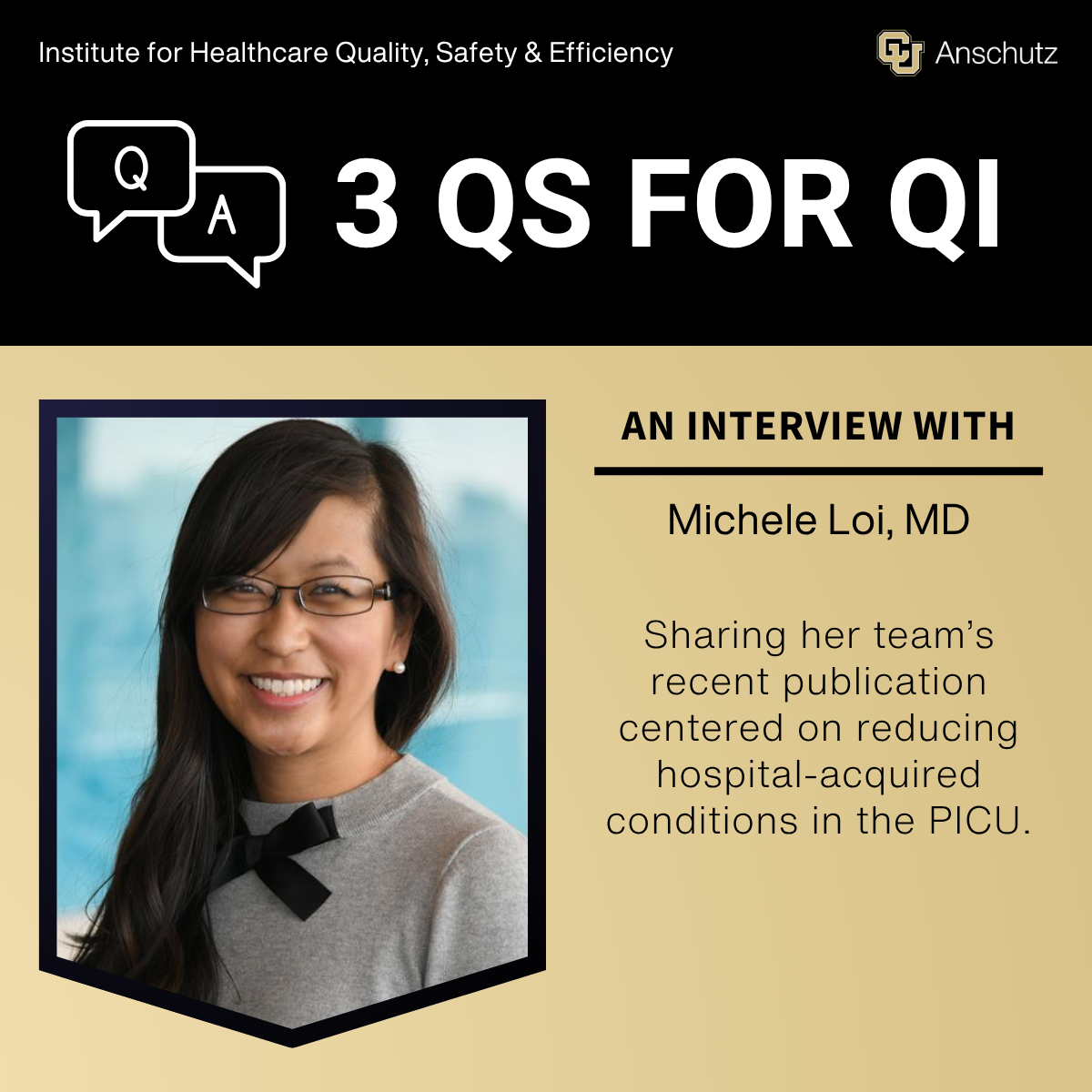
Publication: Reducing Hospital Acquired Conditions in the Pediatric Intensive Care Unit with a High-Risk Rounding Process
Tell us about your approach to this project.
Before this study, we had an uptick in HACs and realized that HACs were challenging to address with utmost psychological safety. Everyone wants to do their best and prevent patient harm. We took a proactive, team-based approach to reducing healthcare-associated conditions in our pediatric intensive care unit by focusing on patients at the highest risk. Our inter-professional team developed clear criteria to identify these patients and implemented weekly high-risk rounds to ensure consistent, focused attention. During these rounds, we used a structured script to guide conversations with bedside nurses, creating space for open dialogue about patient-specific risks and care priorities. This approach allowed us to move beyond retrospective audits and instead address potential issues in real time.
We also prioritized psychological safety throughout the process. By capturing information during each round, we were able to identify patterns, practice gaps and opportunities for improvement. The rounds often led to immediate interventions, such as escalating concerns, adjusting care plans, providing education or securing necessary resources. Over time, this iterative process strengthened communication across the care team and reinforced a shared responsibility for patient safety. Ultimately, our approach combined structured processes with collaborative problem-solving, allowing us to address multiple risks simultaneously and continuously refine our practices based on what we learned.
Why is this work important?
We believe this work is critical because healthcare-associated conditions can have serious, lasting consequences for critically ill pediatric patients. These conditions not only increase the risk of harm but also extend hospital stays, add emotional strain for families and drive up healthcare costs. Traditional prevention methods often focus on compliance with specific care bundles or retrospective reviews after an event has occurred. While valuable, those approaches can miss opportunities to intervene earlier.
Our work shifts the focus to proactive prevention. By identifying high-risk patients and addressing multiple potential issues at once, we can reduce the likelihood of harm before it happens. This is especially important in a PICU setting, where patients are complex and often vulnerable to several types of complications simultaneously. Additionally, our approach fosters stronger collaboration among care team members and empowers bedside nurses by actively involving them in decision-making.
Beyond patient outcomes, this work also supports a culture of safety and continuous improvement. It encourages teams to speak up, share insights and learn from one another.
How do you think this will impact healthcare?
We see this work as having meaningful implications for healthcare beyond our own unit. Our results demonstrate that a structured, team-based approach to identifying and managing risk can significantly reduce healthcare-associated conditions. Because the model is adaptable, it can be implemented in a variety of clinical settings and tailored to different patient populations and organizational needs.
One of the most important impacts is the shift in mindset it promotes from reactive to proactive care with utmost psychological safety. Instead of responding to adverse events after they occur, healthcare teams can anticipate risks and intervene earlier. Additionally, the emphasis on collaboration and real-time communication can strengthen team dynamics and improve overall care coordination.