

3Qs for QI | An Interview with Anita Moudgal, MD
Label or Fabel? Penicillin allergy delabeling
May 29, 2026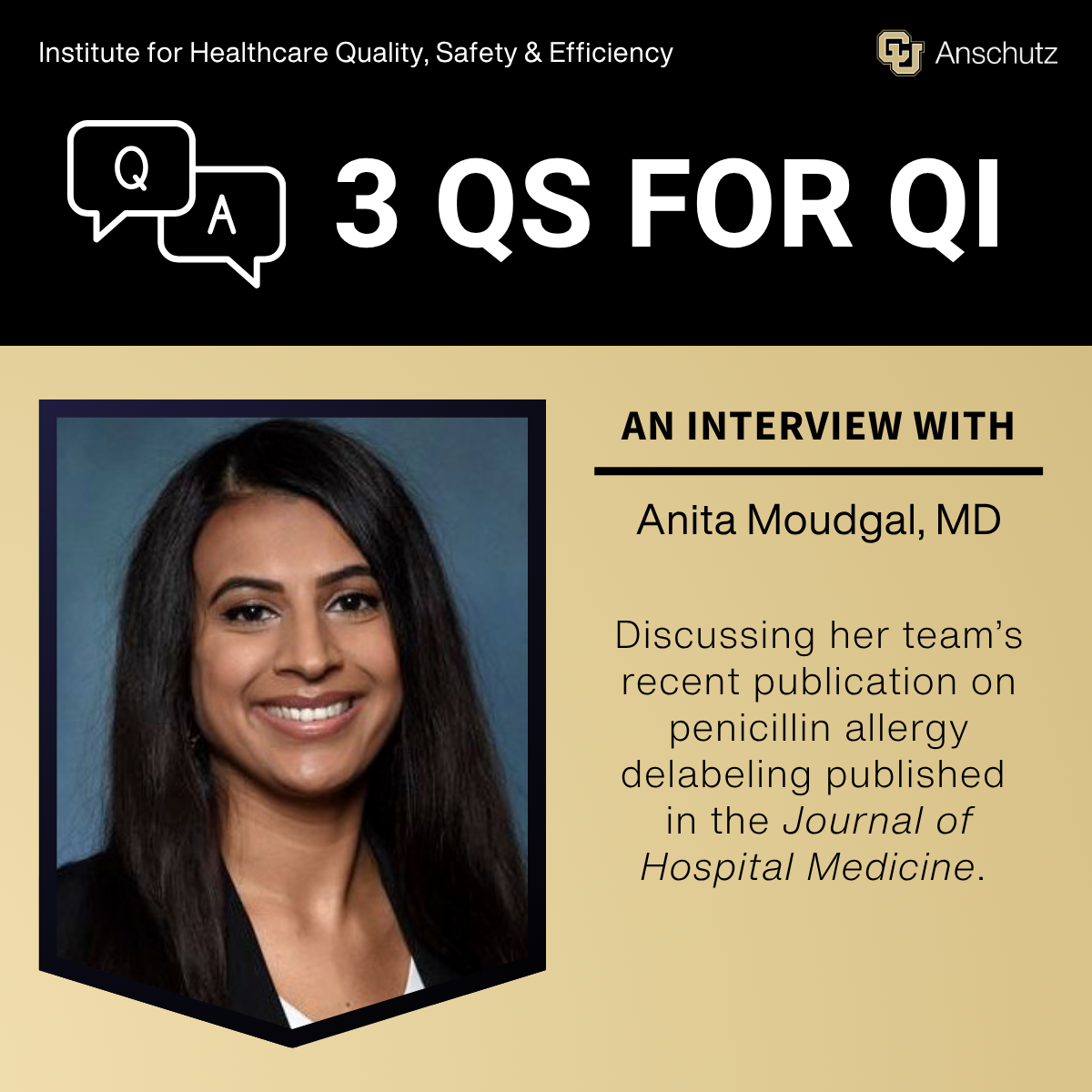
Tell us about your approach to this project?
This is a quality improvement initiative that aimed to improve penicillin allergy delabeling among low-risk hospitalized medicine patients from 1% to 5% in one year. To obtain our baseline data, we queried the EHR for removed penicillin allergy at any point during the hospital encounter and then manually reviewed each chart to verify. Our baseline data showed that 14 patients (1%) underwent penicillin delabeling in one year. 15-20% of hospitalized patients have a penicillin allergy label in their medical chart. Given the known negative impact of a penicillin allergy label, we found the opportunity to build a tool to guide and educate hospitalists to delabel low-risk penicillin allergies on their own. This quality improvement initiative required significant buy-in, input, and collaboration with our pharmacy, nursing, and allergy/immunology colleagues.
Why is this work important?
Penicillin allergy labels are frequently inaccurate. This drug allergy label has been associated with higher hospital costs due to broader spectrum antibiotics use, antibiotic administration delays, and increased antibiotic‐resistant infection risk. Previous delabeling practice standards including skin testing following by direct oral challenge, which are time-intensive and require specialized drug allergy training. Recent studies have shown that by-passing skin testing and going straight to direct oral challenge among patients classified as low-risk is efficient, cost-effective, and safe. A paucity of literature describes inpatient delabeling protocols conducted by hospitalist clinicians. Therefore, this quality improvement initiative adds to the ever-growing literature of ways to implement safe and effective inpatient penicillin delabeling practices.
How do you think this will impact healthcare?
Our quality improvement initiative emphasizes that hospitalist-driven penicillin allergy delabeling can be successful with the right guidance and tools. With an integrated electronic health record protocol and frequent communication updates to hospitalist clinicians to achieve buy-in, patients determined to have low-risk penicillin allergies can be safely delabeled while hospitalized. Nationally, there are over 44,000 hospitalists, compared to approximately 5000 A/I clinicians. With up to 20% of hospitalized patients reporting a penicillin allergy, hospitalist clinicians interact with significantly more patients with penicillin allergies compared to our allergy/immunology colleagues. After our intervention was completed, we found that patients with low-risk penicillin allergies were continuing to get delabeled. This highlights an overall cultural shift and self-motivation by our hospitalist clinicians to improve anti-microbial stewardship practices on a larger scale.