109 publications in 2025


109 publications in 2025
26 Operative Neurosurgery Faculty
Over 5,000 OR cases per year
Pressure headaches, continuous nasal congestion, sleep apnea, crushing fatigue, and a lifelong battle with allergies. Matt Boknevitz spent years in and out of doctor appointments trying to manage symptoms he thought were caused by sinus issues.
Three years ago, while brushing his teeth, a cough triggered a sudden, severe headache. He was confused by the sudden pressure in his head that eventually subsided after laying down flat. However, the pressure in his head frequently returned with coughing or sneezing fits, weather changes, and workouts.
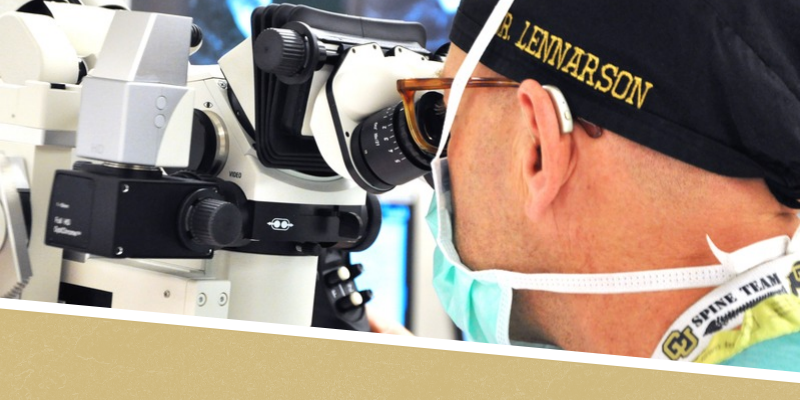
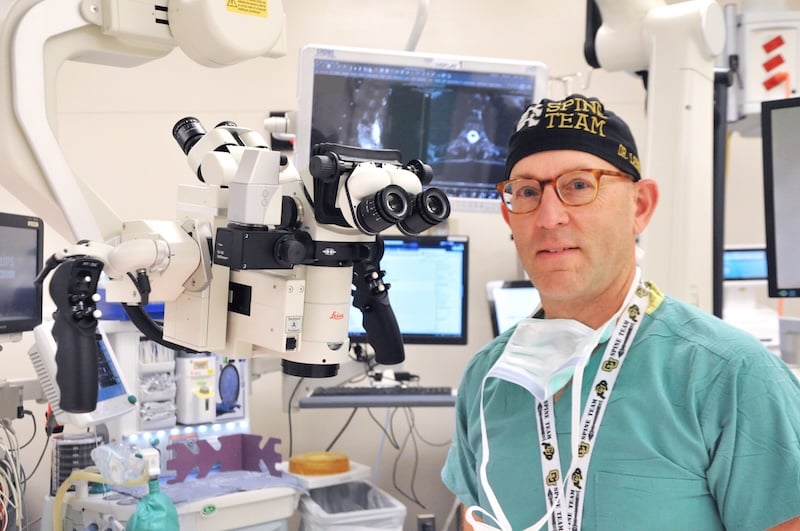
A few years after those first noticeable headaches, Boknevitz was diagnosed with a cerebrospinal fluid (CSF)-venous fistula and was referred to neurosurgeon Peter Lennarson, MD, associate professor at the University of Colorado Anschutz School of Medicine and co-director of the CSF Leak Program.
Now, Boknevitz wants to share his story of recovery, which was possible through surgery, in hopes of reaching other CSF leak patients who are either struggling with similar symptoms without an accurate diagnosis or those who are considering what he describes as “life changing” surgical treatment at CU Anschutz.
A recent $50 million gift to the CSF Leak program will allow the center’s directors, Lennarson and Andrew Callen, MD, associate professor of radiology, to expand access to clinical and surgical care for thousands of CSF leak patients like Boknevitz.
Once Boknevitz was referred to a neurologist, his medical team suspected he had a CSF leak. In March 2025, after years of doctor appointments and treatments, Boknevitz had an accurate diagnosis. His clinicians were correct — a CSF-venous fistula (CVF) was causing his symptoms.
“It was so important to me to know what it was,” he says. “I thought, ‘I have a problem that I can go fix.’ That wasn’t the
case before.”
A CVF is an abnormal connection between the cerebrospinal fluid sac that contains the spinal cord and nerves, and the body’s venous system. These fistulas generally arise from a cyst or diverticulum that is commonly found at the beginning of a nerve as it leaves the spine.
“In Matt’s case, he had a CVF, and the cyst which fed the fistula was also leaking spinal fluid,” Lennarson says. “In most cases of CVF, we eliminate the cyst, cutting off the source of the cerebral spinal fluid, which thereby, eliminates the fistula.”
The cause of these fistulas is still unknown. Lennarson says they were only discovered a little over a decade ago.
Symptoms can also be vague and associated with other neurological conditions, often leading to misdiagnosis. Common symptoms of a CSF leak include headaches, ringing in the ears, brain fog, back and neck pain, and visual disturbances.
“Patients wait a long time for the right diagnosis,” Lennarson says. “There are not enough people who know that these can exist, and they are hard to find even when looked for.”
CU Anschutz is one of the few medical centers in the country with a dedicated CSF leak clinic. The multidisciplinary team at CU Anschutz’s CSF Leak Program treats patients from around the country and all over the globe. In addition to clinical care, team members also conduct research to understand how spontaneous CSF leaks form to improve treatment outcomes.
The anonymous donation made to CU Anschutz will help grow its nationally recognized CSF Leak Program, enabling the team to see more patients while also supporting crucial CSF leak research.
“This amazing gift will allow us to help more patients in a timely manner, by expanding our clinical capacity,” Lennarson says. “We have hundreds if not thousands of patients waiting for evaluation.”
Spontaneous CSF leaks are rare and occur in about 5 out of 100,000 people annually. CSF leaks caused by trauma or by accidental puncture of the dura during certain medical and surgical procedures are more common.
Non-surgical options for CSF leaks include bed rest and medications to provide symptomatic relief, and interventional procedures like epidural blood/fibrin patches. When these options fail, surgical intervention may be recommended.
Boknevitz initially met with Callen, an interventional neuro-radiologist, to discuss treatment options. His CVF was diagnosed with a dynamic CT-myelogam. He then underwent two attempts at targeted percutaneous patches. For this form of patch, the team injects blood and/or fibrin glue into the region of the fistula, hoping to compress it long enough that it closes permanently.
Unfortunately, this treatment did not alleviate Boknevitz’s symptoms, so his medical team recommended surgery.
Lennarson explains that removing the cyst feeding the fistula is highly effective and precludes the possibility of developing another fistula later.
Nearly three years after the initial coughing fit that brought on the first noticeable headache, Boknevitz went in for surgery at UCHealth University of Colorado Hospital with Lennarson.
After the surgery while still in recovery, Boknevitz recalls feeling shocked by the results.
“I could tell a difference within hours of the surgery,” Boknevitz says. “I felt so much better. My energy level was so different. I did not have to blow my nose every two seconds. It was life changing for me.”
Today, Boknevitz is still in awe of his increased energy level and the absence of symptoms that plagued him for years.
“As I went through this process, I realized there were more symptoms than meets the eye,” Boknevitz says.
Hobbies and day-to-day activities Boknevitz did before his surgery now feel doable without the added stress of triggering a headache. Before his surgery, the severe congestion impacted his ability to sing, and singing for longer than 10 minutes triggered a headache.
For nearly three years, Boknevitz could not exercise without triggering a headache while bending over or engaging his core. Bad weather could trigger a headache. Even lifting his luggage into an overhead compartment on an airplane could bring on a headache. He struggled to stay awake at brunch with friends due to his crippling fatigue.
“My energy level on a day-to-day basis is different,” he says. “All my friends have noticed. I’m more mentally present for everything. That’s the biggest difference.”
For Boknevitz, the journey to relief was often frustrating, but he’s now cleared to exercise and looks forward to returning to the gym without the fear of headaches. Work travel, once a huge stress now feels doable, and he is back to singing with friends.
His advice to others diagnosed with a CSF leak is to have grace. “It’s a hard thing to go through,” he says. “I didn’t realize how difficult everything was until after surgery. This has been incredible.”
Pressure headaches, continuous nasal congestion, sleep apnea, crushing fatigue, and a lifelong battle with allergies. Matt Boknevitz spent years in and out of doctor appointments trying to manage symptoms he thought were caused by sinus issues.
Three years ago, while brushing his teeth, a cough triggered a sudden, severe headache. He was confused by the sudden pressure in his head that eventually subsided after laying down flat. However, the pressure in his head frequently returned with coughing or sneezing fits, weather changes, and workouts.
A few years after those first noticeable headaches, Boknevitz was diagnosed with a cerebrospinal fluid (CSF)-venous fistula and was referred to neurosurgeon Peter Lennarson, MD, associate professor at the University of Colorado Anschutz School of Medicine and co-director of the CSF Leak Program.
Now, Boknevitz wants to share his story of recovery, which was possible through surgery, in hopes of reaching other CSF leak patients who are either struggling with similar symptoms without an accurate diagnosis or those who are considering what he describes as “life changing” surgical treatment at CU Anschutz.
A recent $50 million gift to the CSF Leak program will allow the center’s directors, Lennarson and Andrew Callen, MD, associate professor of radiology, to expand access to clinical and surgical care for thousands of CSF leak patients like Boknevitz.
Once Boknevitz was referred to a neurologist, his medical team suspected he had a CSF leak. In March 2025, after years of doctor appointments and treatments, Boknevitz had an accurate diagnosis. His clinicians were correct — a CSF-venous fistula (CVF) was causing his symptoms.
“It was so important to me to know what it was,” he says. “I thought, ‘I have a problem that I can go fix.’ That wasn’t the
case before.”
A CVF is an abnormal connection between the cerebrospinal fluid sac that contains the spinal cord and nerves, and the body’s venous system. These fistulas generally arise from a cyst or diverticulum that is commonly found at the beginning of a nerve as it leaves the spine.
“In Matt’s case, he had a CVF, and the cyst which fed the fistula was also leaking spinal fluid,” Lennarson says. “In most cases of CVF, we eliminate the cyst, cutting off the source of the cerebral spinal fluid, which thereby, eliminates the fistula.”
The cause of these fistulas is still unknown. Lennarson says they were only discovered a little over a decade ago.
Symptoms can also be vague and associated with other neurological conditions, often leading to misdiagnosis. Common symptoms of a CSF leak include headaches, ringing in the ears, brain fog, back and neck pain, and visual disturbances.
“Patients wait a long time for the right diagnosis,” Lennarson says. “There are not enough people who know that these can exist, and they are hard to find even when looked for.”
CU Anschutz is one of the few medical centers in the country with a dedicated CSF leak clinic. The multidisciplinary team at CU Anschutz’s CSF Leak Program treats patients from around the country and all over the globe. In addition to clinical care, team members also conduct research to understand how spontaneous CSF leaks form to improve treatment outcomes.
The anonymous donation made to CU Anschutz will help grow its nationally recognized CSF Leak Program, enabling the team to see more patients while also supporting crucial CSF leak research.
“This amazing gift will allow us to help more patients in a timely manner, by expanding our clinical capacity,” Lennarson says. “We have hundreds if not thousands of patients waiting for evaluation.”
Spontaneous CSF leaks are rare and occur in about 5 out of 100,000 people annually. CSF leaks caused by trauma or by accidental puncture of the dura during certain medical and surgical procedures are more common.
Non-surgical options for CSF leaks include bed rest and medications to provide symptomatic relief, and interventional procedures like epidural blood/fibrin patches. When these options fail, surgical intervention may be recommended.
Boknevitz initially met with Callen, an interventional neuro-radiologist, to discuss treatment options. His CVF was diagnosed with a dynamic CT-myelogam. He then underwent two attempts at targeted percutaneous patches. For this form of patch, the team injects blood and/or fibrin glue into the region of the fistula, hoping to compress it long enough that it closes permanently.
Unfortunately, this treatment did not alleviate Boknevitz’s symptoms, so his medical team recommended surgery.
Lennarson explains that removing the cyst feeding the fistula is highly effective and precludes the possibility of developing another fistula later.
Nearly three years after the initial coughing fit that brought on the first noticeable headache, Boknevitz went in for surgery at UCHealth University of Colorado Hospital with Lennarson.
After the surgery while still in recovery, Boknevitz recalls feeling shocked by the results.
“I could tell a difference within hours of the surgery,” Boknevitz says. “I felt so much better. My energy level was so different. I did not have to blow my nose every two seconds. It was life changing for me.”
Today, Boknevitz is still in awe of his increased energy level and the absence of symptoms that plagued him for years.
“As I went through this process, I realized there were more symptoms than meets the eye,” Boknevitz says.
Hobbies and day-to-day activities Boknevitz did before his surgery now feel doable without the added stress of triggering a headache. Before his surgery, the severe congestion impacted his ability to sing, and singing for longer than 10 minutes triggered a headache.
For nearly three years, Boknevitz could not exercise without triggering a headache while bending over or engaging his core. Bad weather could trigger a headache. Even lifting his luggage into an overhead compartment on an airplane could bring on a headache. He struggled to stay awake at brunch with friends due to his crippling fatigue.
“My energy level on a day-to-day basis is different,” he says. “All my friends have noticed. I’m more mentally present for everything. That’s the biggest difference.”
For Boknevitz, the journey to relief was often frustrating, but he’s now cleared to exercise and looks forward to returning to the gym without the fear of headaches. Work travel, once a huge stress now feels doable, and he is back to singing with friends.
His advice to others diagnosed with a CSF leak is to have grace. “It’s a hard thing to go through,” he says. “I didn’t realize how difficult everything was until after surgery. This has been incredible.”