109 publications in 2025


109 publications in 2025
26 Operative Neurosurgery Faculty
More than 5,000 OR cases per year
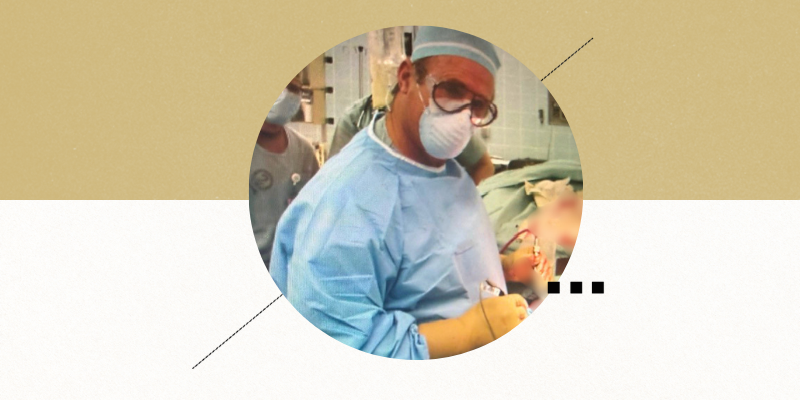
Bolles’ neurosurgical career was shaped by years of military service and global neurosurgery work in countries around the world. He claims to be the oldest neurosurgeon in Colorado, and he plans to continue sharing his wealth of knowledge and experiences for as long as possible.
Bolles had a rocky start to his education at the University of Michigan. His involvement in band, glee club, and fraternity life left little time for studying. Fortunately, an academic counselor helped get Bolles back on track and he was accepted to medical school at the University of Michigan after completing his undergraduate degree. During medical school, he spent his research year in immunology, developing an interest in prolonged organ transplants. His research then led him to CU Anschutz.
Bolles arrived at the CU Anschutz School of Medicine in 1963 for training in transplant and general surgery under Tom Starzl, MD. Shortly after arriving in Colorado, Bolles was drafted into the U.S. Army.
Following his military training, he was deployed to Germany where he served as division surgeon and division flight surgeon for the 8th infantry division. His special interest in evacuation policy led to a temporary duty assignment in Laos, a region that lacked substantial health care resources.
“I was part of a small group tasked with evaluating medical evacuation policies that were later applied more broadly during the Vietnam War,” Bolles says.
After completing his military service, Bolles returned to Colorado and pivoted from transplant surgery, accepting a position in the neurosurgical training program under Keesley Welch, MD.
During his time at the CU Anschutz School of Medicine in 1964, Bolles had the unique opportunity to apply his military training to coordinate a medical helicopter landing carrying Barry Corbett, a member of the first Everest expedition.
“I arranged a military helicopter evacuation that landed in the parking lot of the medical center on Ninth Avenue at night using car lights to surround a landing area,” Bolles says. “This was very likely the first such medical helicopter evacuation in the Denver area.”
Bolles completed his four-year neurosurgical residency, now a seven-year program, then went into private practice in Boulder for 32 years.
In 2001, Bolles was approached by military colleagues looking to fill the chief of neurosurgery position at Landstuhl Regional Medical Center in Germany. He accepted the position before tragedy rocked the U.S. on September 11. After the attack, Bolles hastened his travel plans, and within days of his Thanksgiving arrival, started receiving casualties in the operating room.
“The facility was not equipped with all that was needed for neurosurgery,” Bolles says. “There were a lot of basic instruments that we had to argue for.”
He served for three and a half years, seeing an average of 30-40 patients in clinic daily. A cervical spine disability ultimately made Bolles return home to the U.S.
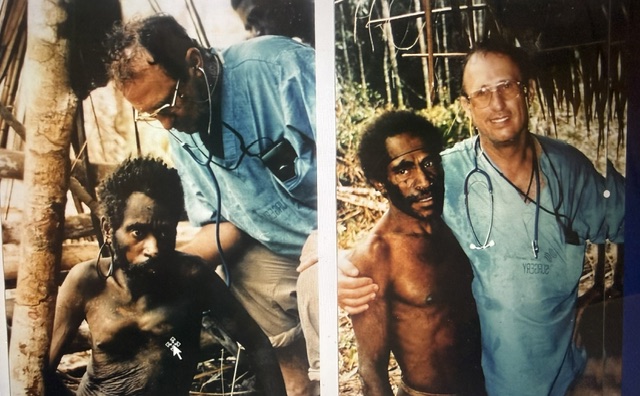
Throughout his military service and career as a neurosurgeon, Bolles was exposed to people from all over the world and developed a deep love for humanitarian work and global neurosurgery.
“If you want to get to know a foreign neurosurgeon, help them with a surgery,” Bolles says.
He spent time in Mexico and Cambodia, traveled annually to Belize in the 1980s and Albania in the 1990s. He also went on humanitarian missions to China, Ethiopia, and New Guinea.
“If you’re going to do this work, it’s important to develop some longevity,” says Bolles. “Some doctors go with the attitude, ‘We know it all we are the best,’ but there is a lot they can teach us.”
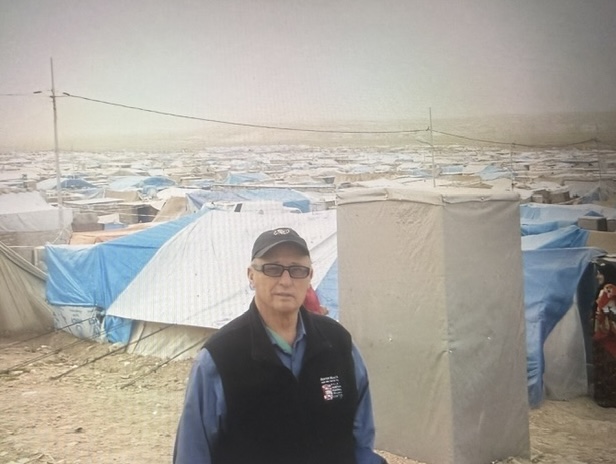
Bolles began traveling regularly to Kurdistan, Iraq, in 2006, a region he spent time in during his military service, working
with local neurosurgeons to improve care. He took CU neurosurgery residents on visits to the region long before the creation of the global neurosurgery program.
“I’ve taken residents to Kurdistan and the volumes of patients is almost unimaginable,” Bolles says. “We were swamped when we hit the door.”
Some current neurosurgery faculty members trained under Bolles, including Zach Folzenlogen, MD, and Daniel Craig, MD. Both accompanied Bolles on humanitarian trips. Timothy Ung, MD, worked with Bolles during his residency training and admires his dedication and passion for global neurosurgery.
“Dr. Bolles has long been a pillar of neurosurgery in Colorado, and his international work in global neurosurgery has profoundly impacted the lives of patients and neurosurgeons alike,” says Ung. “I feel fortunate to have worked with him during my training.”
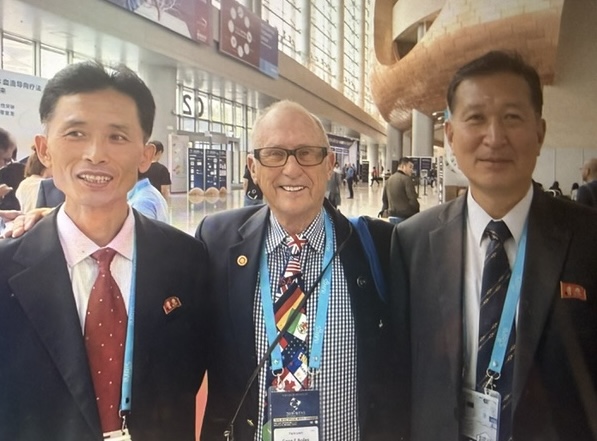
In addition to his humanitarian trips, Bolles served on the ethics committee and education committee for the World Federation of Neurosurgical Societies. He was also invited to the first North Korean symposium for neurosurgery.
“I hope his experiences and insights will continue to inspire and guide our generation of neurosurgeons,” Ung says. “As Dr. Bolles has said, ‘Global neurosurgery will move forward with or without us. I believe it is far better that we choose to be part of it.’”
In 2004, Bolles received a phone call from a colleague, Craig Rab, MD, requesting his help with trauma coverage at Denver Health. The short-term request for help evolved into a faculty position with the CU Anschutz School of Medicine. Bolles spent the last 15 years of his career teaching residents and caring for trauma and spine patients at Denver Health, CU Medicine, and the Rocky Mountain Region Veterans Hospital before retiring at age 80.
Bolles applied what he learned during his military service to his teaching. The large call volume and severe trauma cases seen in a military hospital combined with the limited resources found in the OR suites on his humanitarian trips, made him an excellent trauma and spine surgeon.
“I loved what I did,” Bolles says. “I liked taking call. It’s an adrenaline rush. You see a lot of things, and you get to help a lot of people.”
Bolles’ compassion and basic human decency make Bolles a surgeon that more physicians should strive to emulate
today. His humanity extends far beyond the bedside.
After decades of caring for patients around the world, he offers a unique perspective on patient care. His presentation slides show him smiling with patients around the world—in Army hospitals, palaces, and remote areas with indigenous groups of people. He is still in contact with some of his patients today.
Bolles encourages residents to understand the business side of their practice by studying the Medical Practice Act and looking at malpractice statistics to develop a better understanding of that area of medicine. But the one value he wants to impress on students and young physicians is the importance of caring for people. In the fast-paced world of medicine, driven by work RVUs and systemic pressures, physicians must be intentional with their efforts to connect with patients.
Above all else, Bolles wants neurosurgeons to understand the importance of establishing meaningful relationships with patients.
“We should still be a doctor first,” he says.
Bolles’ neurosurgical career was shaped by years of military service and global neurosurgery work in countries around the world. He claims to be the oldest neurosurgeon in Colorado, and he plans to continue sharing his wealth of knowledge and experiences for as long as possible.
Bolles had a rocky start to his education at the University of Michigan. His involvement in band, glee club, and fraternity life left little time for studying. Fortunately, an academic counselor helped get Bolles back on track and he was accepted to medical school at the University of Michigan after completing his undergraduate degree. During medical school, he spent his research year in immunology, developing an interest in prolonged organ transplants. His research then led him to CU Anschutz.
Bolles arrived at the CU Anschutz School of Medicine in 1963 for training in transplant and general surgery under Tom Starzl, MD. Shortly after arriving in Colorado, Bolles was drafted into the U.S. Army.
Following his military training, he was deployed to Germany where he served as division surgeon and division flight surgeon for the 8th infantry division. His special interest in evacuation policy led to a temporary duty assignment in Laos, a region that lacked substantial health care resources.
“I was part of a small group tasked with evaluating medical evacuation policies that were later applied more broadly during the Vietnam War,” Bolles says.
After completing his military service, Bolles returned to Colorado and pivoted from transplant surgery, accepting a position in the neurosurgical training program under Keesley Welch, MD.
During his time at the CU Anschutz School of Medicine in 1964, Bolles had the unique opportunity to apply his military training to coordinate a medical helicopter landing carrying Barry Corbett, a member of the first Everest expedition.
“I arranged a military helicopter evacuation that landed in the parking lot of the medical center on Ninth Avenue at night using car lights to surround a landing area,” Bolles says. “This was very likely the first such medical helicopter evacuation in the Denver area.”
Bolles completed his four-year neurosurgical residency, now a seven-year program, then went into private practice in Boulder for 32 years.
In 2001, Bolles was approached by military colleagues looking to fill the chief of neurosurgery position at Landstuhl Regional Medical Center in Germany. He accepted the position before tragedy rocked the U.S. on September 11. After the attack, Bolles hastened his travel plans, and within days of his Thanksgiving arrival, started receiving casualties in the operating room.
“The facility was not equipped with all that was needed for neurosurgery,” Bolles says. “There were a lot of basic instruments that we had to argue for.”
He served for three and a half years, seeing an average of 30-40 patients in clinic daily. A cervical spine disability ultimately made Bolles return home to the U.S.
Throughout his military service and career as a neurosurgeon, Bolles was exposed to people from all over the world and developed a deep love for humanitarian work and global neurosurgery.
“If you want to get to know a foreign neurosurgeon, help them with a surgery,” Bolles says.
He spent time in Mexico and Cambodia, traveled annually to Belize in the 1980s and Albania in the 1990s. He also went on humanitarian missions to China, Ethiopia, and New Guinea.
“If you’re going to do this work, it’s important to develop some longevity,” says Bolles. “Some doctors go with the attitude, ‘We know it all we are the best,’ but there is a lot they can teach us.”
Bolles began traveling regularly to Kurdistan, Iraq, in 2006, a region he spent time in during his military service, working
with local neurosurgeons to improve care. He took CU neurosurgery residents on visits to the region long before the creation of the global neurosurgery program.
“I’ve taken residents to Kurdistan and the volumes of patients is almost unimaginable,” Bolles says. “We were swamped when we hit the door.”
Some current neurosurgery faculty members trained under Bolles, including Zach Folzenlogen, MD, and Daniel Craig, MD. Both accompanied Bolles on humanitarian trips. Timothy Ung, MD, worked with Bolles during his residency training and admires his dedication and passion for global neurosurgery.
“Dr. Bolles has long been a pillar of neurosurgery in Colorado, and his international work in global neurosurgery has profoundly impacted the lives of patients and neurosurgeons alike,” says Ung. “I feel fortunate to have worked with him during my training.”
In addition to his humanitarian trips, Bolles served on the ethics committee and education committee for the World Federation of Neurosurgical Societies. He was also invited to the first North Korean symposium for neurosurgery.
“I hope his experiences and insights will continue to inspire and guide our generation of neurosurgeons,” Ung says. “As Dr. Bolles has said, ‘Global neurosurgery will move forward with or without us. I believe it is far better that we choose to be part of it.’”
In 2004, Bolles received a phone call from a colleague, Craig Rab, MD, requesting his help with trauma coverage at Denver Health. The short-term request for help evolved into a faculty position with the CU Anschutz School of Medicine. Bolles spent the last 15 years of his career teaching residents and caring for trauma and spine patients at Denver Health, CU Medicine, and the Rocky Mountain Region Veterans Hospital before retiring at age 80.
Bolles applied what he learned during his military service to his teaching. The large call volume and severe trauma cases seen in a military hospital combined with the limited resources found in the OR suites on his humanitarian trips, made him an excellent trauma and spine surgeon.
“I loved what I did,” Bolles says. “I liked taking call. It’s an adrenaline rush. You see a lot of things, and you get to help a lot of people.”
Bolles’ compassion and basic human decency make Bolles a surgeon that more physicians should strive to emulate
today. His humanity extends far beyond the bedside.
After decades of caring for patients around the world, he offers a unique perspective on patient care. His presentation slides show him smiling with patients around the world—in Army hospitals, palaces, and remote areas with indigenous groups of people. He is still in contact with some of his patients today.
Bolles encourages residents to understand the business side of their practice by studying the Medical Practice Act and looking at malpractice statistics to develop a better understanding of that area of medicine. But the one value he wants to impress on students and young physicians is the importance of caring for people. In the fast-paced world of medicine, driven by work RVUs and systemic pressures, physicians must be intentional with their efforts to connect with patients.
Above all else, Bolles wants neurosurgeons to understand the importance of establishing meaningful relationships with patients.
“We should still be a doctor first,” he says.