Cancer Prevention and Control


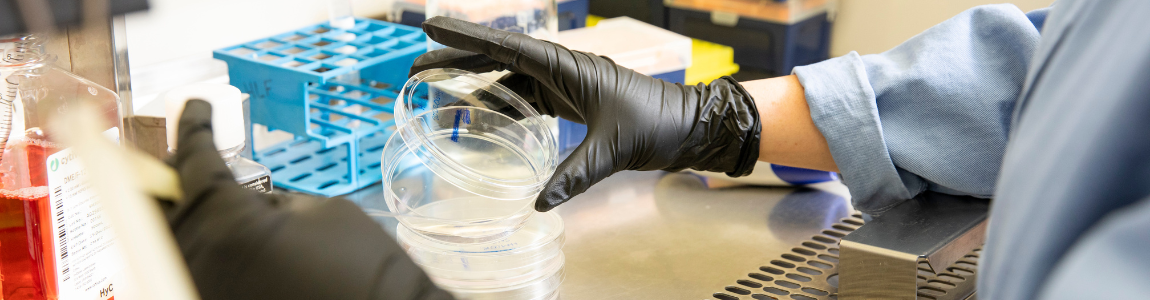
Research at the cancer center is led by internationally recognized scientists with strong federal support. These experts study how cancer develops at the cellular level, working closely with clinical researchers to turn discoveries from the lab into potential therapies, drugs and treatment approaches. New ideas are tested through clinical trials, where patients can access the latest advances in cancer care. This close partnership helps move promising strategies from the lab to real-world treatment faster and more effectively.
Our researchers work across four interdisciplinary programs designed to better understand and treat cancer. With more than 250 clinical trials available, cancer center patients often have access to new treatments before they become widely available. This strong connection between research and care drives innovation, giving us the opportunity to conquer cancer, together.
Cancer Prevention and Control
Tumor-Host Interactions
Molecular and Cellular Oncology
Developmental Therapeutics
Clinical trials at the cancer center help bring the latest advances in cancer care to patients by testing new treatments, therapies, and approaches. These carefully designed studies are the final step in a rigorous research process and are essential to developing safer, more effective ways to prevent, detect, and treat cancer.
The Cancer Research Training and Education Coordination (CRTEC) program supports the next generation of cancer researchers through training, mentorship, and funding opportunities. From organizing seminars and disseminating grants to offering supplemental support for innovation, CRTEC helps graduate, post-doctoral, and medical students build successful careers in cancer research. Each year, students join the Graduate Program in Cancer Biology to gain interdisciplinary training that bridges the lab and clinic in the fight against cancer.
Established in 1988, the CU Anschutz Cancer Center brings together more than 400 leading scientists and clinicians from across Colorado and the Rocky Mountain region. United by a shared mission, our members collaborate to uncover the fundamental mechanisms of cancer, develop new diagnostics, treatments and therapies, design and conduct clinical trials and advance cancer prevention and control efforts locally and globally.
