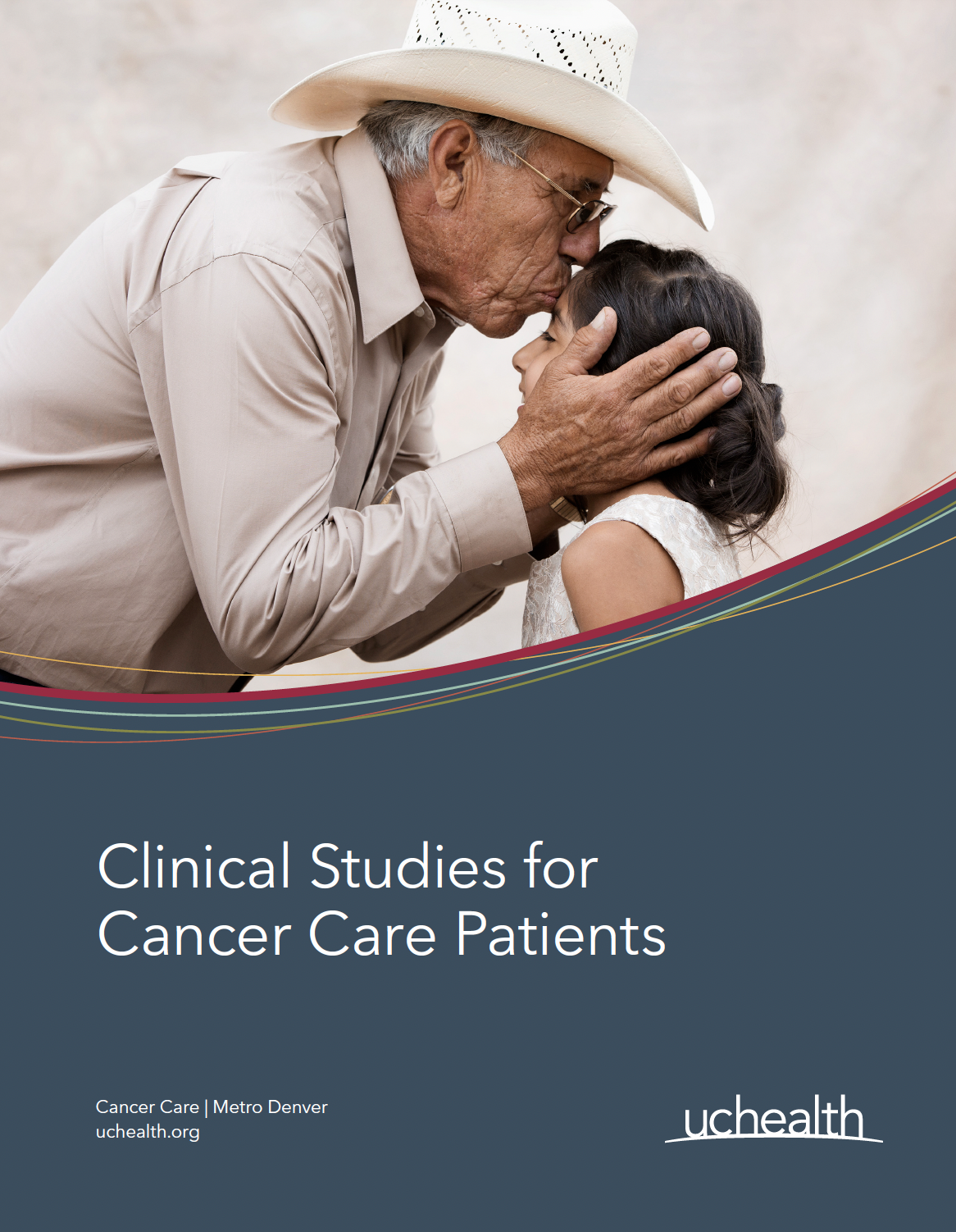
Find a Clinical Trial


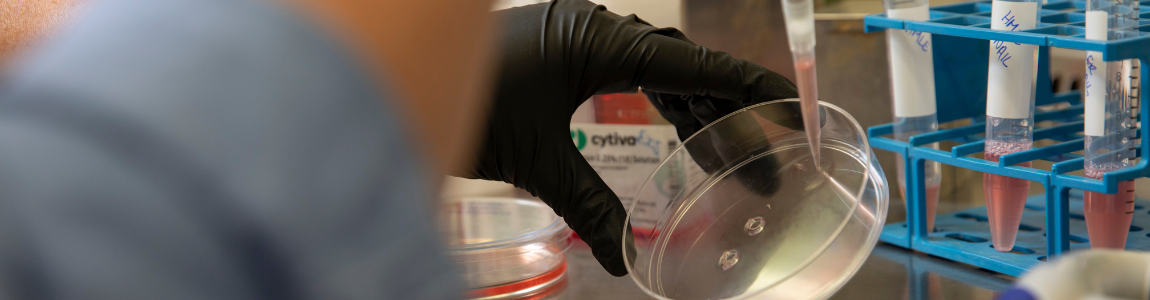
Find a Clinical Trial
Cancers We Treat
Contact UCHealth
Contact Children's Hospital CO
Clinical trials offer patients the most cutting-edge and promising treatments to treat and prevent cancer.
Many advances in medicine are the result of clinical trials — studies of new medications or treatments in humans before they are approved for widespread use.
Clinical trials are the final step in a years long process that begins with laboratory research and animal models. Many treatments used today are the result of past clinical trials. Clinical cancer trials are designed to answer questions about new treatments or new ways of using old treatments and how well they work. These trials may test drugs or vaccines, ways to perform surgery or deliver radiation therapy, or combinations of many treatments. A doctor may offer patients the option to join a clinical trial as part of their treatment plan.
A clinical research study, often known as a clinical trial, answers questions about new drugs for treating different diseases. Researchers use clinical studies to find out if new drugs are safe and effective. Studies are the fastest and safest way to find treatments that work. Researchers test new therapies in people only after lab or animal studies show safe and likely results. A study may include looking at a brand new drug that has not been used or has been used very little in patients. It may also look at combining 2 or more medicines that are well known, but using them together has not been done before. As researchers gain more experience with a new drug and make sure it’s effective, they conduct studies to compare it to the current standard treatment.
Clinical studies are made to protect the safety of patients who participate. There are strict rules that need to be followed by our research staff, doctors and patients to ensure the safety of the clinical study.
Clinical cancer trials follow very strict rules, called protocols, that are overseen by a governing scientific and ethical body. The protocol determines who can participate in the trial and help makes sure the trial is safe and has accurate and meaningful results. The protocol describes:
Clinical trials allow doctors and researchers to test treatments that will extend lives and even lead to cures for some forms of cancer. Some patients will benefit from some clinical trials. Other patients understand that their involvement contributes to helping future patients. In these essential tests, it is the bravery and hope of human patients that allows cancer science to truly reach its goal of providing new treatments.
It is important that people from all backgrounds participate in clinical trials. If a treatment is only tested in one type of person, doctors are unable to determine how the treatment works for all different types of people.
Clinical trials go through 3 phases before the FDA reviews the results. Based on these results, the FDA decides if they will approve the treatment. The FDA oversees medicines in the United States. There are different “phases” of clinical studies that a drug must pass through to become FDA approved.
Depending on how rare the cancer is, the number of patients in each phase might be smaller than the numbers shown here:
Phase I studies are the first time a drug is given to patients: They are done with small groups ofpatients (30 to 50) with different types of cancer to:Find out how much of and how often the drug should be given.
Phase II studies are done with larger groups of patients (60 to 150): All with the same type of cancer to:Find out if the new treatment works well enough to be tested in a larger number of patients.
Phase III studies compare new treatments with the current standard treatment in larger groups ofpatients (more than 500): All with the same kind of cancer to:Get information about how well a new drug works.
A drug can take more than 10 years to get through all these phases and receive FDA approval for use in cancer patients.
Investigator-initiated trials are “homegrown” ideas from researchers and investigators who are active in lab and clinical settings. The sponsor investigator of the trial is not only sponsoring the study but also conducting it. This means that they will be in charge of creating, coordinating, and carrying out the IIT. This may be done alone or with a team supporting the sponsor investigator.
Be sure you understand what happens during the study, the type of health care you will receive, any related costs, and the benefits and risks of participating.
A clinical trial is different from regular medical care. Unlike medical care, when you and your doctors make decisions about the goal of treating your disease or condition the best they can, research seeks to answer a research question. The researchers might not be able to treat you as they would if you were their patient.
In some studies, researchers need to compare healthy volunteers with people who have a specific disease or condition. Research with healthy volunteers is designed to develop new knowledge, not to provide direct benefit to study participants.
Don't be afraid to ask the research team for more information and talk with them about your concerns. It is their job to provide you with the information you need to make your decision.
Informed consent is where you learn about a clinical study before you decide if you want to take part. You will get the following information about the study:
You should take consent documents home to look over and talk with your family or friends before you sign them. They can help you decide if you want to do the study or not. Since this is a big decision, ask the clinical study staff any questions about the study and the consent forms before making your decision. You must sign a consent form before you can join a clinical study.
The clinical study team will give you any new information during and after your participation in the study. When there is new information about risks, benefits or test procedures, the consent form will be updated, and you will review and sign it again.
Taking part in the study is up to you. You can decide to stop being in the study at any time.
Patients who have a type of cancer that has no standard of care or the standard treatment is no longer working. Sometimes, your doctor might suggest doing a certain clinical study to be able to take a new drug that may look hopeful for your type of cancer, even if you still have standard treatments left to try. Other times, this decision is based on the tumor’s gene or protein pattern rather than the type of cancer itself.
There are different clinical trials available for various stages and types of cancer. Guidelines in each protocol are used to help decide who may enter the study. Some of the factors are:
We call the factors used to choose participants and have the lowest risk to patients the “Eligibility Criteria” for the study.
Patients should be aware that clinical trial enrollment may take place over months or years, but once the enrollment ends, new patients cannot join the trial.
Benefits may include:
Risks may include:
If you join a clinical study, your cancer may or may not get better. The results of the study may help other people in the future.
Can I leave the clinical study after it has started?
Yes, you may leave the study at any time for any reason.
Why am I being asked to give a tissue sample or to go through tumor or normal tissue biopsies?
Studying biopsies (from tumor or from normal tissue such as the skin) or blood samples studied in the lab can help find factors that decide if a patient will or will not respond to the study drug. A biopsy can be unpleasant, but the risks are often limited, and it can be important to move forward personalizing anti-cancer therapy.
What Types of Treatments are Offered for Studies?
The types of treatments offered in clinical studies vary widely and change over time as cancer research advances. Clinical studies are done to learn more about different treatments like:
How do I enroll in a study?
During your first visit to discuss treatment options with a doctor, you may receive 1 or more consent forms explaining the details of the clinical studies.
The study team will give you other information to think about before you decide to take part in a clinical study. This includes the:
Consent form:
No research procedures will be performed until you sign a consent form.
If you sign a consent form and decide to join a study, the study team will schedule the appointments needed to start the part of the study called “screening.” Screening makes sure the study will not put you at greater risk of harm than benefit, related to treatment. The screening period often includes:
Scans:
If a study requires scans, you may be required to get a new scan to assess your cancer. Studies usually do not accept scans that are older than 28 days. However, some studies, such as certain prevention and survivorship studies, do not require scans at all. Examples of scans that may be needed are:
Most of the time, you will have the same type of scan that you have had in the past to find and assess your cancer. The study staff will help schedule the needed scan appointment(s) and any other required tests. There are some studies that do not require scans, such as some prevention and survivorship studies.
Screening appointment:
During your screening appointment, you will meet with a clinical research coordinator (CRC). The clinical research coordinator will help you during your time in the study and will help with future appointments and scheduling. Clinical research coordinators are also great resources for questions you may have and will work closely with you and the medical staff to coordinate your care.
At your screening visit you will review the study visits and schedule.
You will also get the contact information of your clinical research coordinator so that you can easily get in touch with them. Screening appointments may take place over several days. This means getting started on a study will take more time than starting standard treatments due to the screening needed for safety.
Where will I go for treatment?
There are several areas on the Anschutz Medical Campus where patients get their treatments. Studies sometimes use more than 1 place for treatment based on what is being done on that day. Your clinical research coordinator will share where your treatment will be on a certain day.
UCHealth Outpatient Infusion Clinic – Anschutz Campus:
Most intravenous (IV) therapies are given at this clinic:
Research treatment room (RTR):
Many study treatments use drugs taken by mouth, which you take on an outpatient basis. On most days when pharmacokinetic blood draws happen for these studies, you will go to the research treatment room (RTR) in the UCHealth Outpatient Infusion Clinic. If the RTR is unavailable, you may be seen in the inpatient CTRC on the 12th floor of the hospital (Anschutz Inpatient Pavilion). Anything needed after the outpatient clinic closes will be done at the inpatient CTRC located on the 12th floor of the main hospital (Anschutz Inpatient Pavilion).
Inpatient 11th floor cancer care unit (Anschutz Inpatient Pavilion):
For some studies, you may need to be watched closely overnight or need greater resources than are available on an outpatient basis The inpatient 11th floor cancer care unit has the resources to respond to acute medical needs related to new, complex therapies.
Inpatient clinical translational research center (Anschutz Inpatient Pavilion):
For some studies you may need a longer study assessment collection period or a private room. These studies of either IV or medicines taken by mouth are done on the 12th floor of the hospital in the CTRC. This is a 24-hour unit, fully staffed by medical personnel. Any study visits needed on the weekend, holidays or after clinic hours are also done here.
Other clinical study sites:
We also conduct studies at:
The study team will tell you if being in a clinical trial at one of these sites is an option for you.
Is a phase II or phase III study better than a phase I clinical study?
The phase of the study does not tell you if the drug will work to treat your disease or not. It does show how much experience there has been with the drug. Clinical studies may find an active drug for your disease at any of the study phases.
Since less is known about the drug in phase 1 studies, these studies often need more intensive patient monitoring with frequent clinic appointments and labs. These studies can often enroll patients with varied types of cancers and patients who have received several types of treatment in the past. This can help patients gain access to drugs they might not otherwise be able to get when the drug gets to phase II or III.
Phase II and III studies look at how well a drug works against one type of cancer. Your doctor will usually check if there are any studies you qualify for before referring you to a phase I study. However, phase II and III studies tend to be stricter, often requiring patients to have a certain kind of cancer and sometimes limiting the number of previous treatments to one or none.
Will I get a treatment that has no medical effect (placebo)?
A placebo is a pill or a liquid that looks like medicine but is not real. It will have no medical effect on you. In phase I studies, all patients get the drug(s) being studied. Placebos are often used in some parts of a phase II or III study.
Only a small number of studies use a placebo and if you enroll in a phase II or phase III study there is a chance you could be assigned to take a placebo. You will be told that the study uses a placebo and what the chances are that you will be assigned to take a placebo. You can decide not to participate in a study that uses a placebo.
Some studies will be blinded. This means you may not know which treatment group you are in. Neither will your study doctor. You will be told if a study is blinded when you review the consent form. You can decide not to be in a study that is blinded.
What will be my time commitment if I am in a clinical study?
Schedules and time commitments vary from study to study and should guide your decision to take part. Most studies require at least weekly visits for labs and examinations. Some studies require as often as daily visits in the first week or two.
Many studies require you to spend several hours at our facilities on the day you get your first dose of the drug. For some studies, these visits can last 8 to 12 hours due to the number of blood samples after you take the study medicine. Long study visit days may happen throughout the study depending on the protocol. Studies may also need other procedures to assess safety and how well the treatment is working (e.g., eye exam, biopsy). These will require extra visits in addition to those specific to the study treatment.
These visits for exams and labs are very important for your safety and for the study’s success. After the first 2 or 3 cycles, the schedule becomes less intense for some studies. Others may still need weekly or more frequent visits throughout the course of treatment. The schedule will be described in the study consent form and will also be reviewed in detail at your screening visit. This way, you will know what to expect.
How long will I take part in the trial?
Typically, a patient will keep getting the study drug as long as it is working to control the disease and is being handled without any serious side effects. You will have regular scans or other tests to see if your disease is getting worse. You will be taken off study if the drug is not controlling the cancer. You will also be taken off the study at any time if your doctor feels that it is no longer safe for you or you are having intolerable side effects. You can also choose to stop being in the study at any time.
What are pharmacokinetic samples (PKs) and pharmacodynamic samples (PD)?
PKs and PDs are blood or urine samples that we collect during the course of your treatment. These samples give us information on:
Many early phase studies require 1 or more days when you will need to stay at the Cancer Center for 8 to 12 hours after getting a dose of the study drug. This is so we can collect blood and/or urine samples. This information will be in your consent and will also be reviewed at your screening visit.
What do I tell the advanced practice provider or doctor during my clinic appointments?
Share any changes you have noticed since your last visit, including anything that you think is different, unusual or may be a side effect of the study drug. For example, let us know about changes in your energy level, any problems with appetite, new rashes, etc. It is a good idea to keep a journal or diary to help you remember when new symptoms happen or start and what you were doing at the time. Talk to your doctor before making any changes in your medicines.
When will I see my study doctor?
You will see your regular clinical study doctor about once a month and each time you have a tumor scan to measure your disease and your response to treatment. Even if you are not scheduled to see your doctor, you may always ask if they are available.
What do I do if I have side effects of the treatment?
You should contact the clinic nursing team by phone or through MyHealth Connection. If it is an emergency or after hours, you should go to the emergency department.
How much will it cost me to participate in a study?
All of our studies are designed so that the research costs are billed to the sponsor of the study. These costs may include extra blood draws, visits required only for research purposes and the study drugs themselves. Your regular insurance will be billed for standard of care items. Standard of care items include anything that you might need for your regular cancer care, regardless of whether you are receiving study or non-study treatment. These could include scans to check your tumors, monthly doctor visits and routine labs.
If you are making copayments, these will continue. There may also be other out-of-pocket expenses (transportation, meals and housing) while taking part in the study. We will work with you to lessen such costs when we can. If you receive unusual bills or have concerns, share them with your clinical research coordinator (CRC) as soon as possible. This allows us to work quickly with our insurance specialists and study budget managers to fix these issues.
Will I still see my referring cancer care doctor (oncologist)?
If you are referred to UCHealth for a clinical trial, your study oncologist will make sure that your referring oncologist receives your clinic visit notes. This will help keep them up to date on your progress. You may see your referring oncologist and your study oncologist as often as you would like.
During a clinical study, your study oncologist will typically make most decisions related to your cancer treatment. We ask that you do not pursue 2 separate treatment paths at the same time without discussing it with your study oncologist first. Other medicines or treatments may interfere with either the study treatment directly or affect your eligibility for entering or staying in the study. We view our group an integral part of the team involved in your cancer care, working together to support you.
The following resources are available through the University of Colorado Anschutz Cancer Center:
If you would like to use any of the above resources, tell your study coordinator or health care provider and they will help you access them.
| Clinic | Clinic Phone Number |
| Brain Cancer Clinic | 720-848-9264 |
| Breast Oncology Clinic | 720-848-1030 |
| Gastroenterology Oncology Clinic & Scheduling | 720-848-3532 |
| Genitourinary Oncology Clinic | 720-848-0170 |
| Gynecologic Oncology Clinic and Scheduling | 720-848-9264 |
| Head & Neck Oncology Clinic | 720-848-3532 |
| Hematology | 720-848-0628 |
| Melanoma/Mohs Oncology Clinic & Scheduling | 720-848-0590 |
| Radiation Oncology Clinic | 720-848-0293 |
| Thoracic Oncology | 720-848-9264 |
CU Anschutz
Fitzsimons Building
13001 East 17th Place
Aurora, CO 80045
720-848-0300