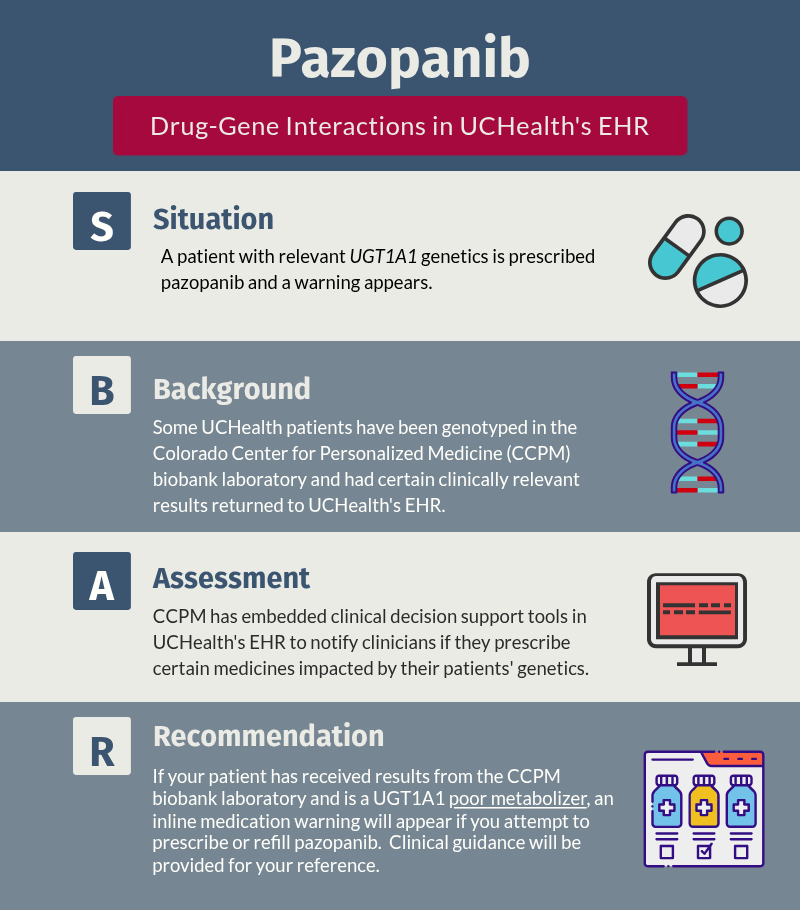
Click below to learn more about the use of UGT1A1 genetics in the prescribing of pazopanib.
Pazopanib inhibits the protein, UGT1A1, which prevents the liver from effectively processing and eliminating bilirubin
Across populations, UGT1A1 protein alleles can have different genetic variants that impact UGT1A1 activity. The different alleles can produce three different metabolism phenotypes: normal, intermediate, and poor metabolizers. Of these, patients with the poor metabolizer phenotype may be more likely to develop high bilirubin levels (hyperbilirubinemia) when administered pazopanib.
The FDA label states that UGT1A1 poor metabolizers may have an increased risk of hyperbilirubinemia if prescribed pazopanib.
At UCHealth the use of pharmacogenetics when prescribing pazopanib will occur in patients who meet the following conditions:
Provided a blood or saliva sample to the CCPM biobank, consented for the return of their results, and this sample has undergone genotyping OR the patient is being seen in a clinic which is currently using pharmacogenetic testing as part of standard care (e.g., the UCHealth GI Oncology Clinic).
Are prescribed pazopanib.
For patients enrolled in the biobank, this process takes a minimum of 4-6 weeks but may take several years. Therefore, results will not be available at initial presentation if a patient has not previously enrolled in the biobank.
If you are a provider AND your patient is a UGT1A1 poor metabolizer, an inline medication warning will warn you if you attempt to prescribe pazopanib in UCHealth's EHR. This warning will fire in both the inpatient and ambulatory settings and recommends increased monitoring for adverse effects when using pazopanib in these patients. There is patient education text available for UCHealth providers to use in discharge paperwork or the after-visit summary (AVS).
Visit our Provider FAQs page here. For immediate questions, secure chat Groups: Pharmacogenomics Service in UCHealth's EHR.


 Request an edit to this webpage here.