

 Who will receive results?
The biobank may not have results for all participants. Participants who have consented to receive results and whose sample has been collected and processed might receive results from the biobank depending on the findings.
 When will I receive results?
Research can take a long time. Results may not be returned for several months, or even years, after joining the biobank.
 How do I know if I have results?
If you have results, you will get a notification through your UCHealth My Health Connection (MHC) patient portal, through email and/or you will receive a phone call from biobank staff.
Follow these instructions to find your results. If you do not have results available, it might be because you have not signed the correct consent form or have not yet donated a sample to the biobank.
If you have received results from the biobank, they will be in your UCHealth My Health Connection (MHC) patient portal.
Please note: For some results, the date listed with your results reflects when your sample was collected. This might have been 3 to 5 years ago.
1. Log into My Health Connection
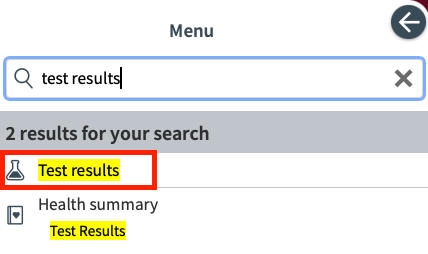
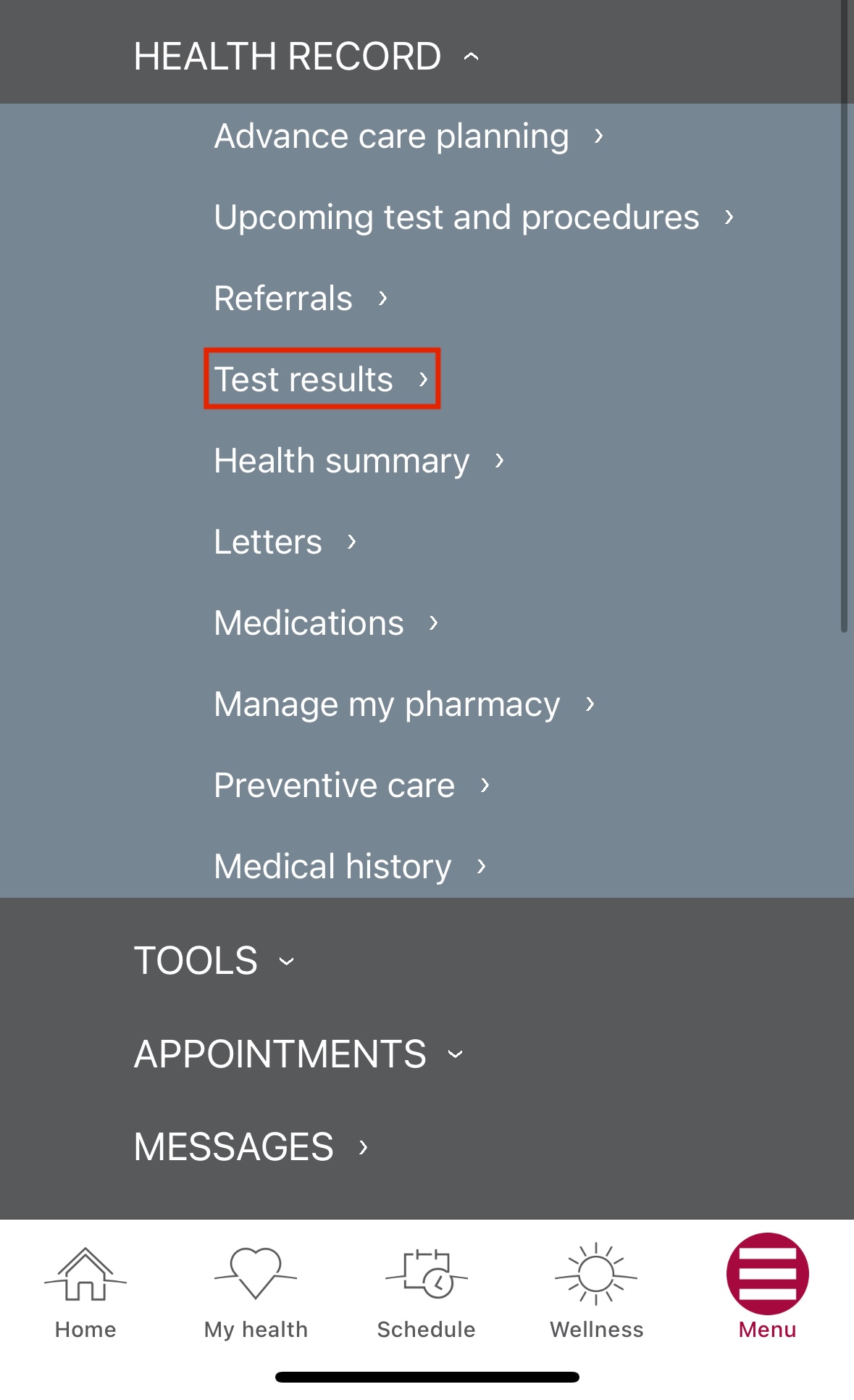
2. Go to "Test Results"
On a desktop (within a browser) | On a phone or table (within the My Health Connection app) |
Search for "Test Results in the menu (3 horizontal bars | Find "Test Results" in the menu (3 horizontal bars  ) under the "Health Record" section ) under the "Health Record" section |
 |  |
3. Search "biobank" to find your results
Reach out to your primary care provider for help understanding what your biobank results mean for you. We also have clinical pharmacists on staff who can help you understand what your pharmacogenetic results mean. These results explain how your genetics affect your response to certain medicines. These consultation calls are free and are not billed to your insurance.
Please reach out if you have already reviewed your results with biobank staff and have further questions.
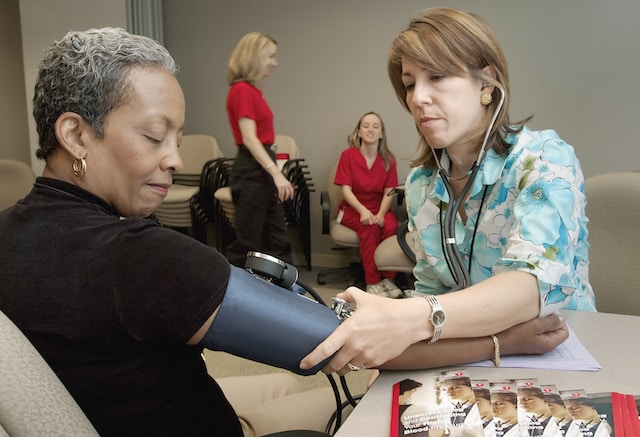
The biobank is currently returning pharmacogenetic (drug gene) and disease risk results to some participants.
Results that may give you information on how you might respond to certain medicines.
.png?sfvrsn=4e79f0b4_0)
DNA holds your genetic code. Differences in your DNA can change how your body handles certain medicines. This is called pharmacogenetics (FAR-mah-coh-je-NEH-tiks).
.png?sfvrsn=1d79f0b4_0)
Results that might predict your risk for some diseases, including some types of cancer, heart disease and other rare genetic diseases.
Only 2 to 3 people out of 100 who take part in the biobank are expected to have a variant (also called a mutation) in their genes linked to a higher risk for developing certain diseases. These genetic variants may cause a higher-than-average risk for cancer, a heart condition or a rare genetic condition.
Genetic testing can find those who have a higher risk for cancer based on inherited genetic variants (also called mutations). This information can help guide early detection, cancer prevention and be a tool to understand who else in the family might have a higher-than-average risk for cancer.
In some cases, heart disease can be due to inherited genetic variants (also called mutations). Some of these conditions can cause sudden cardiac arrest, arrhythmias or heart failure. This information can help guide early detection, give providers information to manage patient care and be a tool to understand who else in the family might have a higher-than-average risk for heart disease.
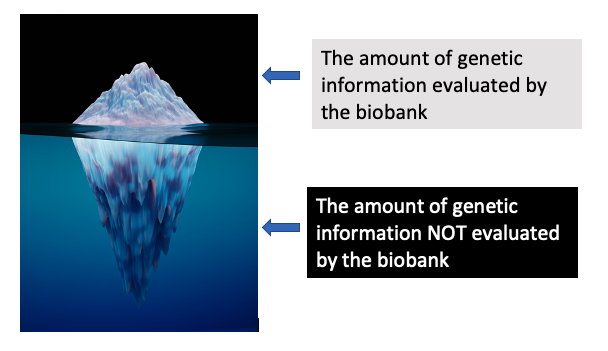
The biobank will look for a few rare genes that are not linked to cancer or cardiac health but could impact your health and how your doctor manages your care. It can also be a tool to understand who else in the family may have a higher-than-average risk for genetic disease. However, most rare genetic conditions are not included in biobank testing. Note: the biobank test does not look for all genetic variants (also called mutations) in these genes.
CU Anschutz
Anschutz Health Sciences Building
1890 N Revere Ct
Mailstop F563
Aurora, CO 80045