109 publications in 2025


109 publications in 2025
26 Operative Neurosurgery Faculty
More than 5,000 OR cases per year
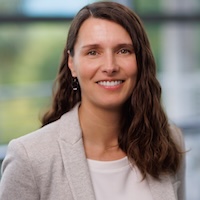
Demonstrating a deep commitment to combating malignant brain tumors, the University of Colorado Anschutz School of Medicine is continuing to expand its research faculty to focus on some of the most challenging cancers, welcoming experts like Michalina Janiszewska, PhD, from the University of Florida.
Glioblastoma (GBM) is a highly aggressive, treatment-resistant, grade 4 brain tumor with a median survival rate of just 15 months. GBM is known as one of the deadliest cancers and is the most common malignant adult brain tumor, yet the standard of care remains unchanged since 2005 due to the tumor’s complexity.
Janiszewska hopes to change that through the exploration of more targeted and adaptive treatments for GBM.
GBM treatment includes a multidisciplinary approach, with surgery to remove the tumor, followed by chemotherapy and/or radiotherapy. For years, the complexity of the tumor and the grim prognosis for patients have attracted scientists from around the world, including Janiszewska.
Originally from Poland, Janiszewska studied cancer biology and stem cells with a focus on GBM. “The complexity is what drew me to the field, and I never wanted to leave,” she says.
Janiszewska was captivated by the volume of patients showing up to clinics only to find out nothing could be done due to a late GBM diagnosis. “It is very difficult to catch these tumors early, so we really need something drastic as an intervention to be able to remove them.”
Current chemotherapeutics for GBM do not kill all the tumor cells, resulting in a new tumor that is resistant to treatment. Surgical removal of the entire tumor is extremely challenging since GBM cells often migrate deep into the brain tissue.
Janiszewska's research looks to understand how different cell types interact with one another. She explains that understanding the different cell populations could be important to understanding drug resistance. She also examines how distinct cell populations localize within tumor tissue, focusing on their specific positioning near blood vessels and other structures, as well as their interactions with healthy brain cells. Discovering new vulnerabilities within these cells may lead to more targeted treatments for GBM, rather than relying solely on traditional surgery, radiation, and chemotherapy.
Her lab will continue to explore heterogeneity — the diversity and variation in the characteristics among tumor cells. This knowledge can then guide targeted therapies used to overcome resistance to standard-of-care treatment by focusing on molecular drivers.
“My hope is that we can use the results of our research to understand the composition of the tumor tissue, which cells are interacting with each other and suppressing the immune system, and find better ways to collapse this complex mixture of cells,” Janiszewska says.
Her research also looks to understand how different cell populations fare better or worse during treatment. “We work to identify some of the populations that can be more vulnerable to drug interventions to target these cells to help with developing new treatments to be combined with the standard of care for improved patient outcomes,” Janiszewska says.
With such a grim prognosis, many patients and their families look to join clinical trials, hoping their involvement will lead to improved treatment options for future GBM patients and an extended life expectancy. Janiszewska hopes that research findings in her lab will lead to a clinical trial.
Brain tumor research is a team sport. Researchers around the globe conduct research on different aspects of malignant brain tumors, hoping their discoveries will lead to a cure. According to the National Brain Tumor Society, brain tumor research received over $500 million in National Institutes of Health funding in 2005, yet many advocates argue that brain tumor research remains underfunded when compared to other cancers.
A robust research campus with multiple labs dedicated to cancer research is a dream for Janiszewska. “I’m thinking about how I can impact the standard of care, and that is difficult to do in isolation. I was excited about CU Anschutz because of its mission to bring researchers and clinicians together,” she says. “People working on the same disease I do is a huge plus. You have researchers studying different aspects of it and coming at it from different angles.”
Janiszewska plans to weave the mathematical modeling and systems biology approaches used by researchers at the CU Anschutz Cancer Center into her lab work, and she intends to collaborate with the Fecci Lab, noting their strong research in CAR T-cell therapies. She is excited by the prospect of working with Alice Soragni, PhD, a national leader in developing improved models for rare and hard-to-treat cancers.
Janiszewska highlights the importance of collaboration with clinicians: “As researchers, we are deep in basic science and too far away from the actual human,” she explains. “Clinicians guide us on the work that is worth pursuing.”
Demonstrating a deep commitment to combating malignant brain tumors, the University of Colorado Anschutz School of Medicine is continuing to expand its research faculty to focus on some of the most challenging cancers, welcoming experts like Michalina Janiszewska, PhD, from the University of Florida.
Glioblastoma (GBM) is a highly aggressive, treatment-resistant, grade 4 brain tumor with a median survival rate of just 15 months. GBM is known as one of the deadliest cancers and is the most common malignant adult brain tumor, yet the standard of care remains unchanged since 2005 due to the tumor’s complexity.
Janiszewska hopes to change that through the exploration of more targeted and adaptive treatments for GBM.
GBM treatment includes a multidisciplinary approach, with surgery to remove the tumor, followed by chemotherapy and/or radiotherapy. For years, the complexity of the tumor and the grim prognosis for patients have attracted scientists from around the world, including Janiszewska.
Originally from Poland, Janiszewska studied cancer biology and stem cells with a focus on GBM. “The complexity is what drew me to the field, and I never wanted to leave,” she says.
Janiszewska was captivated by the volume of patients showing up to clinics only to find out nothing could be done due to a late GBM diagnosis. “It is very difficult to catch these tumors early, so we really need something drastic as an intervention to be able to remove them.”
Current chemotherapeutics for GBM do not kill all the tumor cells, resulting in a new tumor that is resistant to treatment. Surgical removal of the entire tumor is extremely challenging since GBM cells often migrate deep into the brain tissue.
Janiszewska's research looks to understand how different cell types interact with one another. She explains that understanding the different cell populations could be important to understanding drug resistance. She also examines how distinct cell populations localize within tumor tissue, focusing on their specific positioning near blood vessels and other structures, as well as their interactions with healthy brain cells. Discovering new vulnerabilities within these cells may lead to more targeted treatments for GBM, rather than relying solely on traditional surgery, radiation, and chemotherapy.
Her lab will continue to explore heterogeneity — the diversity and variation in the characteristics among tumor cells. This knowledge can then guide targeted therapies used to overcome resistance to standard-of-care treatment by focusing on molecular drivers.
“My hope is that we can use the results of our research to understand the composition of the tumor tissue, which cells are interacting with each other and suppressing the immune system, and find better ways to collapse this complex mixture of cells,” Janiszewska says.
Her research also looks to understand how different cell populations fare better or worse during treatment. “We work to identify some of the populations that can be more vulnerable to drug interventions to target these cells to help with developing new treatments to be combined with the standard of care for improved patient outcomes,” Janiszewska says.
With such a grim prognosis, many patients and their families look to join clinical trials, hoping their involvement will lead to improved treatment options for future GBM patients and an extended life expectancy. Janiszewska hopes that research findings in her lab will lead to a clinical trial.
Brain tumor research is a team sport. Researchers around the globe conduct research on different aspects of malignant brain tumors, hoping their discoveries will lead to a cure. According to the National Brain Tumor Society, brain tumor research received over $500 million in National Institutes of Health funding in 2005, yet many advocates argue that brain tumor research remains underfunded when compared to other cancers.
A robust research campus with multiple labs dedicated to cancer research is a dream for Janiszewska. “I’m thinking about how I can impact the standard of care, and that is difficult to do in isolation. I was excited about CU Anschutz because of its mission to bring researchers and clinicians together,” she says. “People working on the same disease I do is a huge plus. You have researchers studying different aspects of it and coming at it from different angles.”
Janiszewska plans to weave the mathematical modeling and systems biology approaches used by researchers at the CU Anschutz Cancer Center into her lab work, and she intends to collaborate with the Fecci Lab, noting their strong research in CAR T-cell therapies. She is excited by the prospect of working with Alice Soragni, PhD, a national leader in developing improved models for rare and hard-to-treat cancers.
Janiszewska highlights the importance of collaboration with clinicians: “As researchers, we are deep in basic science and too far away from the actual human,” she explains. “Clinicians guide us on the work that is worth pursuing.”