

The CU Diabetes Fellowship is a one-year program at CU Anschutz, a renowned academic medical center, with training at the Barbara Davis Center for Diabetes, University of Colorado Outpatient Clinics and Hospital, Anschutz Health and Wellness Center, and The Rocky Mountain Regional VA Medical Center.

The fellowship trains physicians who have a primary care background (Family Medicine, Internal Medicine, Medicine-Pediatrics) to become diabetologists, through outstanding clinical training in the outpatient setting: intensive experience in advanced diabetes technologies, comprehensive evaluation and management of diabetes (types 1, 2, pregnancy, other types), diabetes complications, and its comorbidities, and experience in the inpatient setting with the Glucose Management Team.
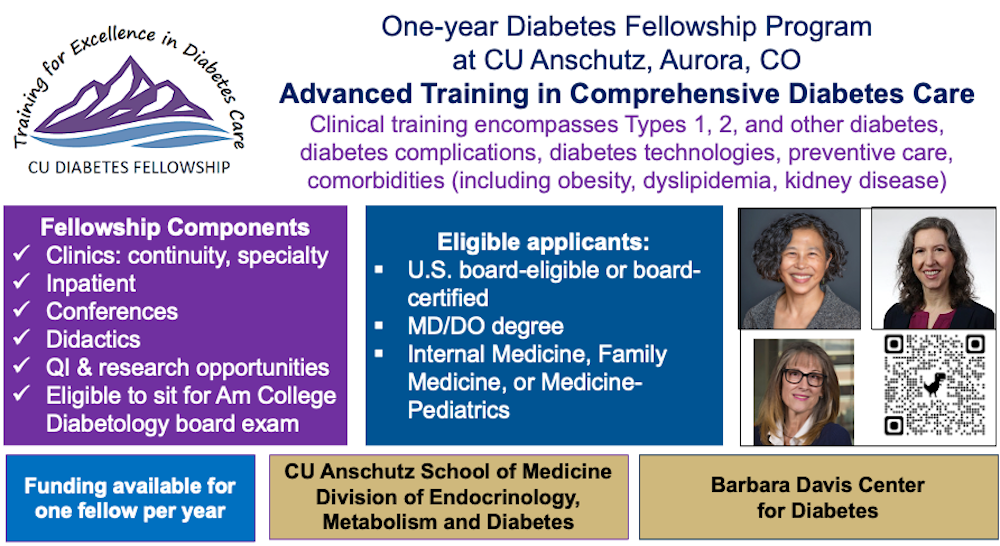
The CU Diabetes Fellowship Program enrolled its first fellow in 2020. It was established with the overarching goal of training highly-motivated physicians in the care of patients with all types of diabetes, diabetes complications, preventive care, and associated comorbidities, including obesity, cardio-kidney-metabolic, and lipid disorders. Fellows train mostly in the outpatient setting with some inpatient experience, using evidence-based practice, and gaining expertise through patient care while working closely with key faculty, and through didactics, conferences, and journal clubs.
Fellows participate in a scholarly project (quality improvement and/or clinical research) and gain knowledge in relevant research to develop optimal evaluation, management and follow-up plans for patients with diabetes referred to our academic center.
Fellows attend the American College of Diabetology Annual Conference, the Practical Ways to Achieve Targets in Diabetes Care Conference, and the American Diabetes Association Scientific Sessions as part of their fellowship training. The fellowship provides a balanced and structured experience in the fundamentals as well as advanced specialized management of diabetes, including use of diabetes technologies in diverse clinical settings and patient populations.