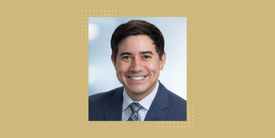
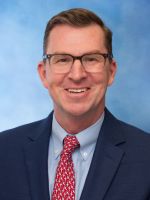
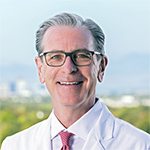
 I am delighted to announce that Michael Englesbe, MD, will be joining CU Anschutz School of Medicine as Chair of Surgery on November 1.
Dr. Englesbe is one of the nation’s leading transplant surgeons and an authority on building effective clinical programs, improving hospital quality and safety, and reforming training environments. He is joining us from the University of Michigan where he is Professor of Surgery and Chief of Transplant Surgery. He’s been on the Michigan faculty since 2004.
As I highlighted in our school’s announcement, Dr. Englesbe has all the traits we are looking for in a leader on our campus: rigor, operational excellence, and a strategic mindset. And there’s more! He’s a widely respected colleague with a passionate commitment to all aspects of our mission. He’s pledged to deliver exceptional clinical care, produce impactful scholarship, and train future surgical leaders.
Dr. Englesbe’s bold vision is to build a Top 10 research program, host the best surgical training programs in the country, and establish the department as a clinical leader for the institution and the communities it serves. We are 100% aligned on those goals and can’t wait for him to join the team!
We were able to recruit him here because of our strong partnerships with UCHealth and Children’s Hospital Colorado, and we thank them for their support in this critical recruitment. Also, I would like to thank Robert McIntyre, Jr., MD, for his steadfast leadership as interim Chair of Surgery and Naresh Mandava, MD, Chair of Ophthalmology and Senior Associate Dean for Strategic Advancement, and his fellow members of the chair search committee, for the dedicated service to our school.
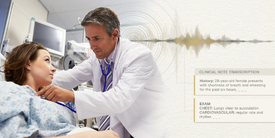
Last week, we celebrated the creation of the nation’s first academic Division of Transplant Medicine within a Department of Medicine, bringing transplant specialists together in a new academic model designed to strengthen patient care, accelerate discovery, and train the next generation of transplant clinicians.
Transplant medicine encompasses multidisciplinary care and expertise before, during, and after organ transplantation, as well as research aimed at improving transplantation and the long-term health of transplant recipients.
Based in the Department of Medicine and working in close partnership with UCHealth University of Colorado Hospital and the Division of Transplant Surgery, the new division will bring together faculty members focused on lung, liver, and kidney transplantation. The Division of Transplant Medicine will work closely with transplant specialists in infectious diseases, cardiology, endocrinology, psychiatry, and other fields.
“CU Anschutz is creating a new model for transplant medicine that brings specialists together around the patient rather than organizing them primarily by organ or traditional medical specialty,” said Vineet Chopra, MD, MSc, Executive Vice Dean for Clinical, Research, and Quality and Chair of Medicine.
Transplant specialists in academic medicine are traditionally based in separate fields, such as nephrology for kidney transplantation, hepatology for liver transplantation, and pulmonology for lung transplantation. The new division creates a shared academic home where experts can collaborate across transplant programs, apply insights from one area to another, and address challenges that affect transplant patients regardless of the organ involved.
We are excited to lead the way with an integrated approach to transplant care and become a model transplant center for the nation!
Last week, I was pleased to join Chancellor Don Elliman and Kimberly Muller, MSc, JD, Vice Chancellor for Innovation and Biotechnology, Executive Director, CU Anschutz Innovations, in calling attention to an important resource that gives our campus a competitive edge: RefinedScience.
RefinedScience is a Colorado-based company with the goal of improving drug discovery and development by helping researchers make more informed decisions by connecting real-world patient data with cutting-edge biological research.
RefinedScience’s first-ever data set focused on acute myeloid leukemia (AML). Adjoint Professor Clay Smith, MD, and Professor Craig Jordan, PhD, spearheaded that effort. Brett Atwood, president of RefinedScience, says when Dr. Smith first introduced him to the concept of cell multi-omic sequencing, the idea immediately piqued his team’s interest.
“We loved the idea, and we co-invested with the university to build up that first AML data set,” says Atwood. “From a data set perspective, we get a very high-resolution look at a patient's tumor or disease, and we can separate that out at the single-cell level.”
Now, growing numbers of researchers at the University of Colorado Anschutz are taking advantage of a powerful tool that lets them comprehensively study cellular disease processes in body tissue samples.
RefinedScience, a company created by CU Anschutz Innovations and UCHealth, provides a unique platform that integrates biobank tissue samples with patients’ clinical records, AI analysis tools, and expertise from the university’s accomplished faculty. So far, the company has focused primarily on studying cancer and autoimmune conditions, but officials said it could expand to other disease types. All clinical patient data is secure and compliant with applicable regulatory, privacy, and ethical standards.
Technicians start by pulling samples of tissue from campus tissue banks and matching it with clinical data in the RefinedScience lab. The tissue sample data is then matched one-to-one with clinical data to create versatile, multi-omic data sets for researchers.
Integrating the tissue samples and clinical data in this way helps researchers in the CU Anschutz School of Medicine and elsewhere on campus discover new drug targets, identify biomarkers, test potential drugs, and improve designs of clinical trials.
This is an engine for our future growth, and I want to encourage all our clinicians and researchers to learn more about RefinedScience by reading this excellent article in the School of Medicine newsroom.
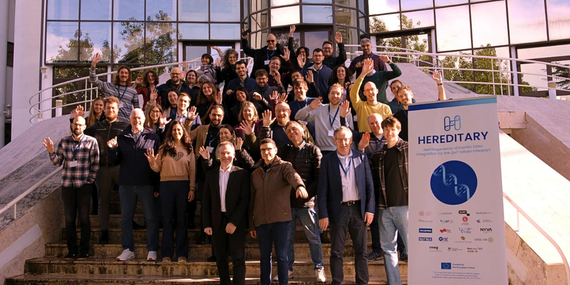
The Heterogeneous Semantic Data Integration for the Gut-Brain Interplay (HEREDITARY), a multi-year effort funded by the European Union (EU) under the Horizon Europe program (GA 101137074), aims to uncover how AI may improve the prevention, detection, and treatment of neurodegenerative diseases and conditions related to the gut microbiome.
CU Anschutz is the only U.S. partner involved in HEREDITARY. School of Medicine researcher Jayashree Kalpathy-Cramer, PhD, Chief of the CU Anschutz Division of Artificial Medical Intelligence in Ophthalmology, in collaboration with data scientist Giacomo Nebbia, PhD, is leading work on how AI can be used to scan images of people’s eyes and uncover biomarkers of conditions like Parkinson’s disease and multiple sclerosis, aiming for earlier diagnosis and intervention.
“One of the reasons the Sue Anschutz-Rodgers Eye Center was invited is because the researchers in Europe were very excited about our oculomics work, which we are hoping to continue to expand upon,” Dr. Kalpathy-Cramer says in a recent story about the project.
Read More
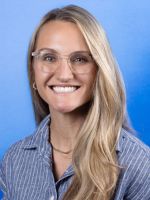
Elizabeth McGinn, MD, Assistant Professor of Pediatrics, is the recipient of the 2026 Culshaw Family Heart Lung Young Investigator Award. This prestigious honor recognizes outstanding early-career faculty whose clinical, academic, and research achievements demonstrate exceptional commitment to improving outcomes for children and families.
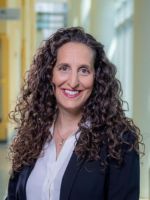
Maya Haasz, MD, MSCS, Associate Professor of Pediatrics, has been appointed as the American Academy of Pediatrics representative to the American Medical Association’s Firearm Injury Prevention Taskforce. The appointment represents a coordinated effort to empower health care professionals to prevent firearm injuries through education, patient counseling, and advocacy. Its resources and campaigns provide practical tools to integrate firearm safety into routine clinical practice, ultimately aiming to save lives and reduce the public health burden of gun violence.
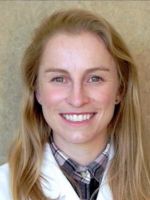
Nicole Look, MD, Assistant Professor of Orthopedics, was included on a list of 15 rising stars in spine surgery that was published July 27 by Becker’s ASC Review. Dr. Look specializes in degenerative spine disorders, spinal deformity, trauma, infections, and other cervical and lumbar conditions. She treats patients using both surgical and nonsurgical approaches, with a focus on restoring function and improving quality of life.
Tuesday, August 25, 12–1 p.m
Zoom
The Faculty Advancement Working Group will hold monthly office hours to provide a forum for faculty and their supervisors to ask questions about promotions among the ranks of Instructor, Senior Instructor, and Assistant Professor. These office hours are virtual only, on the 4th Tuesday of every month from 12–1 p.m. Access the office hours through the Faculty Advancement Working Group Zoom link.
Wednesday, August 26, 8 a.m.
Virtual
Join Executive Vice Dean of Education Shanta Zimmer, MD, for a virtual town hall. She will be joined by Geoffrey Connors, MD, Associate Dean for Graduate Medical Education, and Jennifer Adams, MD, Associate Dean of Medical Education, for a discussion on how our school is preparing the next generation of physicians for a rapidly evolving health care landscape.
The panel will focus on medical education across the continuum, including advancements such as the TREK curriculum, and the new accelerated three-year MD program with early transition to residency.
Register for the town hall and submit questions in advance.
Wednesday, September 9, 3 p.m.
Hensel Phelps West Auditorium, Research 1 North
The School of Medicine proudly presents Debra Houry, MD, MPH, Senior Fellow, Yale University School of Public Health. Dr. Houry will present “Lead Like a Doctor: Lessons from Medicine, Outbreaks, Public Service and Health Innovation.” Drawing on experiences from clinical medicine, outbreak response, federal leadership, and emerging health technologies, she will also discuss how innovations such as AI-enabled tools, real-time data systems, and advanced diagnostics are reshaping decision-making and creating new opportunities to improve health.
Thursday, September 10, 5 p.m.
Room 1203, Anschutz Health Sciences Building
Conflict is inevitable; navigating it effectively is an essential skill. Faculty are encouraged to join this interactive session exploring conflict styles, communication and deescalation techniques, and collaborative problem-solving strategies. Participants will gain practical tools to approach workplace conflict with greater confidence and foster more constructive outcomes. Faculty members should register for the Faculty FORUM online.
Wednesday, October 14, 8 a.m.–4 p.m.
Donald M. Elliman Conference Center, Anschutz Health Sciences Building
The Office for Faculty Development is hosting the annual New Faculty Orientation on October 14. This daylong event provides a structured overview of the school and campus, including introductions to essential units, resources, and services. Participants will have opportunities to network with colleagues and meet campus leaders, ensuring a strong foundation of knowledge and connections as they begin their faculty roles. Faculty can register for the orientation online. For questions, contact [email protected].
Friday, November 6
Donald M. Elliman Conference Center, Anschutz Health Sciences Building
The CU Anschutz School of Medicine co-hosts this daylong event with faculty from the University of Michigan. The event alternates between Ann Arbor and Aurora each year, and this year, the academy will be hosted in Aurora in the Elliman Conference Center. Space will be limited to 200 individuals on a first-come, first-served basis. Save the date and watch this space in October to make a reservation.
Wednesdays, January 13–May 26
90 minute in-person sessions
Registration is now open for the inaugural cohort of the Emerging Leaders Development Program (ELDP), hosted by the Office for Faculty Development. The ELDP is designed for early-career faculty who are interested in honing skills to secure future leadership opportunities within academic medicine. The ELDP program consists of ten 90-minute, in-person sessions with content aligned with the Center for Creative Leadership framework, emphasizing personal leadership growth as the basis for later leading others and leading organizations. Register and learn more on the ELDP website. For questions, contact [email protected].
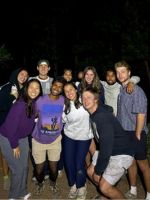
The Class of 2029 wrote an anthology, One Year Later, to share art and words of wisdom with our new medical students. The photos included a repeated piece of advice, that little moments of joy make each day better. View more photos from the anthology on Instagram.
Follow CU Anschutz School of Medicine on Social Media
 Have a good week,
John H. Sampson, MD, PhD, MBA
Richard D. Krugman Endowed Chair
Vice Chancellor for Health Affairs
Dean, University of Colorado Anschutz School of Medicine
The Dean’s weekly message is an email news bulletin from John H. Sampson, MD, PhD, MBA, Dean of the CU Anschutz School of Medicine, that is distributed to inform CU Anschutz School of Medicine faculty members, staff, students and others about issues pertaining to the school’s mission of education, research, clinical care and community service.
Subscribe to the Dean's Message