

Learning Across Borders
Through partnerships in Costa Rica and Ecuador, CU Doctor of Physical Therapy students gained new perspectives on healthcare, movement, and the power of global collaboration.
Zachary Noriega | Physical Medicine & Rehabilitation/CU School of Medicine Sep 11, 2026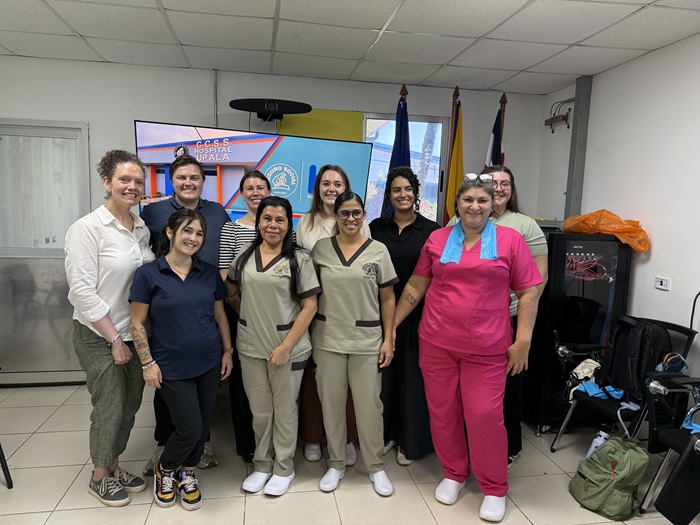
For several members of the University of Colorado Doctor of Physical Therapy (DPT) Class of 2027, the summer of 2026 offered something few classroom experiences can: the opportunity to learn alongside healthcare professionals, students, patients, and community members in Costa Rica and Ecuador.
Led by faculty members Dawn Magnusson, PT, PhD, Lilly Webster, PT, DPT, MPH, and Jennifer Stevens-Lapsley, PhD, PT, FAPTA, the international experiences combined professional exchange, community engagement, and cultural immersion, giving students a broader understanding of how physical therapy is practiced across different healthcare systems and communities.
“These global health experiences challenge DPT students to see health, disability, and healthcare through perspectives beyond their own,” Dr. Magnusson said. “They strengthen students’ adaptability, cultural humility, and ability to work across diverse communities while bringing new perspectives back to the classroom. For our program and university, these experiences build reciprocal international partnerships that enrich teaching, scholarship, and community engagement, extending our impact far beyond the individual students in our program.”
Learning Through Partnership in Costa Rica
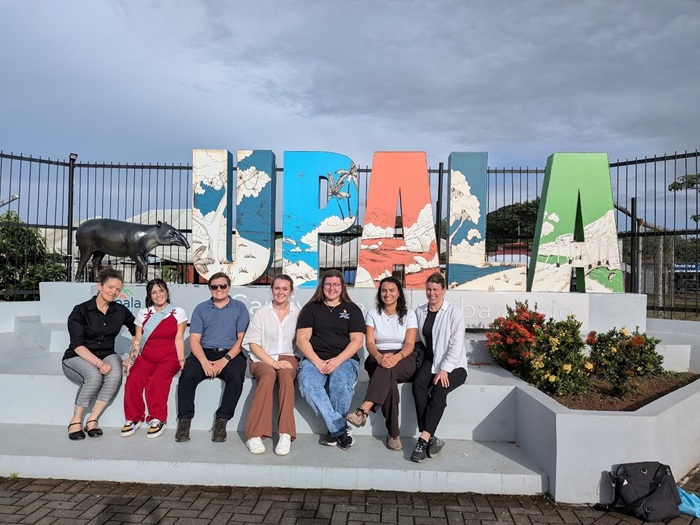
In Costa Rica, students and faculty traveled to the rural community of Upala, where they partnered with healthcare professionals at Upala Hospital and other community organizations.
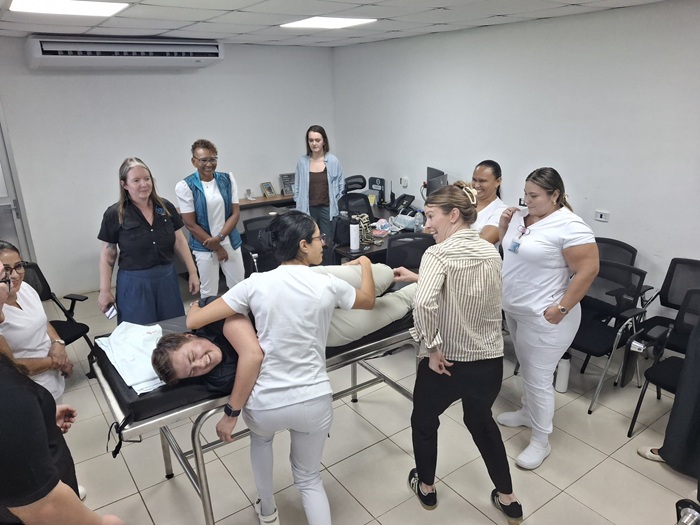
The group spent their first days meeting with hospital staff, observing workflows, and learning about local needs. Those conversations informed a series of educational workshops focused on movement, body mechanics, and injury prevention. Working with nurses, pharmacists, maintenance staff, kitchen workers, and others, students discussed practical ways to incorporate movement throughout the workday and reduce physical strain.
The workshops often became opportunities for shared problem-solving. When pharmacists described the challenge of pushing heavy equipment carts up steep hills around the hospital, the discussion evolved into a collaborative exploration of strategies that were both efficient and realistic for their environment.
Students also visited the United Nations High Commissioner for Refugees (UNHCR) to learn about support services for refugees in the region and connected with faculty and students in the University of Costa Rica's physical therapy program. Outside of formal activities, they explored the country's natural beauty through hiking, river tubing, and zip lining.
For DPT student Haydin Pazdur, the experience was unforgettable. “The trip to Costa Rica was absolutely one of the most impactful experiences of my life,” Pazdur said. “I found so much value in the time we spent in rural communities and in fostering connections with individuals who have come to Costa Rica from all over. Engaging with different parts of the community every day was both a meaningful and reciprocal learning experience, and it was so much fun. I am incredibly grateful for the perspective I gained from this experience, as it will forever shape who I am both as a clinician and as a person.”
Connections Across Ecuador
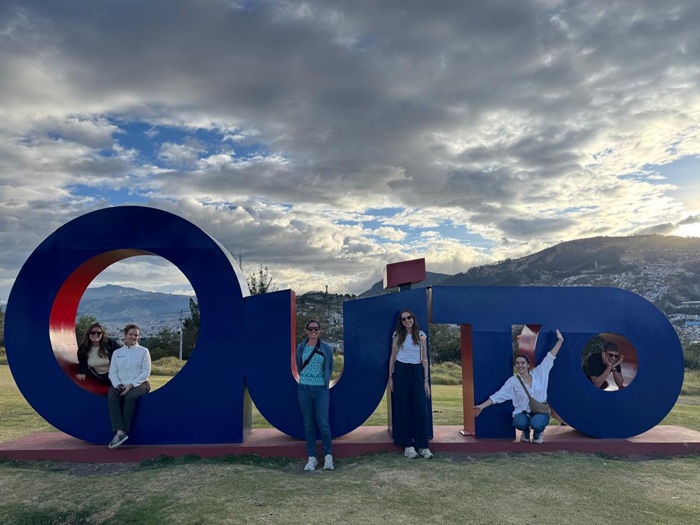
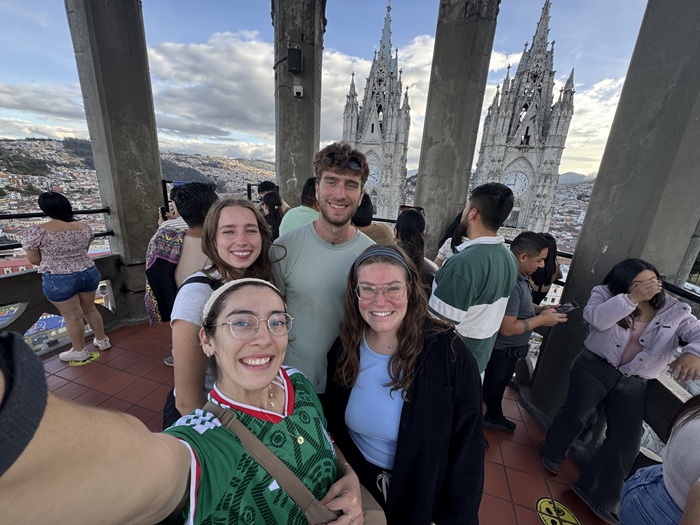
A second group of CU DPT students traveled to Ecuador, where they explored the intersection of community health, physical therapy education, and cultural exchange.
After spending time in Quito learning about Ecuador's history and culture, students traveled to Santo Domingo to work alongside local physical therapist Flavia and community health organization Hombro a Hombro. There, they participated in patient discussions and educational workshops centered around the concept of movement as medicine.
The group later traveled to Latacunga, where they collaborated with caregivers and professionals from Cotopaxi Solidario on workshops addressing movement, wellness, and safe body mechanics. Throughout the experience, conversations consistently reinforced the importance of movement in promoting health and quality of life.
One community member in Santo Domingo shared her personal experience with staying active despite significant health challenges. “Exercise is something that is very, very good for your health,” she told students. “I suffer from depression, I've had cancer, I've had thyroid surgery, and I have four surgeries on my body, but I keep going. And I thank you and congratulate those who want to pursue medicine. Keep going forward because it is wonderful.”
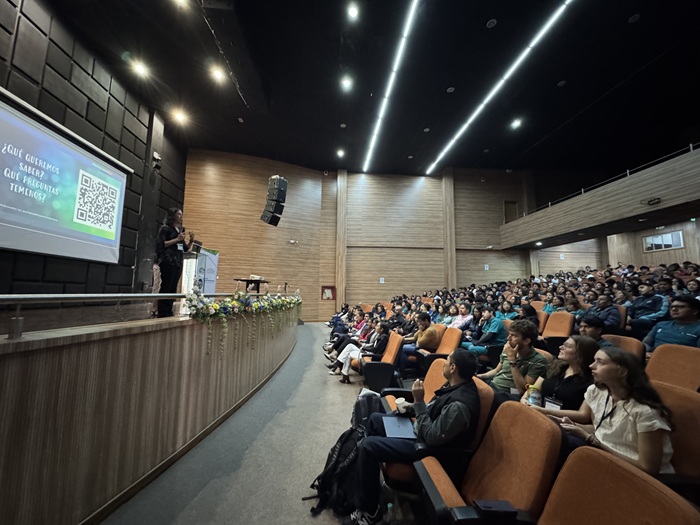
The trip also provided opportunities to engage with Ecuador's physical therapy community. Students visited Pontificia Universidad Católica del Ecuador and partnered with Universidad Central del Ecuador to participate in a seminar attended by more than 300 physical therapy students and professionals. Discussions focused on topics ranging from pain science and motivational interviewing to the future of physical therapy practice.
For DPT student Corey O’Keefe, the relationships formed throughout the trip became one of its most meaningful aspects. “What stood out to me most about our experience in Ecuador was the connections we made with the physical therapists, the community members, and the patients,” O’Keefe said. “We had such an incredible opportunity to see the impact that physical therapy can have across continents and reminded me that people around the world are doing good every single day. It can be so easy to get caught up in our own bubble and lose sight of the power of connection and the human shared desire to serve.”
The experience also broadened her perspective on the profession and her future role within it. “Not only did this endeavor confirm this idea, but it also inspired me to find more ways of connecting with those across the world that have similar passions as I do,” she said. “I am incredibly grateful for the relationships I built and for the opportunity CU DPT gave us to learn alongside Hombro a Hombro and Ecuadorian communities. This experience changed the way I look at the physical therapy profession and the kind of provider I hope to become. I would encourage future students to take advantage of this opportunity; it will change the way you see your practice forever.”
Bringing New Perspectives Home
Although separated by geography, the experiences in Costa Rica and Ecuador shared a common purpose: expanding students' understanding of healthcare through partnership, curiosity, and mutual learning.
Students returned to Colorado with new clinical perspectives, a deeper appreciation for cultural humility, and a greater understanding of the many ways physical therapists, educators, caregivers, and community leaders are advancing health around the world. They also returned with a renewed understanding that expertise exists within every community and that meaningful progress happens when people learn from one another.
For the CU Physical Therapy Program, these international partnerships continue to demonstrate that some of the most valuable learning occurs through collaboration, relationship-building, and the exchange of ideas across cultures and healthcare systems.
The summer of 2026 was not defined by what students brought to Costa Rica and Ecuador. Rather, it was defined by what they learned alongside the people they met there, and by the understanding that advancing health and wellbeing is a shared effort that transcends borders.