

| These tools are under constant development. Check back for updates! |
The R2P2 Method
Rapidly and Rigorously Adapt a Program to Context
Here's what you get:
These essential components may be familiar to you. In R2P2, we aim to take these concepts in an applied way to make them easier to do rapidly while maintaining as much rigor as possible. Even if you are familiar with them, explore the content within to find faster ways to actualize these components.
R2P2 Conceptual Model: Rapidity through pragmatic approaches
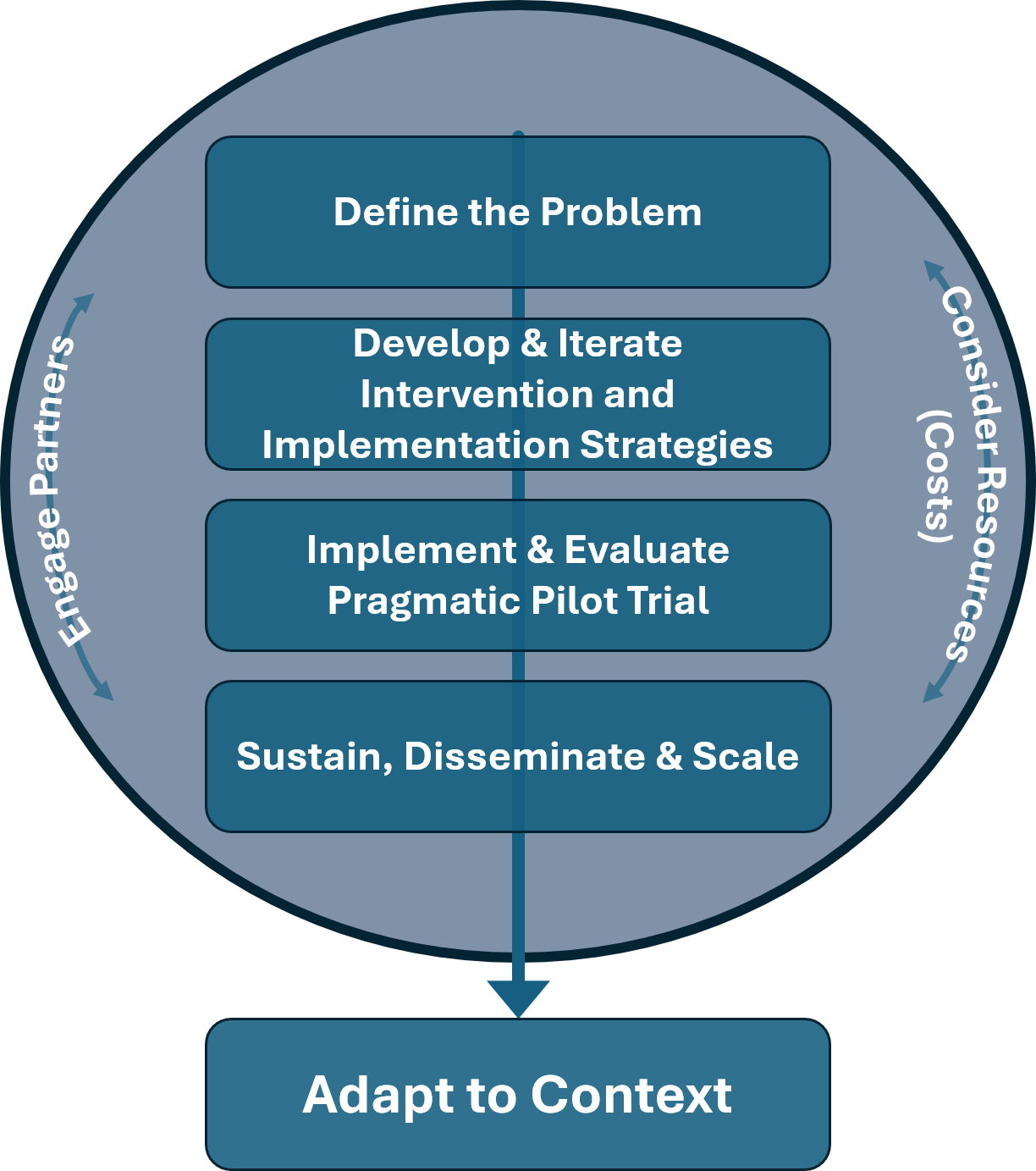
The Foundational Projects below took part in designing and refining the tools within this website.
The Use Case Projects put the tools to the test.
Along the way, the R2P2 team makes improvements as feedback is generated from the Use Cases.
Design and integrate a patient-centered health risk assessment and goal-setting tool into the UCHealth Mobile App. The project will also explore two approaches to follow-up support: patient messaging and health navigation calls.
Develop patient-centered decision aids to support informed decision-making for people with carotid stenosis. Separate decision aids will address symptomatic patients who have experienced a stroke or TIA and asymptomatic patients who have not.
Design a patient-centered decision aid to support patients and their care partners as they consider heart transplantation. The project will pilot test the decision aid to assess its usability and potential to support informed, values-aligned decisions.
Design a patient-centered roadmap to support patients and care partners in navigating decisions across the dementia care continuum. The roadmap will be pilot tested with patients and care partners as well as through community-based organizations.
Develop and test brief, role-relevant conversation guides and mini-trainings to help medical assistants and nurses communicate effectively about influenza and HPV vaccination. The project aims to strengthen frontline vaccine communication and support productive vaccine conversations in pediatric practices.
Partner with clinicians and caregivers to co-create and refine patient-centered R2Text messages. The project will then pilot test the impact of these messages in community-based clinics across the Denver metro area.
