

By using user-centered design principles, evidence based interventions can be optimized to solve specific problems
Review the guidance organized by the elements below. Being clear on these details from the outset will limit future setbacks.
We recommend using a tool to help guide defining the problem and have created a worksheet to help teams gather and reconcile the information quickly and clearly.
Traditional research often moves at a slow pace - too slow for the real-world needs of patients, clinicians, and end-users. Our approach changes that. By embedding design principles into your process, you can accelerate rigorous projects without sacrificing quality.
Whether you’re developing a new intervention, drafting a manuscript or grant, or collaborating with computer engineers, these principles of rapid iteration in response to feedback are essential. They help you design solutions that matter, are faster, and with rigor to promote confidence that they’ll work in practice.
Co-Design* for Rapid and Rigorous, Pragmatic Interventions
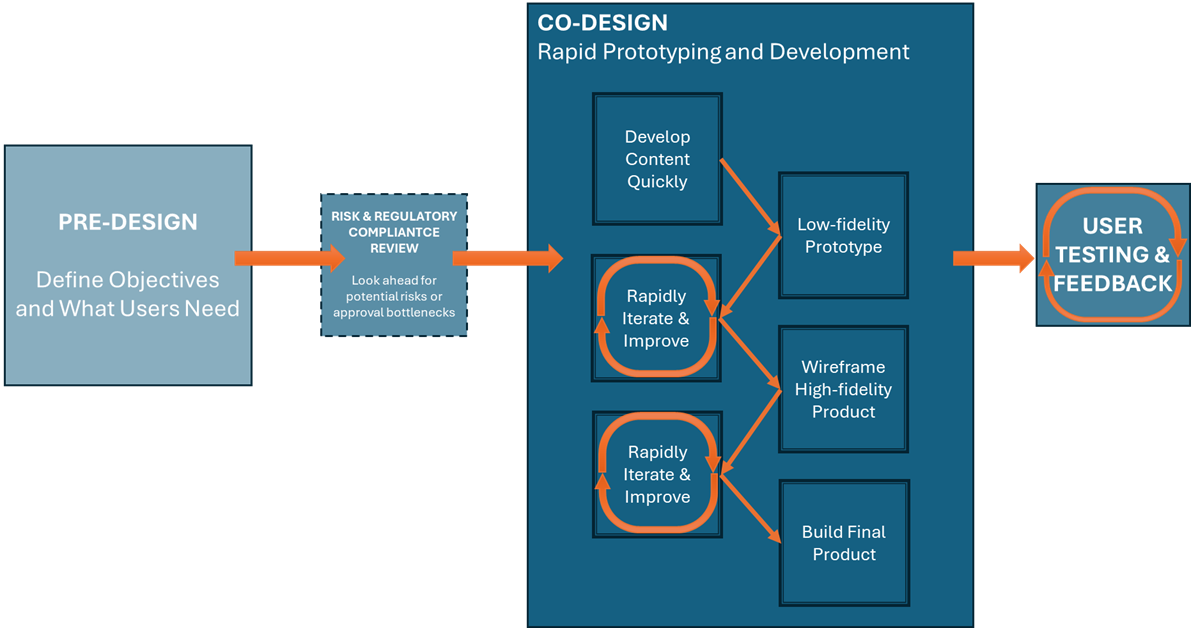
* Key steps of Co-Design are organized in Figure 1. This process is meant to be cyclical and will rarely be linear. The process outlined in the figure represents elements of traditional user-centered design for technology-focused tools. We have adapted and combined elements in our guidance here to better generalize to pragmatic work.
