

Foot & Ankle Educational Resources

Great Toe Arthritis (Hallux Rigidus)

Cartilage loss and bone spurs in the great toe joint can make every step painful. Learn how non-operative care and surgery can restore movement.

Understanding Great Toe Arthritis

What is hallux rigidus?

Great toe arthritis can be caused by a number of different reasons including injury, trauma, age, or gout. In general, it is a loss of cartilage in the toe that can lead to pain, swelling, and decreased range of motion.

As the cartilage wears down, bone spurs often form on the top of the joint, making it painful to push off during walking, running, or activity. Left untreated, the joint can become progressively stiff — hence the name hallux rigidus.

Non-Operative Treatment

First-line care to manage symptoms

Non-operative treatment is always the first line of care. Most patients can meaningfully reduce pain and preserve function with a combination of the following:

  • Stiff-soled shoes with a rocker bottom
  • Carbon fiber foot plate in the shoe
  • Activity modifications
  • Oral anti-inflammatory medications
  • Topical anti-inflammatory medication (Voltaren gel)
  • Steroid injections
Surgical Treatment Options

When conservative care isn't enough

If symptoms persist despite non-operative care, several surgical options can address hallux rigidus based on the severity of arthritis and your activity goals.

01

Cheilectomy

A cheilectomy removes the bone spurs (dorsal osteophytes) at the top of the great toe joint. It preserves the joint and is best suited for early-to-moderate arthritis, restoring motion and reducing pain with push-off.
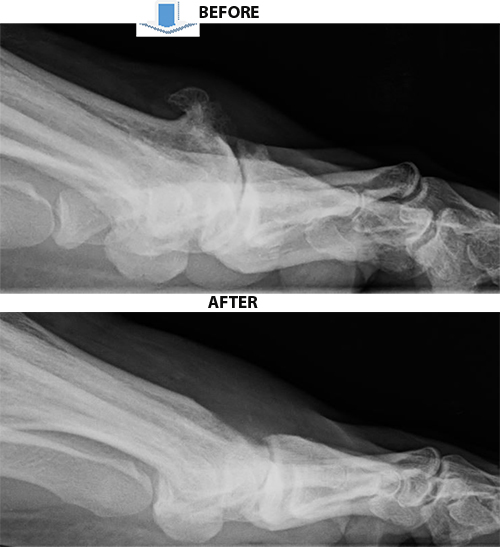
Before and after X-rays of a cheilectomy performed by Dr. Marissa Jamieson
Before and after X-rays of a cheilectomy
02

Interpositional Arthroplasty

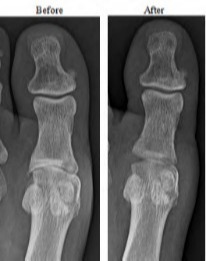
Interpositional arthroplasty removes damaged cartilage and places a soft-tissue spacer between the joint surfaces. It preserves motion and can be a good middle-ground option for patients who want to avoid a fusion.

Before and after X-rays of an interpositional arthroplasty of the great toe

Before and after X-rays of an interpositional arthroplasty

03

Great Toe Fusion (Arthrodesis)

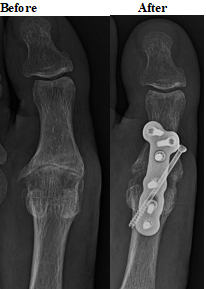
For advanced arthritis, fusion of the great toe joint reliably eliminates pain by joining the two bones with a plate and screws. It is the most durable option and allows a return to most activities, including hiking and running.

Before and after X-rays of a great toe fusion with plate and screws

Before and after X-rays of a great toe fusion

Symptoms

When to seek care

  • Pain at the base of the great toe
  • Stiffness and reduced push-off
  • Swelling or a visible "bump" on top of the joint
  • Pain worsened by activity or stiff shoes
Your Experience

What to expect

  • Comprehensive exam and weight-bearing X-rays
  • Personalized non-operative plan first
  • Surgery matched to arthritis severity and goals
  • Structured post-op recovery and return to activity

Ready to move without toe pain?

Schedule a consultation with Dr. Jamieson to discuss your options for treating great toe arthritis.

Call (720) 516-9445 Contact Us
CMS Login