

Dear Colleague:
Welcome to CU, Dr. Paul Picton!
I am excited to announce that Paul Picton, MB ChB, has been named chair of the Department of Anesthesiology, effective September 1.
Dr. Picton is a transformative leader who can lead our department to be one of the nation’s best departments of anesthesiology across all our missions of clinical care, research discovery, educational excellence, and community service.
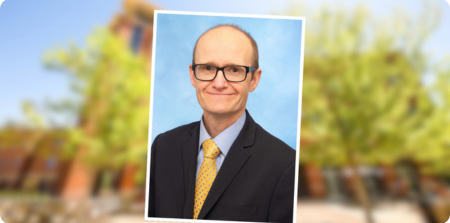
He brings to our school and campus all the skills we want a leader to have. He has a keen eye for detail, a strong sense of organization, a disciplined attention to clinical quality, an exceptional ability to manage finances, international recognition in scholarship, and a commitment to being a collaborative leader who builds strategic alliances that contribute to the success of our entire academic community.
Dr. Picton will be joining us from the University of Michigan Medical School, where he has served in many leadership roles, including Executive Vice Chair, Senior Associate Chair for Clinical Affairs and Quality, and Service Chief of Adult Anesthesia. He was also interim chair for 14 months, beginning May 2024. You can learn more about Dr. Picton in this article in the School of Medicine newsroom.
I want to thank our search committee, led by Marco Del Chiaro, MD, Chief of Surgical Oncology, and Shanta Zimmer, MD, Executive Vice Dean of Education, for their generous commitment of time through the recruitment and interview process. It was a very thorough process that considered many high-quality candidates from across the country.
Thanks also to Christopher Lace, MD, MBA, who has served as interim chair of the Department of Anesthesiology since May 2025, and to Vesna Jevtovic-Todorovic, MD, PhD, MBA, for her near-decade of service as department chair.
Gates Institute Wins a Major First from FDA
The Gates Institute Anschutz announced that the novel CD64 CAR T-cell therapy – discovered, engineered, and advanced entirely on our campus – has received Investigational New Drug (IND) clearance from the U.S. Food and Drug Administration (FDA). This achievement marks the first CD64-directed CAR T-cell therapy authorized for clinical testing in the United States.
This milestone paves the way for a first-in-human phase 1 clinical trial in adults with relapsed or refractory acute myeloid leukemia (AML), with enrollment anticipated to begin this summer. A pediatric trial is also expected to open later this year – an important step toward expanding innovative treatment options for patients across age groups.
The initial adult clinical trial will be led by Mathew Angelos, MD, PhD, Assistant Professor of Medicine in Hematology, with plans for a follow-up pediatric clinical trial led by Sanam Shahid, MD, Assistant Professor of Pediatrics, with Executive Director of the Gates Institute Terry Fry, MD, providing strategic leadership. Manufacturing of the CAR T-cell product to support the clinical trial will be conducted at the Gates Biomanufacturing Facility.
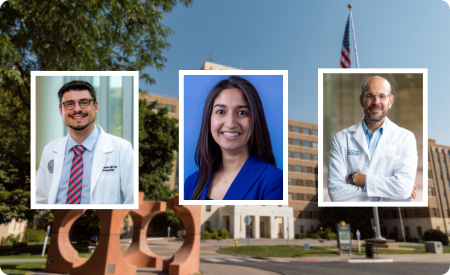
This milestone is the culmination of work that originated in the laboratory of Craig Jordan, PhD, Professor of Medicine in Hematology, and his team, who identified CD64 as a promising target based on its expression on leukemic stem cells in patients with AML who relapsed after standard therapies.
M. Eric Kohler, MD, PhD, Assistant Professor of Pediatrics in Hematology, Oncology and Bone Marrow Transplantation, along with Haley Simpson, MD, PhD, who was a fellow in Dr. Kohler’s laboratory, led the preclinical development of the CD64 CAR T-cell construct. A large team from the Gates Institute prepared the IND application and coordinated the FDA review in collaboration with the campus Investigational New Drug and Device Office.
“This achievement represents the output of science entirely conducted at CU Anschutz, highlights the strength of our growing cell and gene therapy ecosystem, and demonstrates the collaborative expertise required to advance a novel therapy from discovery to clinical testing,” said Dr. Fry. “It is a powerful example of how teams are working together across campus to translate science into meaningful impact for patients.”
AI and the Future of Medicine
I’m proud of our Department of Medicine for its embrace of artificial intelligence to improve outcomes for patients and working conditions for our faculty and staff. An enlightening article in the Department of Medicine newsroom features faculty members who are putting AI tools to work for high-impact effect.
Cardiac electrophysiologist Michael Rosenberg, MD, Associate Professor in the Division of Cardiology, describes his approach.
“My overall goal is to figure out how to use technology to make life easier and help inform decision-making for treating patients,” Dr. Rosenberg said. “Our division focuses on both the technical side of AI and implementation science, critically thinking about how we can actually use these tools to improve outcomes for patients. I think CU Anschutz is really well-poised to conduct this important research.”
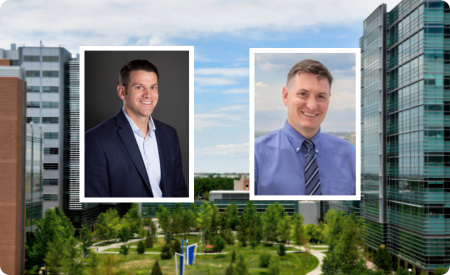
AI is helping accelerate the workflow of cardiologists at CU Anschutz. In Rosenberg’s work, for example, the technology is used to analyze electrocardiograms. His lab typically analyzes between 2,000 and 2,500 ECGs each week, which is only possible with the assistance of AI.
“If I had to sit down and write an interpretation of every ECG, it would take all my time. By using rule-based automation systems that we program, this work can be completed much faster,” Rosenberg said. “However, we don’t just rely on what the computer says. We always have a cardiologist read over them to ensure there are no mistakes.”
Another example from the Department of Medicine: Andrew Kent, MD, PhD, Assistant Professor in the Division of Hematology, who focuses his clinical and research work on improving care for patients with myeloid disorders.
Each year at CU Anschutz, our hematologists care for hundreds of blood disorder patients and perform around 100 stem cell transplants. For almost 15 years, the clinicians have collected data about each of these patients to help determine which patients responded to treatment, who did not, and the potential reasons why.
“Now, we can use AI to say, ‘I want you to analyze this database from a certain perspective to answer this question.’ And within minutes, it can deliver an answer that would have taken days or weeks for us to find,” said Dr. Kent. “We’re also using conventional tools to analyze the data alongside the AI, so we can compare those results head-to-head.”
Kent then uses discoveries made by the clinic to help inform research, such as projects that study samples from patients to understand on a biological level why certain treatments work and others do not.
Even as we are putting AI tools to work, we are also emphasizing thought leadership in the field. The department recently hosted Robert Wachter, MD, Chair and Professor of Medicine at the University of California, San Francisco, and author of “A Giant Leap: How AI is Transforming Healthcare and What That Means for Our Future.”
“I think we are in the early stages of probably the greatest experiment in the history of medicine,” Wachter told attendees during his Grand Rounds presentation earlier this month. “Not only are these tools remarkably good at what they do and getting better fast, but health care needs it. In fact, I think health care’s desperate need for transformation is part of what makes me particularly optimistic.”
Inaugural Well-Being Innovation Day a Success
Addressing burnout in health care professionals continues to be a top priority in the medical field. At the University of Colorado Anschutz School of Medicine, it’s been the mission of Lotte Dyrbye, MD, MHPE, and her team to improve well-being among faculty and identify the best ways to reduce factors that result in burnout.
At the inaugural CU Thrive Well-Being Innovation Day last Tuesday, leaders in medicine at CU Anschutz and beyond joined Dr. Dyrbye, Senior Associate Dean for Faculty Well-being and Chief Well-being Officer, in sharing evidence, innovations, and practical solutions.
“When our workforce thrives, our patients, our learners, and our communities thrive,” Dr. Dyrbye told attendees.
The event, featured in this article in the School of Medicine newsroom, reflects a growing movement among researchers and leaders to advance well-being in health care and strengthen the experience of faculty across clinical, research, and educational roles.
Tait Shanafelt, MD, Chief Wellness Officer at Stanford University, delivered the keynote address, and I had a wonderful conversation with him during his visit to our campus.
At the CU Thrive event, more than a dozen researchers presented on topics focused on well-being.
Alexandra Kilinsky, DO, Assistant Professor of Pediatrics, discussed optimizing cognitive load of nocturnists through a swing shift intervention, while Tyra Fainstad, MD, Associate Professor of Medicine, presented on a coaching program called Better Together that she and Adrienne Mann, MD, Associate Professor of Medicine, created. The program “helps physicians shift from external validation and survival mode to internal agency in the midst of demanding training environments.”
Anna Maw, MD, Associate Professor of Medicine, walked attendees through how documentation burden can contribute to burnout and why artificial intelligence tools such as Abridge, a documentation tool that captures clinical conversations and turns them into structured medical notes, may play a part in improving clinician wellness.
Remarkable Year for Ophthalmology
The recently published Sue Anschutz-Rodgers Eye Center 2025 Annual Report offers a view of a very impressive year for the CU Anschutz Department of Ophthalmology.
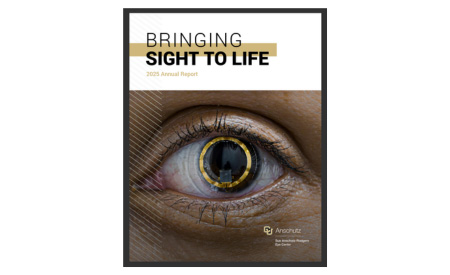
Naresh Mandava, MD, Chair of Ophthalmology and Senior Associate Dean for Strategic Advancement, writes:
“We’ve reached new heights in both scale and impact at the Sue Anschutz-Rodgers Eye Center. With more than 90 faculty members, we are now among the largest ophthalmology departments in the country – an achievement that speaks to the strength of our community and the breadth of our expertise. Our growth is not just in numbers, but in the depth of innovation and care we provide.
“This year, we received a transformative $40 million gift to accelerate the translation of vision research into clinical care. We were also named as part of a cross-campus initiative awarded up to $46 million from Advanced Research Projects Agency for Health to pursue whole human eye transplantation, a bold step toward curing blindness.”
The year was filled with many accomplishments:
Faculty Updates
Alison Mungo, MD, Assistant Professor of Surgery, has been named a recipient of the Carolyn E. Reed Traveling Fellowship Award from The Society of Thoracic Surgeons (STS). Dr. Mungo was honored during the Thoracic Surgery Foundation VIP & Awards Reception at the STS Annual Meeting earlier this year in New Orleans.
David Bekelman, MD, MPH, Professor of Medicine in the Division of General Internal Medicine and Professor of Psychiatry, has been funded through the VA Quality Enhancement Research Initiative for a $9 million, five-year dissemination and implementation science grant for the Virtual Interventions Targeting Advancements in Life Quality for VETerans (VITAL-Vet). The goal is to improve specialty care access, reduce rehospitalization, and improve survival and quality of life through value-based virtual care models for veterans with heart failure or chronic obstructive pulmonary disease. Additional principal investigators are Paul Hess, MD, MHS, Associate Professor of Medicine in the Division of Cardiology, and Chelsea Leonard, PhD, Assistant Professor of Medicine in the Division of Health Care Policy and Research.
Recent Publications
Tellen D. Bennett, MD, Professor of Biomedical Informatics, and Halden F. Scott, MD, MSCS, Professor of Pediatrics, are co-authors of an original investigation, “National Estimates of Pediatric Sepsis in US Hospitals Using Clinical Data,” published March 22 by JAMA. Three colleagues from our campus are co-authors.
Kathryn Haskins, PhD, Professor of Immunology and Microbiology, and James E. DiLisio, graduate student in the Haskins Lab, are corresponding authors of an article, “Antigen-specific immunotherapy with a CD4+ T cell neoepitope restrains CD8+ T cell differentiation in murine pancreatic islet grafts,” published March 24 by Nature Communications. Eight co-authors are from our campus.
Elizabeth Stein, MD, Resident with the Medicine-Pediatrics Residency Program, is a co-author of an original investigation, “Managing Conflicting Prognostic Communication Preferences in Pediatric Oncology,” published March 23 by JAMA Network Open.
Tyler M. Muffly, MD, Associate Professor of Obstetrics and Gynecology, is corresponding author of a research letter, “Appointment Access and Waiting Times in General and Pediatric Dermatology,” published March 18 by JAMA Dermatology. Five co-authors are from our school.
Jennifer K. Richer, PhD, Dean of the CU Anschutz Graduate School and Professor of Pathology, is corresponding author of a research article, “Metastasis-associated wound repair promotes reciprocal lung epithelium activation and breast cancer metastatic outgrowth,” published March 10 by Cancer Research Communications. Twelve co-authors are from our campus.
William Mundo, MD, Fellow in Emergency Medicine, is corresponding author of an original article, “ALERT-ED: Awareness and Linkage to Resources for At-Risk Emergency Department Patients: Interviews with Older Patients, Caregivers, and Nurses,” published March 16 by Academic Emergency Medicine. Four co-authors are from our school.
Ryo Sakuma, MD, Resident with the Medicine-Pediatrics Residency Program, is corresponding author of a case report, “Repair of Sinus Venosus Atrial Septal Defect in 2 Patients With Severe Pulmonary Arterial Hypertension,” published March 17 by Pulmonary Circulation. Five co-authors are from our campus.
Have a good week,
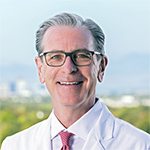
John H. Sampson, MD, PhD, MBA
Richard D. Krugman Endowed Chair
Vice Chancellor for Health Affairs and
Dean, University of Colorado Anschutz School of Medicine
The Dean’s weekly message is an email news bulletin from John H. Sampson, MD, PhD, MBA, Dean of the CU Anschutz School of Medicine, that is distributed to inform CU Anschutz School of Medicine faculty members, staff, students and others about issues pertaining to the school’s mission of education, research, clinical care and community service.
Subscribe to the Dean's Message