

Dear Colleague:
Best Ranking for NIH Funding in 20 Years
I have great news to share!
Our School of Medicine just posted its best year in two decades in rankings of medical schools for NIH funding!

Each year, the Blue Ridge Institute for Medical Research compiles and shares NIH funding data for every medical school in the country. This year’s rankings, released last week, offer several reasons for us to celebrate:
Overall, the School of Medicine has nine clinical departments ranked in the top 15, up from six in 2024, and the school improved its overall ranking to 21st — from 22nd in 2024 — with an additional $9.7 million in funding from the NIH bringing the total to nearly $314 million.
The Departments of Otolaryngology, Emergency Medicine, and Anesthesiology were ranked 11th respectively and the Departments of Family Medicine and Dermatology both ranked 12th. Internal Medicine ranked 14th.
This is great news and proves that we can certainly reach our Top 10 in 10 – maybe even Top 5 in 5! Many of our departments are just one major grant away from being in the top 10!
Thanks to everyone for your hard work and dedication to our School of Medicine. Keep up the great work!
Town Hall on Our Research Mission
I invite you to join me for the next School of Medicine virtual town hall on Wednesday, March 4, at 8 a.m. Focused on our research mission and moderated by Vineet Chopra, MD, MS, Executive Vice Dean for Clinical Affairs, Research, and Quality, the conversation will feature Leslie Berg, PhD, Senior Associate Dean for Biomedical Research, and Adit Ginde, MD, MPH, Senior Associate Dean for Clinical Research.
These are evolving times for academic medical research. We’re here to address your questions directly and share updates on the momentum we’re building across discovery and translational science. Our recent Blue Ridge rankings affirm the strength of our research community and the national impact of your work. We have much to celebrate, and even more to build on. Register to join this important discussion forum and submit any advance questions you might have.
Transplant Surgeries at UCH
Earlier this month, UCHealth University of Colorado Hospital announced that its transplant programs have completed more than 10,000 transplant surgeries since 1962. The hospital also reported that 2025 was a milestone year that included completion of the 1,000th lung transplant, 1,000th heart, 5,000th kidney, and 3,000th liver transplants.
In the early days of transplant medicine, solid organ transplant surgery was considered experimental, risky, and uncertain. Patients often spent weeks or even months in the hospital recovering. Today, advances in technology and surgical techniques have transformed transplant care for both recipients and living donors resulting in smaller incisions and shorter recovery times.
“Today, UCHealth performs robotic-assisted kidney transplants, multi-organ surgeries, and complex living donor procedures — all with dramatically shorter recovery times and higher survival rates,” said Trevor Nydam, MD, Professor of Surgery and Chief of Transplant Surgery at UCHealth University of Colorado Hospital (UCH). “Decades of innovation have really changed the game for transplant surgery.”
In addition to announcing the milestone achievements, UCHealth also published an article about a patient who received a heart transplant at UCH last year.
Joseph Armenta, who works at the airport in Farmington, NM, had only been on an airplane once in his life before he was flown to Colorado for a heart transplant at age 35. He had been short of breath for months, he was constantly fatigued, and he could barely walk. His heart was enlarged and full of blood clots. Medications, blood thinners, and diets had helped only so much. At one point, his heart had been pumping at just 9% of its capacity.
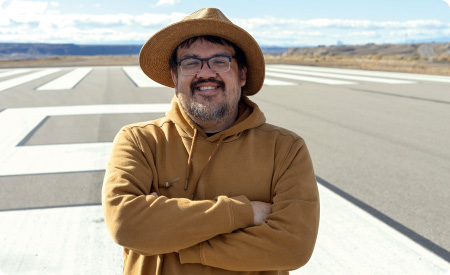
The heart transplant program at UCH is the largest in the region, drawing patients from Montana, Wyoming, New Mexico, Arizona, the Dakotas, Kansas, and Nebraska.
“We have been successful at bringing in people before they are sick and when they are sick. Joseph is a good example, as he was seen by hundreds of staff and faculty while he was here. It’s a huge group effort to get patients like him what they need — and not only deal with their medical issues but the psychological aspects that they face as well,” said Jordan Hoffman, MD, Associate Professor of Surgery, who is also surgical director of Heart and Lung Transplantation at the UCHealth Transplant Center.
In addition to Dr. Hoffman, Amrut Ambardekar, MD, Professor of Medicine, and Laura Peters, DNP, Associate Professor of Medicine, are featured in the article.
One Couple, One Heart Surgeon
Another remarkable article about outstanding care was published this month in the Department of Surgery newsroom.
When Carol Patten needed open heart surgery in September 2025, she knew just where to turn — Muhammad Aftab, MD, Associate Professor of Surgery, who had performed the same operation on her husband, Walt, a long-distance runner, in 2024.
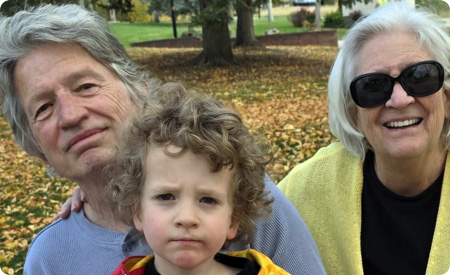
“Dr. Aftab is one of the best, and we’re very lucky that we live here in Denver and got to see him,” Walt said. “When she had her surgery, I didn’t have any stress, because I knew that she was at the best possible place.”
Dr. Aftab advises to get checked out when they have chest pain, shortness of breath, or other warning signs. “Bypass surgery has a very excellent outcome for a long time, and patients do very, very well. I'm confident Carol and Walt are going to do well for a long period of time. Coronary artery bypass grafting is one of the most effective and satisfying procedures for us,” Dr. Aftab said. “We see a patient come in with chest pain, an inability to do things, and once you restore the blood flow back to the heart muscle, he's doing amazing. How many 75-year-olds do you see running marathons?”
Faculty Updates
Vineet Chopra, MD, MSc, Executive Vice Dean, Clinical Affairs, Research, and Quality, and Professor and Chair of Medicine, has been elected to be a Master in Hospital Medicine, which is the highest honor within the Society of Hospital Medicine (SHM). Masters are selected by the SHM board based on personal character; positions of honor; contributions towards furthering the goals of SHM; distinction in practice, education, and medical research; and other achievements in science or in the art of hospital medicine. Congratulations to Dr. Chopra on this well-deserved honor!
Alice Soragni, PhD, a nationally recognized leader in patient-derived tumor organoids and functional precision oncology, has joined our Department of Biomedical Informatics to launch the Functional Personalized Medicine Initiative. At UCLA, her laboratory pioneered a miniaturized, high-throughput organoid platform that was engineered to rapidly compare the effect of multiple therapies and combinations on a patient’s tumor, and to do so on timelines compatible with real clinical decision-making. She will be Professor of Biomedical Informatics and Neurosurgery, and the inaugural holder of the Marsico Chair in Excellence in Functional Precision Medicine.
UCHealth Safety Culture Survey
Please monitor your email for the UCHealth Safety Culture Survey and complete it if you receive it. This survey will take between 5 to 10 minutes. All responses are completely confidential. Through a series of questions, you will be asked to share your opinions on safety regarding teamwork, continuous improvement, and psychological well-being. Let your voice be heard!
Recent Publications
Jose Castillo-Mancilla, MD, Associate Clinical Professor, is a co-author of an original article, “Cabotegravir plus Rilpivirine for Persons with HIV and Adherence Challenges,” published February 18 by The New England Journal of Medicine.
Joshua A. Barocas, MD, Associate Professor of Medicine, is corresponding author of an editorial, “From Efficacy to Access in Long-Acting HIV Therapy,” published February 18 by The New England Journal of Medicine.
Hayato Mitaka, MD, Assistant Professor of Medicine, and Michelle A. Barron, MD, Professor of Medicine, are co-authors of an Images in Clinical Medicine article, “Peritoneal Coccidioidomycosis,” published February 18 by The New England Journal of Medicine.
Kenneth L. Tyler, MD, Chair of Neurology, is corresponding author of an article, “Rational design and in vivo validation of capsid inhibitors for enterovirus D68,” published February 10 by Nature Communications. Michael J. Rudy, PhD, Assistant Research Professor of Neurology, and Penny Clarke, PhD, Research Professor of Neurology, are co-authors.
Tatiana G. Kutateladze, PhD, Professor of Pharmacology, is a corresponding author of an article, “Recruitment of BRD4 to the ASXL1 genomic targets depends on the extra-terminal domain of BRD4,” published February 17 by Nature Communications.
Mark L. Dell’Acqua, PhD, Professor of Pharmacology, is a co-author of an article, “The clinical missense variant E282K in PPP3CA/calcineurin shifts substrate dephosphorylation by altering active site recruitment,” published February 16 by Nature Communications.
Angelo D’Alessandro, PhD, Professor of Biochemistry and Molecular Genetics, and Kirk C. Hansen, PhD, Professor of Biochemistry and Molecular Genetics, are corresponding authors of a research article, “Multiomic analyses of longitudinal plasma samples identify thromboinflammation endotypes and trajectories in patients with trauma,” published February 11 by Science Translational Medicine. Twenty-five co-authors are from our campus.
Kumar Thurimella, PhD, fourth-year medical student, is first author of an original research article, “Identifying microbial protease allergens through protein language model-guided homology,” published February 20 in Cell Systems as a part of his doctoral thesis. This research was conducted with collaborators from Massachusetts General Hospital and the University of Cambridge.
Michelle Knees, DO, Assistant Professor of Medicine, is corresponding author of an original research article, “Care Team Model and Diagnostic Error Risk in Medical Patients Who Transferred to the ICU or Died,” published January 26 by the Journal of General Internal Medicine. Three co-authors are from our campus.
Katherine T. Morrison, MD, Associate Professor of Medicine, is corresponding author of an article, “Qualitative evaluation of an Accreditation Council for Graduate Medical Education-approved online hospice and palliative medicine fellowship program,” published January 22 by Academic Medicine. Nine co-authors are from our campus. This article describes outcomes of the School of Medicine’s novel Community Hospital and Palliative Care Medicine Fellowship, which is unique in medical education because it proves ways to develop subspecialty expertise and change practice without re-locating for a fellowship.
Emily McCourt, MD, Associate Professor of Ophthalmology, and Austin Larson, MD, Associate Professor of Pediatrics, are co-authors of an article, “Mitochondrial energetic failure underlies FLVCR1-related sensory neuropathy,” published February 14 by Communications Biology.
Sarah Faubel, MD, Clinical Professor of Medicine, is corresponding author of an article, “Metabolomic assessment reveals depletion of amino acids and energy metabolites in skeletal muscle after ischemic acute kidney injury in mice,” published February 13 by Scientific Reports. Nine co-authors are from our campus.
Ernest E. Moore, MD, Distinguished Professor of Surgery, is corresponding author of an invited review, “Resuscitative thoracotomy: What you need to know,” published in the February issue of The Journal of Trauma and Acute Care Surgery.
Nicholas Bianchina, MD, Senior Instructor of Medicine and Chief Medical Resident, is corresponding author of an article, “Being Fat in Residency,” published February 13 by the Journal of Graduate Medical Education.
Megham Twiss, MAT, MDiv, GME Program Director, Operations and Strategy, is co-author of an article, “An Analysis of Graduate Medical Education Program Coordinator Job Descriptions,” published February 13 by the Journal of Graduate Medical Education.
Have a good week,
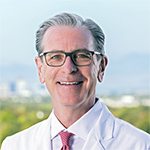
John H. Sampson, MD, PhD, MBA
Richard D. Krugman Endowed Chair
Vice Chancellor for Health Affairs and
Dean, University of Colorado Anschutz School of Medicine
The Dean’s weekly message is an email news bulletin from John H. Sampson, MD, PhD, MBA, Dean of the CU Anschutz School of Medicine, that is distributed to inform CU Anschutz School of Medicine faculty members, staff, students and others about issues pertaining to the school’s mission of education, research, clinical care and community service.
Subscribe to the Dean's Message