People sometimes ask me what Top 10 in 10 looks like in practice. This week, I have a pretty good answer.
A surgeon performing the first robotic aortic valve replacement in the Mountain West. A resident's research winning a national impact award. A faculty member ringing the opening bell on Wall Street after watching an idea he had about glaucoma treatment become a publicly traded company. These aren't abstract indicators of progress — they're the thing itself.
This week's stories span ORs, classrooms, laboratories, and boardrooms, and I hope you'll take a few minutes to read about what your colleagues have been up to. It's a good week to be at CU Anschutz.
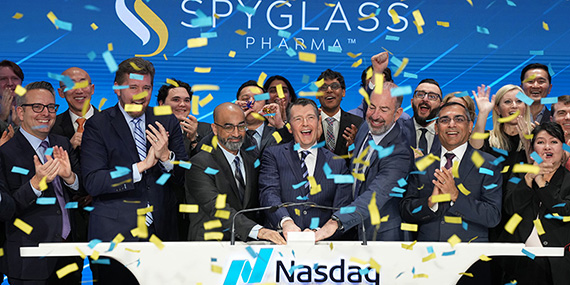
Malik Y. Kahook, MD, Professor of Ophthalmology, recently celebrated the public offering of stock by SpyGlass Pharma, Inc., by joining the ceremonial ringing of the bell to open trading on Wall Street. SpyGlass went public on Feb. 6, trading under the ticker SGP on the Nasdaq.
“We found out the day before that we were ringing the (opening) bell,” Dr. Kahook said. “It was an extraordinary moment to both celebrate how far the idea has come and to propel its development forward.”
Dr. Kahook was driven by his desire to help patients treat glaucoma. He recognized that about half of patients with glaucoma stop using their eye-drop medication and wondered whether treatment could be delivered from inside the eye instead of through eye drops.
That idea kicked off a journey of invention for Kahook, the Slater Family Endowed Chair in Ophthalmology, and his team at the Sue Anschutz-Rodgers Eye Center. The solution was the Bimatoprost Drug Pad-IOL (BIM-IOL) System, which is now in Phase 3 clinical trials and moving closer to U.S. Food and Drug Administration (FDA) approval.
In 2019, the innovation was spun off to become SpyGlass Pharma, Inc., which, through the BIM-IOL System, provides sustained drug delivery for the care of chronic eye disease, including glaucoma, the world’s leading cause of irreversible blindness.
Dr. Kahook collaborated with CU Anschutz Innovations throughout the company’s development. The SpyGlass drug delivery system integrates lasting delivery of glaucoma medication with an interocular lens that is implanted during routine cataract surgery.
Dr. Kahook is also the inventor behind the Kahook Dual Blade, one of the most commonly used surgical tools for glaucoma treatment globally. In this article in the campus newsroom, Dr. Kahook says he gets the most satisfaction from the end result of his team’s innovations – improved patient outcomes.
Our surgeons are leading the way with innovations that improve patient lives.
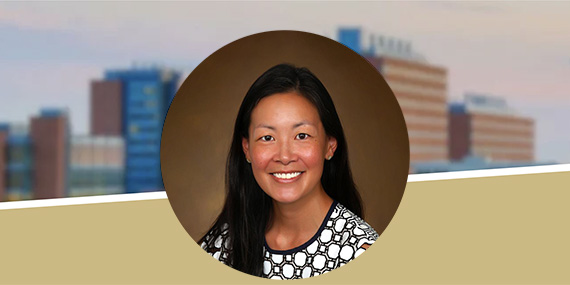
Led by Jessica Rove, MD, Associate Professor of Surgery in the Division of Cardiothoracic Surgery, the robotic cardiac team in the Division of Cardiothoracic Surgery recently performed its first robotic aortic valve replacement (RAVR) surgery.
The procedure was also the first performed in the Mountain West. Only a few hundred robotic aortic valve replacements have been performed worldwide.
“The patient spent less than 24 hours in the ICU and did well,” Dr. Rove said. “This is a big milestone for our cardiovascular and OR teams. Moving forward, it will be an important minimally invasive option for appropriate patients and highlights the full spectrum of valve treatments we have to offer our patients.”
Dr. Rove added that the milestone was a team achievement involving surgeons, cardiologists, advanced practice providers, and the cardiac OR team. Read more about this achievement in the Department of Surgery newsroom.
I had the pleasure of joining the Department of Neurosurgery’s faculty meeting on March 24. I appreciated the warm welcome and was very impressed with the department’s continued tremendous progress. The Neurosurgery team is demonstrating remarkable momentum across clinical growth, operational excellence, and strategic expansion. Kudos to Peter Fecci, MD, PhD, Chair of Neurosurgery, and his colleagues for reporting so much success!
Recent recruitment successes — including key hires in surgical and medical neuro-oncology from leading institutions such as Duke University and University of California, San Francisco — underscore the department’s ability to attract top-tier talent and build a nationally competitive program.
Clinically, the department is experiencing robust growth, with clinic volumes increasing by as much as 30%, sustained expansion in surgical activity, and wRVU production.
The department’s financial performance is equally strong, and with help from their recent hire of a “super coder,” they have had a dramatic 44% reduction in controllable write-offs — the largest single-year improvement on record — reflecting highly effective revenue cycle optimization.
Operational advancements, including new OR capacity, expanded clinical space, and innovative scheduling tools such as a diagnosis-driven “Decision Tree,” are enhancing patient access, efficiency, and care delivery. At the same time, the department continues to address complex payer and authorization challenges with targeted, data-driven strategies.
Collectively, these accomplishments reflect a high-performing, rapidly advancing neurosurgical program that is strengthening its clinical impact, operational sophistication, and national standing. Bravo!
-scholars-program-members.jpg?sfvrsn=c220b6b4_1)
Learn More About the Program
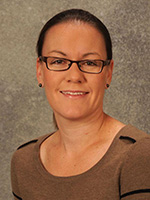
Bernie Johnson, MD, Associate Professor of Pediatrics, has been named Section Head of Emergency Medicine in the Department of Pediatrics effective April 1. A respected clinician and operational leader, Dr. Johnson has served the section for over a decade and has led nationally recognized improvements in emergency department performance, quality, and patient experience. She is also a dedicated educator, mentor, and academic contributor with a strong record of scholarship and research leadership.
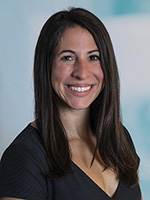
Nicolle Fernández Dyess, MD, MEd, has been named the recipient of the second annual M. Douglas Jones Junior Faculty Educator Award by the Department of Pediatrics. This award recognizes a junior faculty member who demonstrates exceptional dedication to medical education and academic excellence. Dr. Dyess, Assistant Professor of Pediatrics in the Section of Neonatology, is the associate program director of the neonatal-perinatal medicine fellowship, the director of the Residents and Fellows as Educators Elective, and the co-director of the School of Medicine Medical Education Individualized Curriculum.
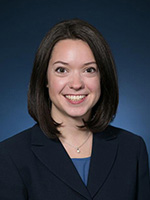
Josephine Harrington, MD, Assistant Professor of Medicine in the Division of Cardiology, has been named recipient of the Christopher O'Connor Award for Outstanding Scholarship award for research published in JACC: Heart Failure. The award from the American College of Cardiology is given to researchers within the first five years of training. Dr. Harrington’s article, “Heart Failure With Preserved Ejection Fraction Across the Spectrum of Body Mass Index: Hemodynamic and Echocardiographic Characteristics and Outcomes,” was published March 2026.

Memorial Service for Gerald D. “Chip” Dodd, III, MD
Tuesday, April 14 from 11:30 a.m. to 1:30 p.m.
Education 2 South
Please join us for a memorial service to honor and celebrate the life, legacy, and impact of Gerald D. “Chip” Dodd, III, MD, who served as Chair of Radiology from 2008 to 2023. All who knew Dr. Dodd are welcome to attend the service to remember his life and lasting impact on our community.

New Leader Orientation
Thursday, June 4
Anschutz Health Sciences Building
The Office for Faculty Development is hosting a full-day new leader orientation event designed for new Chairs, Vice Chairs, Division and Section Chiefs, Associate and Assistant Deans, and other newly appointed institutional leaders seeking to learn more about School of Medicine infrastructure and resources across the campus. Topics covered include research funding, relationships with outside practices, finance, faculty and staff support structures, appointments and promotions processes, philanthropy, and innovations. Register or nominate a new leader for the orientation. For questions, please contact [email protected].
Ethan G. Hughes, PhD, Associate Professor of Cell and Developmental Biology, is corresponding author of a spotlight article, “Timing is everything: myelin and coincidence detection,” published in the March 2026 issue of Trends in Neurosciences. Three co-authors are from our campus.
Ian H. Stanley, PhD, Associate Research Professor of Emergency Medicine, is corresponding author of a research letter, “Public Opinions of US Military Medical Research,” published March 30 by JAMA Network Open. Four co-authors are from our campus. The publication was accompanied by an invited commentary, a distinction that reflects the significance the journal's editors placed on this work.
Daniel Brook, MD, PhD, Resident in Psychiatry, is a co-author of an original investigation, “Brief Prescribing Support and Buprenorphine Adoption in Rural Primary Care: A Cluster Randomized Clinical Trial,” published March 25 by JAMA Network Open.
Christian D. Young, PhD, Assistant Professor of Pathology, and Xiao-Jing Wang, MD, PhD, Adjunct Professor of Pathology, are corresponding authors of an article, “Smad7-based biologic targeting epidermis and stroma promotes healing of diabetic wounds in mice and pigs,” published March 26 by Nature Communications. Three co-authors are from our campus.
Margaret E. Macy, MD, Professor of Pediatrics, is corresponding author of an article, “FDA approvals for pediatric cancer indications using children’s oncology group associated trials data,” published March 26 by the Journal of the National Cancer Institute. Lia Gore, MD, Professor of Pediatrics, is a co-author.
Leigh Perreault, MD, Adjoint Professor of Medicine, is corresponding author of an article, “Justified Billing Practices Can Improve Revenue for Weight-Focused Visits,” published March 27 by the American Journal of Managed Care. Three co-authors are from our school.
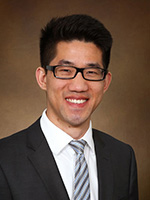 Surgeons Win Impact Paper of the Year Award
Have a good week,

John H. Sampson, MD, PhD, MBA
Richard D. Krugman Endowed Chair
Vice Chancellor for Health Affairs and
Dean, University of Colorado Anschutz School of Medicine
The Dean’s weekly message is an email news bulletin from John H. Sampson, MD, PhD, MBA, Dean of the CU Anschutz School of Medicine, that is distributed to inform CU Anschutz School of Medicine faculty members, staff, students and others about issues pertaining to the school’s mission of education, research, clinical care and community service.
Subscribe to the Dean's Message