

We are making incredible progress in our efforts to become Top 10 in 10, and this week’s message offers many updates on these efforts.
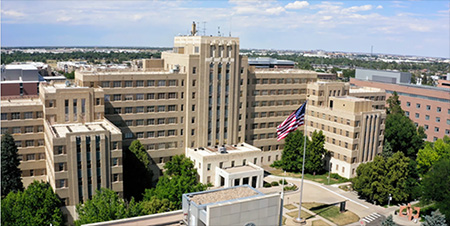
Foremost is last week’s recognition by U.S. News in its latest rankings that we are a top tier research institution. U.S. News doesn’t provide numerical rankings, but rather an alphabetical listing of 16 schools in the top tier. Our peers in the top tier include Baylor College of Medicine; Emory University; Mayo Clinic; University of California Los Angeles; University of California, San Francisco; and Yale University.
There is other outstanding news to share this week:
I hope you enjoy these impressive updates about our colleagues and their work.
Read More About the Rankings
What if our joints could heal themselves? CU researchers could get us there.
The federal Advanced Research Projects Agency for Health (ARPA-H) announced on April 6 that it will advance support for researchers from CU Boulder, CU Anschutz, and Colorado State University who are working on a suite of new therapies for osteoarthritis.
The program — known as NITRO — was the inaugural program of ARPA-H, created to develop “minimally invasive therapeutics that fully regenerate damaged joints.”
Two years ago, NITRO, which stands for Novel Innovations for Tissue Regeneration in Osteoarthritis, received an award of up to $33.5 million, contingent on positive results, to pursue this goal.
“In two years, we were able to go from a moonshot idea to developing these therapies to demonstrating that they reverse osteoarthritis in animals,” said principal investigator Stephanie Bryant, PhD, Professor of Chemical and Biological Engineering at CU Boulder. “Our goal is not just to treat pain and halt progression, but to end this disease.”
Evalina Burger, MD, Chair of Orthopedics, celebrated the potential impact for patients who will benefit from advances by the research team, which includes scientists from her department.
In an article published last week by CU Boulder Today, Dr. Burger said she has seen osteoarthritis afflict everyone from grandparents who can’t comb their hair without shoulder pain to runners and hockey players who had to give up the sport they love due to knee or back pain.
“At the moment, the options for many patients are either a massive, expensive surgery or nothing. There’s not a lot in between,” said Dr. Burger, who has been following the team’s research with interest. “That’s why ARPA-H is so important.”
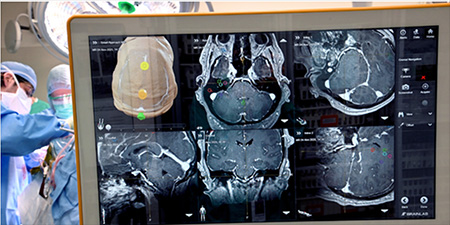
Members of our Department of Neurosurgery performed Colorado’s first implanted brain-computer interface (BCI) surgery at UCHealth University of Colorado Hospital, marking a significant advance for patients with neurological injury or disease.
BCIs can restore lost motor and sensory function by translating brain signals into actions for people with paralysis or neurodegenerative movement disorders.
The 41-year-old UCHealth patient was in an accident approximately 10 years ago that paralyzed him from the neck down. Now, the implanted device will record and interpret his brain’s electrical signals, learning the relationship between the brain’s activity and his intended behavior. This will allow him to regain function and independence through external devices like controlling a robotic arm and using a computer. The research team will also stimulate sensory areas of his brain to restore sensation, aiming to help the patient feel his hand again for the first time since his injury.
A unique feature of this procedure is that our surgeons are among the first in the world to implant the technology in higher level areas of the brain that allow for more natural and complete sensory and motor control. This approach allows for restoring function in a more complete way and allows for rare insight into how the brain turns thoughts into actions.
“This surgery is an important step forward not only for this patient but for neuroscience as a whole,” said Daniel Kramer, MD, Assistant Professor of Neurosurgery. “While most BCI procedures focus only on purely motor regions, implanting this device in higher level brain areas will offer new insights into how the human brain works during everyday thinking and movement.”
Additional details about this amazing surgery are included in the campus newsroom.
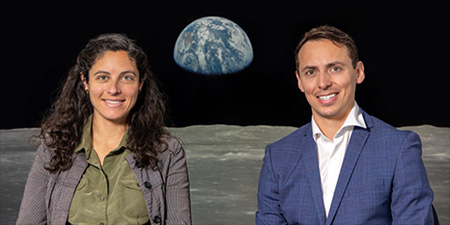
 Krithika Lingappan, MD, PhD, has been appointed Section Head of Neonatology in the Department of Pediatrics, effective September 1. Dr. Lingappan joins us from the Children’s Hospital of Philadelphia and the Perelman School of Medicine at the University of Pennsylvania, where she is a tenured Professor of Pediatrics in Neonatology. An internationally recognized physician-scientist, she brings extensive NIH-funded research expertise, a strong record of clinical and program leadership, and a deep commitment to education and mentorship.
 Jamie Feinstein, MD, MPH, Professor of Pediatrics, Medical Director of the Colorado Child Health Research Institute, and Pediatric Director of the Epidermolysis Bullosa Multidisciplinary Program, has been appointed the new Ergen Family Endowed Chair in Pediatric Outcomes Research, effective July 1. He succeeds Allison Kempe, MD, MPH, Professor of Pediatrics. Dr. Feinstein brings a strong focus on translating research into meaningful improvements in care, policy, and outcomes for children, particularly those with complex and chronic conditions.
 Patricia Gabow, MD, MACP, Professor Emerita of Medicine received the Welch-Rose Award for Distinction in Public Health at the 2026 Association of Schools & Programs of Public Health Annual Meeting in March, honoring Dr. Gabow’s legacy as a physician, scientist, policy leader, and health system innovator. The prestigious Welch-Rose Award recognizes a lifetime of transformational contributions to the field of public health.
 Sean O’Leary, MD, MPH, Professor of Pediatrics, has been awarded the Henry K. Silver Advocate Award by the National Association of Pediatric Nurse Practitioners (NAPNAP). The award honors the legacy of pediatric health care pioneers Henry K. Silver, MD, and Loretta C. Ford, EdD, and recognizes outstanding members who carry on the contributions of these two leaders who founded the nurse practitioner role while at CU in 1965.
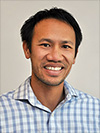 Derek Fong, DVM, DACLAM, Associate Director of Veterinary Services for the Office of Laboratory Animal Resources and Associate Professor of Pathology, is the 2026 President of the American Society of Laboratory Animal Practitioners (ASLAP). After serving three years as a board member for ASLAP, he was elected to the ASLAP Executive Committee in 2024. ASLAP’s mission is to advance laboratory animal practitioners through career development, recruitment, and representation in the greater professional community.
 Lauren Habenicht, DVM, MS, DACLAM, Senior Clinical Veterinarian and Associate Professor of Pathology was recently awarded the 2025 American Association for Laboratory Animal Science (AALAS) Foundation Advocacy Award for her outreach work to educate the public and university community on the important role of animals in research. Dr. Habenicht was also recently featured on The LASt Word: An AALAS Podcast – Episode 35 (YouTube) discussing her article, “Detection and Remediation of Pneumocystis murina Infections by Environmental Health Monitoring,” published in JAALAS.
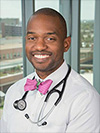
Cleveland Piggott, MD, MPH, Associate Professor of Family Medicine and Vice Chair for Departmental Engagement, has been recognized by the Society of Teachers of Family Medicine (STFM) with its 2026 Diversity Award. All STFM award winners will be recognized during their Annual Spring Conference in New Orleans in May.

Anuja Riles, MD, MEd, Assistant Professor of Pediatrics and Director of the Post-clerkship Curriculum and the Health System Science Curriculum at the Fort Collins Branch campus, has been named Editor-in-Chief of the Journal of Regional Medical Campuses.
 Eva Bernstein, MD, a third-year resident in Family Medicine, has been named Family Medicine Resident of the Year by the Colorado Academy of Family Physicians (CAFP). Dr. Bernstein received the honor at the CAFP Annual Summit on April 10.
 Memorial Service for Gerald D. “Chip” Dodd, III, MD
Tuesday, April 14 from 11:30 a.m. to 1:30 p.m.
Education 2 South
Please join us for a memorial service to honor and celebrate the life, legacy, and impact of Gerald D. “Chip” Dodd, III, MD, who served as Chair of Radiology from 2008 to 2023. All who knew Dr. Dodd are welcome to attend the service to remember his life and lasting impact on our community.

Wednesday, May 27, 6 p.m.
Tattered Cover Book Store, 2526 E. Colfax Ave.
Suzanna Kafer, PhD candidate, and Kristen Boyle, PhD, Associate Professor of Pediatrics, will present “The Persistence of PFAS: How 'forever chemicals' slip into our lives, and into our cells.” The talk is free and open to the public and is part of an ongoing series offered by the Office of Research Education.
 New Leader Orientation
Thursday, June 4
Anschutz Health Sciences Building
The Office for Faculty Development is hosting a full-day new leader orientation event designed for new Chairs, Vice Chairs, Division and Section Chiefs, Associate and Assistant Deans, and other newly appointed institutional leaders seeking to learn more about School of Medicine infrastructure and resources across the campus. Topics covered include research funding, relationships with outside practices, finance, faculty and staff support structures, appointments and promotions processes, philanthropy, and innovations. Register or nominate a new leader for the orientation. For questions, please contact [email protected].
Christopher McKinney, MD, Associate Professor of Pediatrics, is a co-author of an original article, “CRISPR-Cas12a Gene Editing of HBG1 and HBG2 Promoters to Treat Sickle Cell Disease,” published April 1 by The New England Journal of Medicine.
Harrison Bai, MD, Associate Professor of Radiology, is a corresponding author of an article, “Integrating large language models for enhanced predictive analytics in healthcare,” published April 2 by NPJ Digital Medicine. Five co-authors are from our campus.
Andrew Getahun, PhD, Assistant Professor of Immunology and Microbiology, is corresponding author of an article, “Lyn governs the establishment and maintenance of B cell anergy by suppressing PI3K signaling,” published March 8 by Nature Communications. Three co-authors are from the Department of Immunology and Microbiology.
Leigh Perreault, MD, Adjoint Professor of Medicine, is corresponding author of a brief communication, “Mediators and moderators of successful population-level weight management in primary care: results from the PATHWEIGH cluster-randomized pragmatic trial,” published April 2 by the International Journal of Obesity. Five co-authors are from our Department of Family Medicine.
Thomas E. Finger, PhD, Professor of Cell and Developmental Biology and Co-director of the Rocky Mountain Taste & Smell Center, is a corresponding author of an article, “Taste dysfunction in long COVID,” published January 29 by Chemical Senses.
Joshua F. Yarrow, PhD, Assistant Professor of Medicine, is a co-author of a research article, “Pathologic Changes in Subchondral Bone Microarchitecture Differ Between ACLT, NIKI, and MMT Models of Post-Traumatic Osteoarthritis,” published March 27 by the Journal of Osteopathic Research.
At CU Thrive Well-Being Innovation Day, more than a dozen researchers presented topics focused on well-being and how to best address burnout among health care professionals. Look back at photos from the event on Instagram.
Follow CU Anschutz School of Medicine on Social Media
Have a good week,
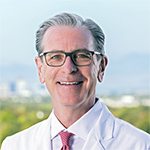
John H. Sampson, MD, PhD, MBA
Richard D. Krugman Endowed Chair
Vice Chancellor for Health Affairs and
Dean, University of Colorado Anschutz School of Medicine
The Dean’s weekly message is an email news bulletin from John H. Sampson, MD, PhD, MBA, Dean of the CU Anschutz School of Medicine, that is distributed to inform CU Anschutz School of Medicine faculty members, staff, students and others about issues pertaining to the school’s mission of education, research, clinical care and community service.
Subscribe to the Dean's Message