

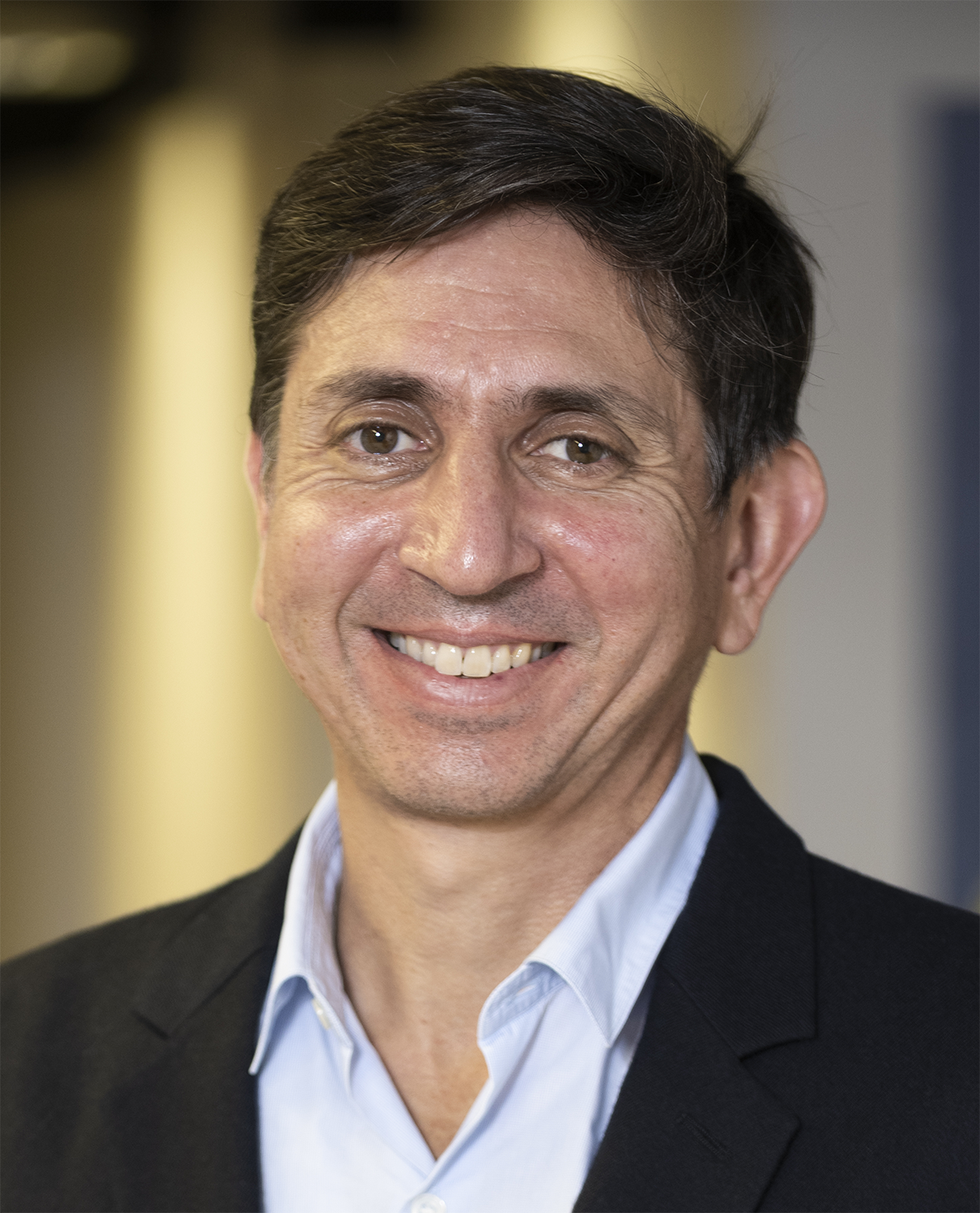
To schedule an appointment with Dr. DiGregorio, please contact his assistant, Becca Hall: [email protected]
Department of Physiology and Biophysics
University of Colorado Anschutz
RC1 North Tower, P18-7129
Mail Stop 8307
Aurora, CO 80045
Tel (303) 724-5364
E-mail: [email protected]
Graduate Program Affiliations:

Summary: Our lab investigates how the diversity and dynamics of synapses shape neural circuit function and behavior. Using a multi-scale and multi-disciplinary approach—from nanoscale molecular organization to millimeter-scale circuit output—we study how neurons encode time and integrate multisensory information.
Synaptic basis of behavior: A paramount challenge of Neuroscience research in the 21st century is to understand how the cells in the brain (neurons) use their specialized contacts (synapses) to route and transform information to perceive the world around us and, in turn, drive behaviors. One fascinating function of the nervous system is its ability to keep track of time. Sensations, thoughts, and actions are dynamic events that require the brain to encode the passage of time. For many tasks, such as playing music or sports, accurate execution requires the precise estimation of time intervals in the range of milliseconds to seconds. But how neuronal elements within brain circuits represent “time” is not understood. Synaptic connections between neurons change their strength dynamically during brief bouts of activity. We hypothesize that they could act like “cellular timers” and thus be a substrate for encoding time within neural networks to generate precise behaviors.
A specialized brain region, the cerebellum, learns precise temporal details of our internal and external sensory world to fine-tune motor and cognitive behaviors. Indeed, deficits of cerebellar function could account for altered sensory responses in schizophrenia
or autism. Fortunately, the cerebellar circuit architecture is relatively simple and has only a handful of well-defined neuron types. This makes it uniquely tractable to establish the role of each neuron type and its synaptic connections in generating
precisely timed actions.
Question: In the DiGregorio lab, we want to understand how the molecules, synapses, and neurons together help us keep track of time to perform precise actions.
Approach: The SCD laboratory has implemented a multi-scale and multidisciplinary research program that links macromolecular organization at synapses to neural circuit function that drives well-timed behaviors. Projects in the laboratory include microscopy development, patch-clamp, and two-photon dynamic imaging in acute brain slices, super-resolution imaging of synaptic macromolecular complexes, high-speed random access 2-photon imaging of neuronal population activity, and single-unit recordings using high-density Neuropixels probes in awake behaving mice. Statistical and numerical methods are used to compare experimental results to mathematically formalized hypotheses.
/ryan.jpg "Ryan") | Ryan Thorpe |
/haris2.png "Haris") | Haris Alvanos Postdoctoral Researcher [email protected] |
/img_4226.jpeg "Selin") | Selin Schamiloglu Postdoctoral Researcher [email protected] |
/silhouette-100x125.png "Ali") | Ali Mahdavi Omaselan Olya Postdoctoral Researcher [email protected] |
| Ming Ma Research Assistant Professor [email protected] |
 | Max Martin Entry Research Services Professional [email protected] |
 | Sanjeev Janarthanan Research Assistant [email protected] |
Morabito, A., Zerlau, Y., Dhanasobhon, D., Berthaux, E., Tzilivaki, A., Moneron, G., Cathala, L., Poirazi, P., Bacci, A., DiGregorio, D.*, Lourenço, J.*, Rebola, N*. A dendritic substrate for temporal diversity of cortical inhibition. Neuron, in press (2025). *equal contribution
Colcombet-Cazenave*, B., Moneron, G.*, El Helou, A., DiGregorio, D.A., Michel, V., and Wolff, N. Super-resolution mapping of the ankle link proteins ADGRV1 and PDZD7 in developing auditory hair cells. iScience, in press (2025). *equal contribution
Broussard, G.J., Diana, G., Quiroz, F.J.U., Sermet, B.S., Lynch, L.A., *DiGregorio, D.A., *Wang, S.S.-H.. Precise calcium-to-spike inference using biophysical generative models. BioRxiv, https://doi.org/10.1101/2024.12.31.630967 (2025). *equal contribution.
Diana, G., Sermet, B.S., and DiGregorio, D.A.,. High-frequency spike inference with particle Gibbs sampling. eLife 13. https://doi.org/10.7554/eLife.94723.1. (2025)
Cazé, R.D., Tran-Van-Minh, A., Gutkin, B.S., and DiGregorio, D.A. Demonstration that sublinear dendrites enable linearly non-separable computations. Scientific Reports 14, 18226. https://doi.org/10.1038/s41598-024-65866-9 (2024).
Mellouk, N., Lensen, A., Lopez-Montero, N., Gil, M., Valenzuela, C., Klinkert, K., Moneron, G., Swistak, L., DiGregorio, D., Echard, A., Enninga, J. Post-translational targeting of Rab35 by the effector IcsB of Shigella determines intracellular bacterial niche formation. Cell Reports 43, 114034. https://doi.org/10.1016/j.celrep.2024.114034 (2024).
Diana, G., Sermet, S., and DiGregorio, D. A. High frequency spike inference with particle Gibbs sampling. bioRxiv: https://doi.org/10.1101/2022.04.05.487201 (2022).
Barri, A., M. T. Wiechert, M. Jazayeri and D. A. DiGregorio. Synaptic basis of a sub-second representation of time in a neural circuit model. Nature Communications, 13:7902 doi: 10.1038/s41467-022-35395-y (2022)
Tarpin T, Llobet V, Dugue G, Piwkowska Z, Varani AP, Khilkevich A, DiGregorio D, Popa D, Léna C Multisite extracellular electrode neuronal recordings in the rodent cerebellar cortex and nuclei. In: Sillitoe RV (ed.) Measuring Cerebellar Function. Neuromethods Series. Springer, Berlin Heidelberg New York. (2022).
Biane, C., Rückerl, F., Abrahamsson, T., Saint-Cloment, C., Mariani, J., Shigemoto, R., DiGregorio, D.A. Sherrard, R.M. and Cathala, L. Developmental emergence of two-stage nonlinear synaptic integration in cerebellar interneurons. eLife Nov 3;10:e65954. doi: 10.7554/eLife.65954 (2021).
Reva, M, DiGregorio, D.A.*, and Denis S. Grebenkov, D.S.* A first-passage approach to diffusion-influenced reversible binding: insights into nanoscale signaling at the presynapse. Scientific Reports, Mar; 11(1): 5377 (2021). *senior authors.
Hoehne, A., McFadden, M, and DiGregorio, D.A. Feed-forward recruitment of electrical synapses enhances synchronous spiking in the mouse cerebellar cortex. eLife 9:e57344 doi: 10.7554/eLife.57344 (2020).
Rebola, N., Reva, M., Kirizs, T., Szoboszlay, M., Moneron, G., Nusser, Z. and DiGregorio, D.A. Distinct nanoscale calcium channel and synaptic vesicle topographies contribute to the diversity of synaptic function. Neuron, 104(4): 693-710 (2019). Featured Article and see Preview.
Tran-Van-Minh, A. Rebola, N., Hoehne, A., and DiGregorio, D.A. Two-Photon Neurotransmitter Uncaging for the Study of Dendritic Integration (pgs 33-64). In: Hartveit, Espen. Multiphoton Microscopy. Springer Nature. 364 pgs. ISBN: 978-1-4939-9701-5 (2019)
Marvin, J. S., Scholl, B., Wilson, D.E., Podgorski, K., Kazemipour, A., Mueller, J.A., Schoch-McGovern, S., Wang, S. S-H., Urra Quiroz, F. J., Rebola, N., Bao, B., Little, J. P., Tkachuk, A.N. Hantman, A., Chapman, E.R., Dietrich, D., DiGregorio D.A., Fitzpatrick, D., Looger L.L. Stability, affinity and chromatic variants of the glutamate sensor iGluSnFR Nature Methods, Nov;15(11):936-939 (2018).
Nakamura, Y., Reva, M. and DiGregorio D.A. Variations in Ca2+ influx can alter chelator-based estimates of Ca2+ channel-synaptic vesicle coupling distance. Journal of Neuroscience 8(16):3971–3987 (2018).
Koukouli, F., Rooy, M., Tziotis, D., Sailor K. A., O’Neill H., Levenga, J., Witte, M., Nilges, M., Changeux, J.P., Hoeffer, C., Stitzel, J., Gutkin, B., DiGregorio, D. A., and Maskos, U. Nicotine reverses hypofrontality in animal models of addiction and schizophrenia. Nature Medicine, Mar;23(3):347-354, doi: 10.1038/nm.4274 (2017).
Tran-Van-Minh, A., Abrahamsson, T., Cathala, L. and DiGregorio, D.A. Differential integration of presynaptic activity by dendritic Ca2+ and voltage in cerebellar interneurons. Neuron 91(4):837-50. doi: 10.1016/j.neuron.2016.07.029 (2016). (See Highlights in same issue)
2020 Member of Academia Europaea
2017 Chair of Excellence, Institut Pasteur
2016 Pasteur Vallery-Radot Prize
2015 Prime d’encadrement doctoral et de recherche (PEDR), CNRS
1999 UCLA Alumni Association Outstanding Graduate Student
1998 Hortense Fishbaugh Fellowship
1996 Nation Institutes of Health Individual Fellowship
1993 Nation Institutes of Health MD/Ph.D. (MSTP) Fellowship
1992 Teaching Award