

3 Qs for QI | An Interview with Drs. Wiersma & Spencer
Discussing their QI publication on responding to the 2022 respiratory virus surge in the pediatric ED
Dec 21, 2025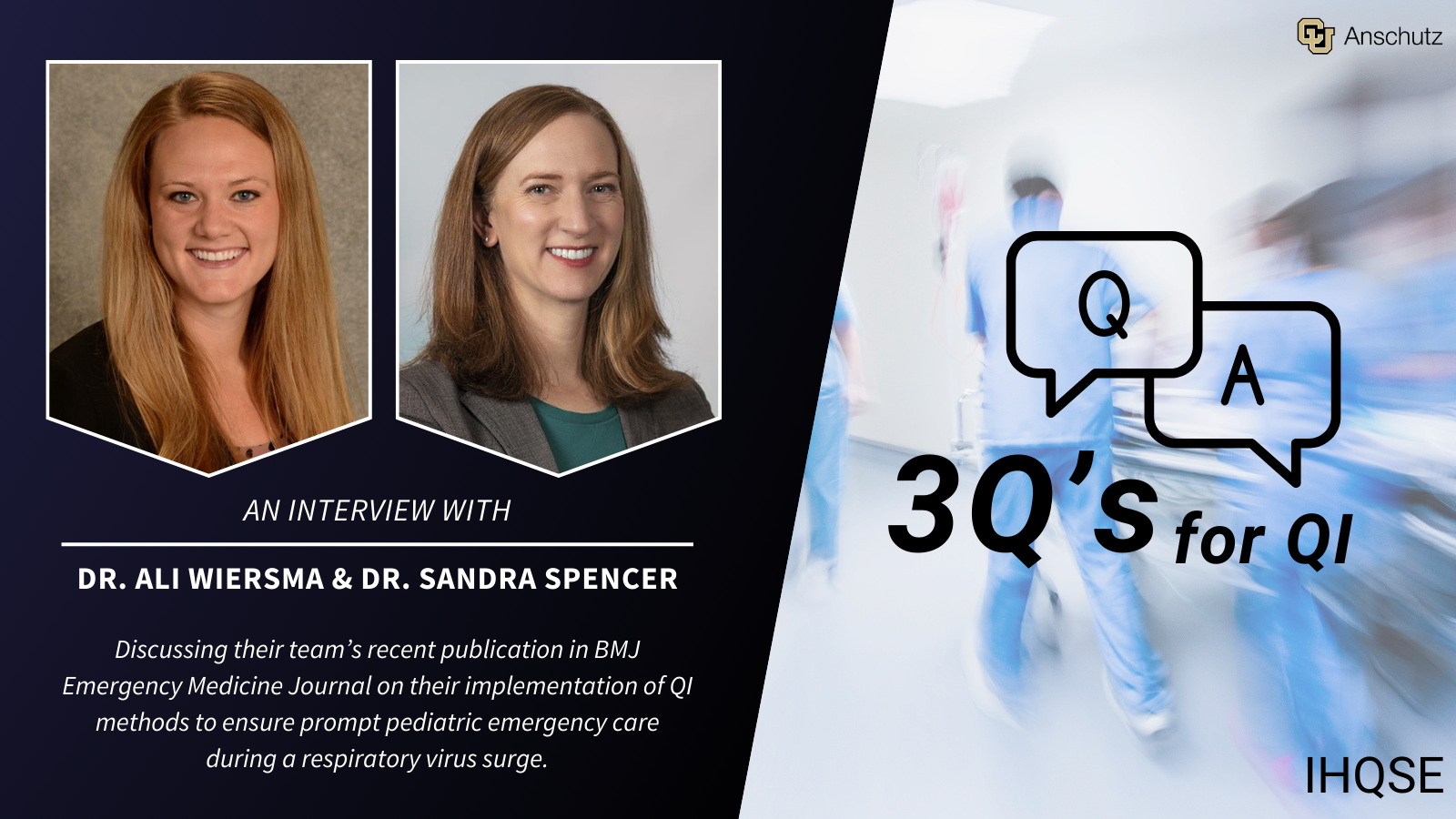
Tell us about your approach to this project
When the 2022 respiratory surge hit, it felt like the pediatric version of the early COVID-19 pandemic: packed waiting rooms, record volumes, and stressed teams. We knew we couldn’t rely on traditional, months-long QI cycles; we needed to make meaningful changes fast. Our team leaned on rapid-cycle quality improvement, meeting frequently to review data and brainstorm practical fixes we could implement within days, not weeks.
We pulled together a diverse group of physicians, nurses, operational leaders, registration, and environmental services and brainstormed solutions at our local site. We quickly repurposed low use administrative space into new patient care rooms for our UC, launched a provider-led intake process to get kids seen faster in the ED, and adjusted staffing around peak hours. After each change, we looked at metrics like door-to-provider time and LWBS rates, adjusting as needed.
That constant cycle of testing, learning, and adjusting allowed us to adapt in real time. It wasn’t about perfection; it was about progress every day. And it worked—our LWBS rate dropped from 40% to under 5%, and door-to-provider times improved even before the surge ended. In fact, this was so successful we made the new rooms we created during this time into the permanent location of our urgent care.
2) Why is this work important?
This project matters because it shows that even in chaos, quality improvement can meet the demands of a system. When families come to an emergency department or urgent care, they’re often scared and exhausted. Long waits or leaving without being seen can make a hard situation worse—and sometimes dangerous. Our team just wanted to be able to care for all the patients that needed it.
During the 2022 surge, many pediatric hospitals were overwhelmed. We wanted to prove that with the right approach, you can protect access and safety even when resources are stretched thin. By using rapid-cycle QI, we improved flow, reduced delays, and created systems that worked better under pressure, not worse.
The beauty of this work is that it’s scalable. You don’t need new buildings or fancy tech—you need people willing to collaborate, data to guide decisions, and the flexibility to act quickly. Those lessons translate to any healthcare setting.
3) How do you think this will impact healthcare?
I think this project shows what’s possible when teams are empowered to make smart, fast changes at the front line. Too often, healthcare systems wait for the “perfect plan” or a big grant before tackling problems. What we demonstrated is that real improvement can come from quick, low-cost, staff-driven ideas that respond to what’s happening today.
We’ve already seen a shift in mindset at our own hospital. People are more confident in their ability to test changes, review the data, and keep what works. We have seen improved engagement in other flow and efficiency QI projects.
On a larger scale, this type of rapid-cycle improvement can help healthcare systems everywhere move from reactive to proactive. Instead of feeling paralyzed during crises, teams can rely on structured, proven tools to adapt quickly. Ultimately, that means safer care, shorter waits, and a better experience for patients and families.