

3Qs for QI: An Interview with Dr. Norman Friedman
Feb 26, 2026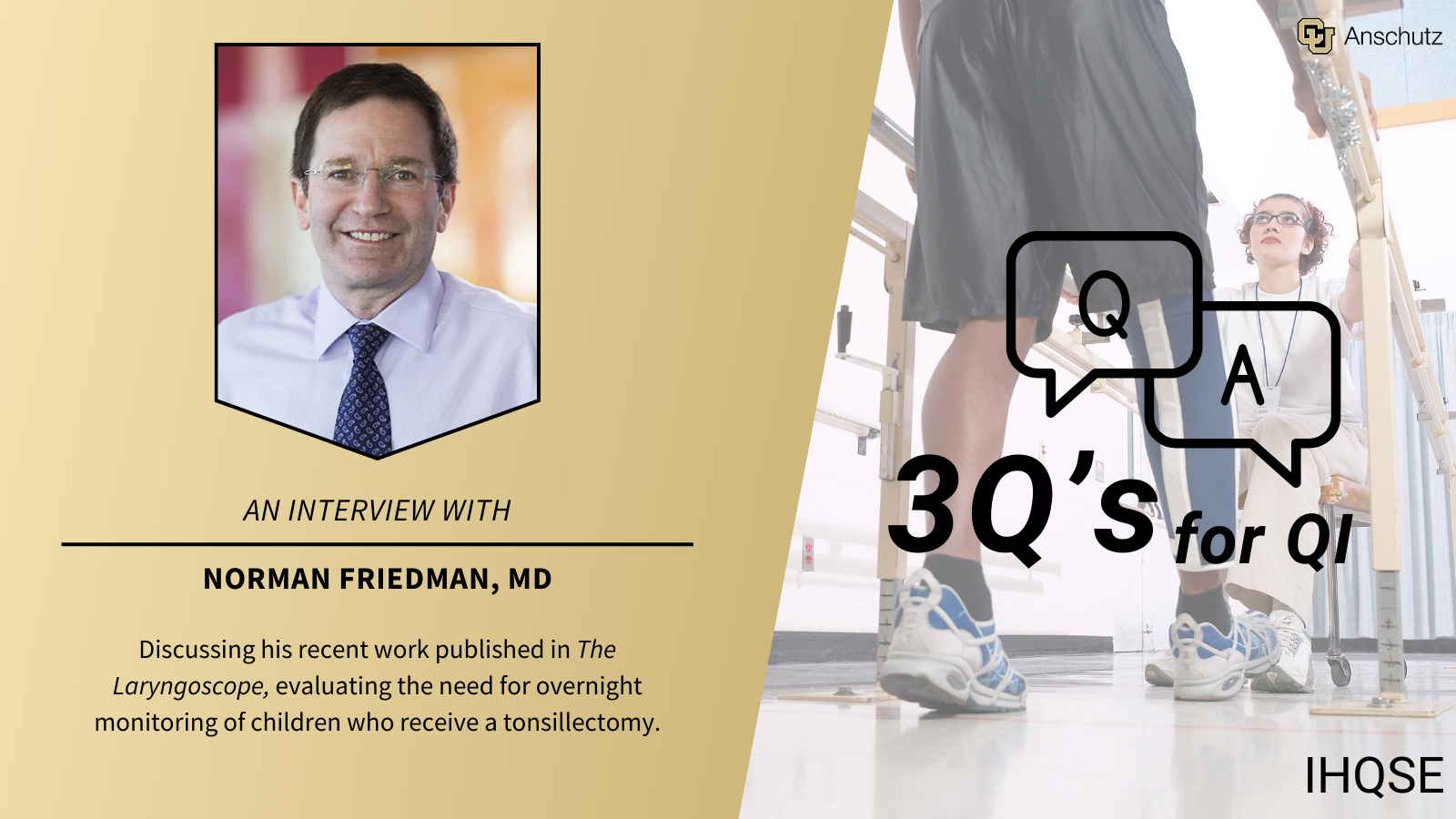
Tonsillectomy is one of the most common pediatric surgical procedures performed with over 550,000 operations annually. Stratification of which children do not require overnight monitoring has major implications for healthcare value both financially and for the family experience. The American Academy of Otolaryngology/Head & Neck Surgery’s tonsillectomy clinical practice guideline recommends overnight observation for any child less than 3 years of age.
Our most recent investigation of clinical outcomes for toddlers who underwent a tonsillectomy provided further evidence that children who were off oxygen with 3 hours of surgery and passed an asleep room air challenge (AsRAC) are good candidates for same day surgery. Over 80% of toddlers were off oxygen within 3 hours and only 1.3% (n=7) were briefly placed back on oxygen following passing an AsRAC. The tonsillectomy outcome research at CHCO will be at the forefront when the American Academy of Otolaryngology/Head&Neck Surgery revises the tonsillectomy clinical practice guidelines.
Tell us about your approach to this project?
In 2011, I was an author for one of the American Academy of Otolaryngology/Head&Neck Surgery’s (AAO/HNS) tonsillectomy clinical practice guidelines. I disagreed with the overnight monitoring criteria, but I had no evidence to support my view. Prior to investigating the best practice patterns for same day surgery for children with obstructive sleep disordered breathing, all the perioperative pain management and patient education needed to be standardized. All the clinicians and nurses in the divisions of anesthesia, perioperative services and Peds OTO would have to abandon their current “best” practice. The Children’s Hospital Colorado administration agreed to support my research with the stipulation that I learn to manage change by participating in the University of Colorado’s Institute for Healthcare Quality, Safety and Efficiency Certificate Training Program. Following adoption of a uniform family education plan, postoperative PACU orders and a single T&A postoperative order set, the stage was set to investigate our clinical outcomes.
Q2: Why is this work important?
In an era that values the right patient, right place and right time, a reassessment of the overnight monitoring criteria was appropriate. From a resource utilization standpoint, a decrease in hospital admissions improves healthcare value by not only lowering costs but also simultaneously improving the family experience and patient access.
Q3: How do you think this will impact healthcare systems going forward?
Our findings have already influenced healthcare systems on a national level. Children with non-severe obesity (BMI% <99), age > 24 months, an OAHI <20 and no hypoxemia preoperatively are candidates for same day surgery. The 2019 tonsillectomy AAO/HNS clinical practice guidelines are due to be reviewed. The research at CHCO on tonsillectomy outcomes will be at the forefront of the revised overnight monitoring criteria.
Dr. Thanh Nguyen of anesthesia, ENT nursing and the PACU team continue to make iterative changes in tonsillectomy care to provide the best care for these families.