Accelerated project, combining expertise from CU Anschutz, CU Boulder and Colorado State University scientists, aims for human clinical trials within 18 months.
A groundbreaking and fast-paced effort – combining biologic, clinical and regulatory expertise at the University of Colorado Anschutz – has helped propel an ambitious nationwide attempt to reverse osteoarthritis (OA), a painful degenerative disease that affects 32 million Americans.
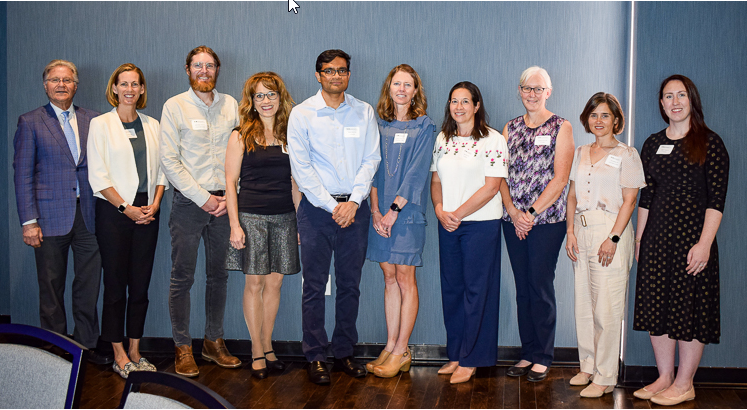
At 8:30 a.m., 125 or so researchers crowded into the CSU Spur. Some were toting their posters. Some were clutching their coffee and laptops. They settled in to learn about the links between plastic exposure and chronic disease risk; they heard about a novel cancer treatment tested in both golden retrievers and humans; and they listened to researchers discuss advances in cartilage regeneration. What connected these wide-ranging topics? It was the CCTSI’s CU-CSU Summit conference on chronic disease research.
Dr. Pochih Shen, research fellow in the group, presented his study titled “3D-Printed Growth Plate Mimetic Composite Mitigates Early Growth Deformities in a Rabbit Model.” His talk was followed by Dr. Ana Ferreira Ruble, who shared her latest work on “Optimization of a 3D-Printed Growth Plate Mimetic Composite for the Treatment of Growth Plate Injuries.”
Osteoarthritis, a painful degenerative disease that affects 32.5 million Americans, slowly degrades buffering cartilage until joints grind together bone-on-bone. With no existing effective regenerative therapy, treatments are limited to anti-inflammatory injections and, ultimately, expensive joint replacement surgery.


-annual-meeting-2025-img-5.jpg?sfvrsn=aae7ddb4_1 "Orthopaedic Research Society (ORS) Annual Meeting 2025-Img-5")