

January 6, 2026
Happy New Year! Welcome to the 2026 Winter edition of our CU Anschutz Maternal-Fetal Medicine e-newsletter. In this issue, we discuss updates on gestational diabetes management, baby aspirin dosing, fetal pillow recommendations and other important announcements.
Our division has noticed a greater number of patients referred for GDM management based solely on a failed one-hour GTT. While, both ACOG and ADA agree that a 50-g screen >200 mg/dL is strongly suggestive of GDM, it is not diagnostic. Due to several logistic considerations, MFM asks that patients are not referred for GDM unless diagnosis is confirmed by either a 3-hour test or the week of testing (outlined below). Without official confirmation of GDM diagnosis, some patients are getting billed out-of-pocket for supplies and counseling.
GDM diagnosis should be confirmed with a 3h GTT (with 2 or more abnormal values) or persistently elevated self-monitored BG values exceeding pregnancy targets. If >/= 30% of all FSBG values or if fasting is >95 more than 30% of the time, the patient will be managed as GDM.
If/when GDM diagnosis is confirmed, please prescribe glucometer and testing supplies and instruct patient to begin testing fasting and 1- or 2-hour postprandial values at the same time the referral is placed. If you refer to us for GDM, we will assume the intention is for MFM to manage GDM, and our team will schedule all remaining growth ultrasounds.
If a patient was previously referred to MFM for a different reason (i.e. IVF conception, abnormal 1st trimester scan) and a diagnosis of GDM is made later in the pregnancy, a new referral should be placed for our team to know that you now want us to manage the GDM. Even if a patient already has ultrasounds scheduled with MFM, if we do not receive a referral for GDM management, it is not obvious or clear how you would like our team involved.
Though it is well-studied that daily 81mg aspirin reduces the risk for preeclampsia in high-risk patients, several recent larger studies have suggested that a daily dose of 162mg may provide further risk reduction. While acknowledging these studies and the potential risk reduction, ACOG, SMFM and USPSTF continue to recommend a total daily dose of 81mg citing insufficient evidence to change practice at this time. Two large clinical trials are now taking place and will be randomizing participants to 81mg vs 162mg in early pregnancy. The ASPRIN trial, funded by a PCORI grant, is enrolling 10,000 women who are at risk of developing a hypertensive disorder of pregnancy. The Maternal Fetal Medicine Units network, of which the University of Colorado Anschutz is a member, recently started the ADEPT trial which is enrolling patients who have had a prior proximal preterm delivery, whether it be spontaneous or iatrogenic due to ischemic placental disease or fetal demise. Currently, CU Anschutz MFM has reviewed the available data and are following the recommended guidelines of 81mg (with an exception to offer 162mg if a prior preterm preeclampsia delivery occurred while on 81mg). We eagerly await the results of both trials and will share updates as they become available.
Our division remains committed to improving access to high-risk pregnancy care. Earlier this year, we expanded appointment availability (i.e. adding Saturday clinic slots at our CU Anschutz School of Medicine sites) and added additional providers and sonographers.
We understand the frustration community clinicians have experienced with longer-than-normal wait times and want to assure you that we continue to prioritize urgent and time-sensitive cases. Looking ahead, our top priority for 2026 is to reduce wait times through strategic initiatives across all Colorado sites. However, we need your help! Whether you refer through Epic or fax/email our referral form, PLEASE include detailed indications for service so we know exactly why your patient is being referred.
Thank you for your partnership and understanding as we work together to provide exceptional care for our high-risk obstetric patients.
We have recently been asked by many referring providers about MFM’s approach to the Fetal Pillow considering recently reported concerns. We have decided as a system to keep the Fetal Pillow stocked for use for impacted fetal head at time of Cesarean. We recommend against placing the Fetal Pillow in any patient in which the device has not been studied (history of Cesarean, pre-eclampsia, diabetes, intraamniotic infection, etc.). This decision is based on a review of the available evidence, which shows mixed benefits but no major risks when used appropriately. Data remains limited, and we await the results of a currently ongoing randomized controlled trial on the use of the Fetal Pillow.
The Abrysvo vaccine was approved in late 2023 for use in pregnant patients for the purpose of decreasing RSV disease in their infants. It is approved for administration from 32w0d to 36w6d gestational age. This timeframe limits the risk of preterm delivery (a non-significant trend in the vaccine trial) and to ensure the infant receives benefit (14 days from administration are necessary for transplacental antibody transfer). Keep this in mind if a patient has a planned delivery in the late preterm or early term period. For example, if a patient has a planned cesarean delivery or induction at 37w0d, the Abrysvo vaccine should be given before 35 weeks to allow the 14 days for infant to receive benefit from the antibodies. As a reminder, repeat vaccination in a subsequent pregnancy is not currently recommended.
We are excited to share that Dr. Dayna Whitcombe and Kate McCracken, DNP have joined our division. Dr. Whitcombe completed both OB-GYN residency and MFM fellowship at University of Arkansas for Medical Sciences. She then served as an Assistant Professor there in maternal-fetal medicine from July 2023 until joining our team. Her clinical interests include diabetes, hypertensive disorders in pregnancy, cardio-obstetrics, multiple gestation, and fetal anomalies.
Kate McCracken, DNP trained at Frontier Nursing University. She spent almost 10 years in maternal-fetal medicine at University of Oklahoma Health while also serving as Assistant Professor at University of Oklahoma College of Nursing. Kate has a strong passion for quality improvement initiatives and is excited to bring her clinical experience, academic perspective and commitment to improving maternal outcomes to her new role her at CU Anschutz.
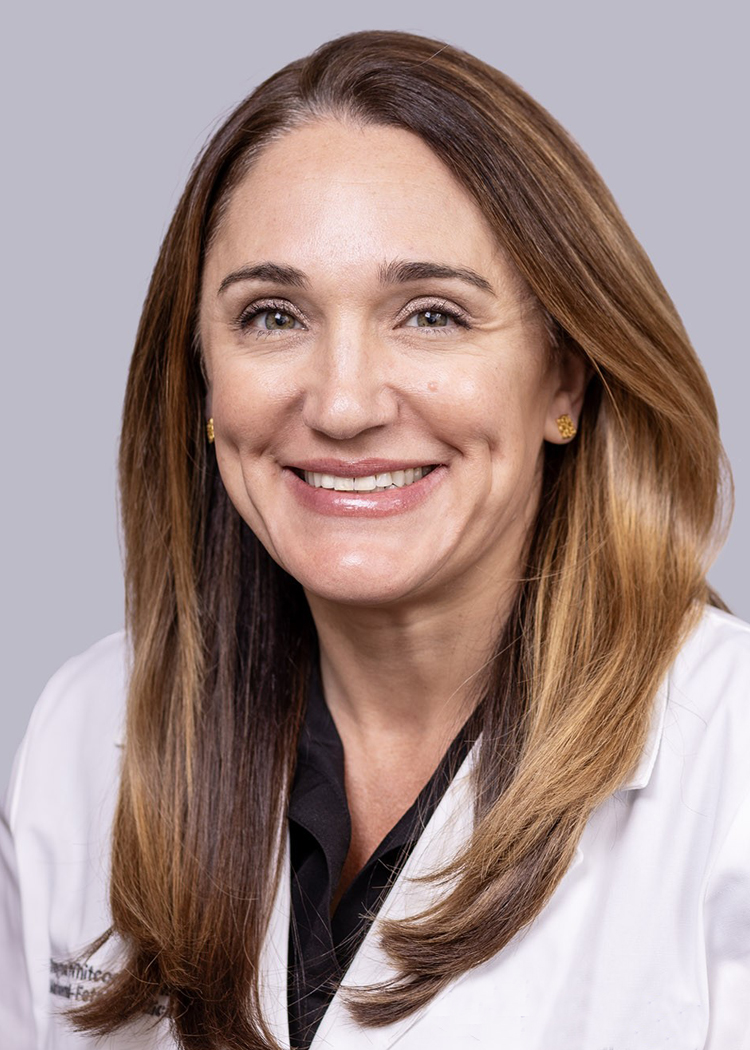
Assistant Professor

Assistant Professor
To refer a patient or for more information, call 303-315-6100 or fax 303-468-3481.
In UCH Epic, referrals can be submitted via Ambulatory Referral to OBGYN/MFM: (REF86). You MUST also select a location for referral to drop into our work queue.
We invite you to share your thoughts, experiences and suggestions related to our content and services. Do you have any questions or topics you'd like us to cover in future editions or educational events? Are there any success stories or challenges in Maternal-Fetal Medicine that you'd like to see featured? Have you experienced issues, concerns or discrepancies with our services? Please email Kelly Clark, [email protected], or fill out our online form. Your input helps us tailor our content and educational offerings to better serve your needs and interests. Join the conversation and be a part of shaping our community!