David Case, MD, Named Director of the Neuro ICU and CO-Director of Stroke
Robert Neumann, MD, PhD's mentorship and genuine friendship prepared David Case, MD, for his new roles.
Makenzie Hardy Jul 30, 2026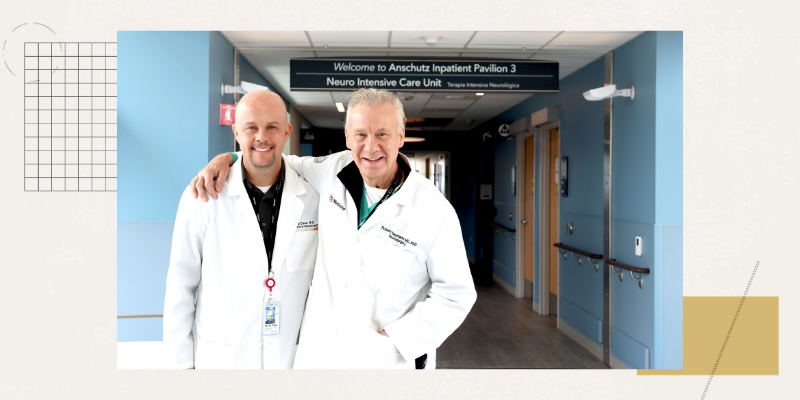
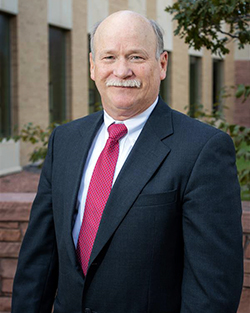
David Case, MD, associate professor of neurosurgery at the University of Colorado Anschutz School of Medicine, has been named the new director of the neurological intensive care unit (neuro ICU) at UCHealth University of Colorado Hospital and co-director of the hospital's comprehensive stroke program.
He succeeds Robert Neumann, MD, PhD, professor of neurosurgery, who developed the dedicated neuro ICU, growing it to become among the state's top neuro ICUs. It's now recognized as a premier regional referral and dedicated neuro critical care unit in the Rocky Mountain region.
“Bob and I are very close, he’s a fantastic human being,” Case says. “I wouldn’t have my job if it weren’t for him. He trained me and everyone in the ICU.”
Neumann built a team of physicians, advanced practice providers, and nurses trained to care for critically ill patients to meet a serious neuro critical care need in Colorado.
Neurocritical care in Colorado
Over two decades ago, Neumann walked into UCHealth University of Colorado Hospital as the only neurointensivist at the hospital dedicated to caring for patients in the intensive care unit (ICU) with life-threatening diseases or injuries in the brain or spinal cord.
Recognizing a need for neuro critical care, Neumann developed a dedicated neurological intensive care unit (neuro ICU). At the time of its creation, the neuro ICU ranked 9th in Colorado. Under Neumann’s leadership, the unit became a top neuro ICU in the state and is recognized as the premier regional referral and dedicated neurocritical care unit in the Rocky Mountain region.
In his leadership roles, Neumann hired, trained, and mentored all attendings, advanced practice providers (APPs), and many of the inter-disciplinarian staff working in the neuro ICU today. He grew the unit from one attending to a busy, 24-bed neuro ICU with seasoned neuro nursing leadership, nurses, multidisciplinary team members, and outstanding quality metrics. The neuro ICU team also provides care for step-down patients, stable patients requiring intermediate monitoring, in the hospital.
In 2007, Neumann added the first fellow and a second attending, Luis Cava, MD, and a senior nursing team. The program grew to include Case and Jason Weedman, MD, along with a team of APPs.
“He has mentored and helped numerous staff throughout the entire hospital system,” Case says. “We now have outstanding nursing leadership, charge nurses, APP leadership, pharmacy, dietary and nutrition services, therapies, social workers, volunteers, and hospital support.”
The neuro ICU
The ICU is led by intensivists, critical care physicians who are trained to provide care for some of the sickest patients in the hospital. Neurointensivists care for patients with brain or spinal cord injuries or diseases that require critical care monitoring, procedural management, and treatment.
Neurointensivists are trained to perform bedside neurosurgical procedures including external ventricular drain (EVD) placement, lumbar drain insertion, and intracranial pressure (ICP) monitor placement. These interventions are done to monitor intracranial pressure and drain cerebrospinal fluid. Patients are admitted to the neuro ICU after a stroke, complex brain or spine surgery, severe infection in the brain, or traumatic injury to the brain or spine.
Neuro ICU nurse training is another crucial component of an excellent neuro ICU unit. Nurses working in the neuro ICU require advanced skills to manage complex neuromonitoring technology and detect clinical changes that may signal neurological decline in a patient. Case credits the strong neuro nursing leadership and charge nurses for their expertise in caring for these patients.
The Neuro ICU at UCHealth University of Colorado Hospital is a regional referral center. Case now has the responsibility of leading a neuro ICU that is an integral part of the hospital’s level I trauma center designation.
The length of stay in the neuro ICU varies from patient to patient. Some patients stay for a few days for monitoring while other, more critical patients may stay for weeks.
Peter Fecci, MD, PhD, chair of neurosurgery at the CU Anschutz School of Medicine, offered his support of the leadership change and Case’s plans for the future in a department-wide announcement.
“These appointments recognize David’s clinical excellence and leadership, and they position our neuro critical care and stroke programs for continued growth,” Fecci says.
Neuro critical care research and education
Neuro critical care research focuses on improving survival and recovery of patients in the neuro ICU. Case plans to bolster research studies and productivity utilizing the department’s strong research team and by collaborating with other departments at the University of Colorado Anschutz School of Medicine.
He plans to work in unison with the rest of the neurosurgery service line to expand upon research that has already been done, engaging in clinical trials, studying advanced monitoring, and improving bedside clinical examination and treatment.
In addition to research, Case hopes to continue to attract top-tier candidates to the neuro critical care fellowship. The two-year fellowship program seeks board-eligible neurologists, neurosurgeons, anesthesiologists, emergency physicians, or critical care physicians who are interested in subspecialty training in neuro critical care.
Faculty in the neuro ICU also provide training and education for neurosurgery residents and medical students during their rotations. Like Neumann before him, Case firmly believes in investing in the next generation of neuro critical care providers.
Caring for stroke patients
In addition to his role in the neuro ICU, Case will also serve as co-director of the stroke program alongside Sharon Poisson, MD, professor of neurology. The UCHealth University of Colorado Hospital is a nationally designated comprehensive stroke center, offering advanced care in emergency interventions and specialized neuro intensive care.
A hospital obtains the certification of a comprehensive stroke center by meeting several criteria, including a dedicated neuro-ICU and the ability to provide round-the-clock availability of vascular neurologists, neurosurgeons, and endovascular neurosurgeons.
After completing medical school then a residency program in neurology at CU Anschutz School of Medicine, He then completed a stroke/vascular neurology fellowship, a neuro critical care fellowship, and an endovascular neurosurgery fellowship at CU Anschutz. He is board certified in neurology, vascular neurology, neuro critical care, and endovascular neurosurgery making Case the ideal candidate to take on both roles. Many of the stroke patients he sees while on call end up in the neuro ICU. He currently serves a dual role clinically as a member of the endovascular neurosurgery team and neuro critical care team.
In addition to caring for patients at the UCHealth University of Colorado Hospital, Case also cares for patients at Children’s Hospital Colorado. He will continue to take call at both locations.
Looking ahead
Case hopes to grow the neuro ICU in unison with the neurosurgery department to a nationally recognized, top-tier program. With the addition of more staff and increased academic efforts, Case will continue to move the program forward, providing much needed neuro critical care, research, and education.
While driven to attain these ambitious goals, Case values the years of advice and mentorship that he received from Neumann and plans to adopt his servant leadership approach. He says that Neumann is a great example of what a true servant leader should be.
“The best piece of advice from Bob was to take care of your team and do what is best for patients,” Case says. “He treats everybody the same.”