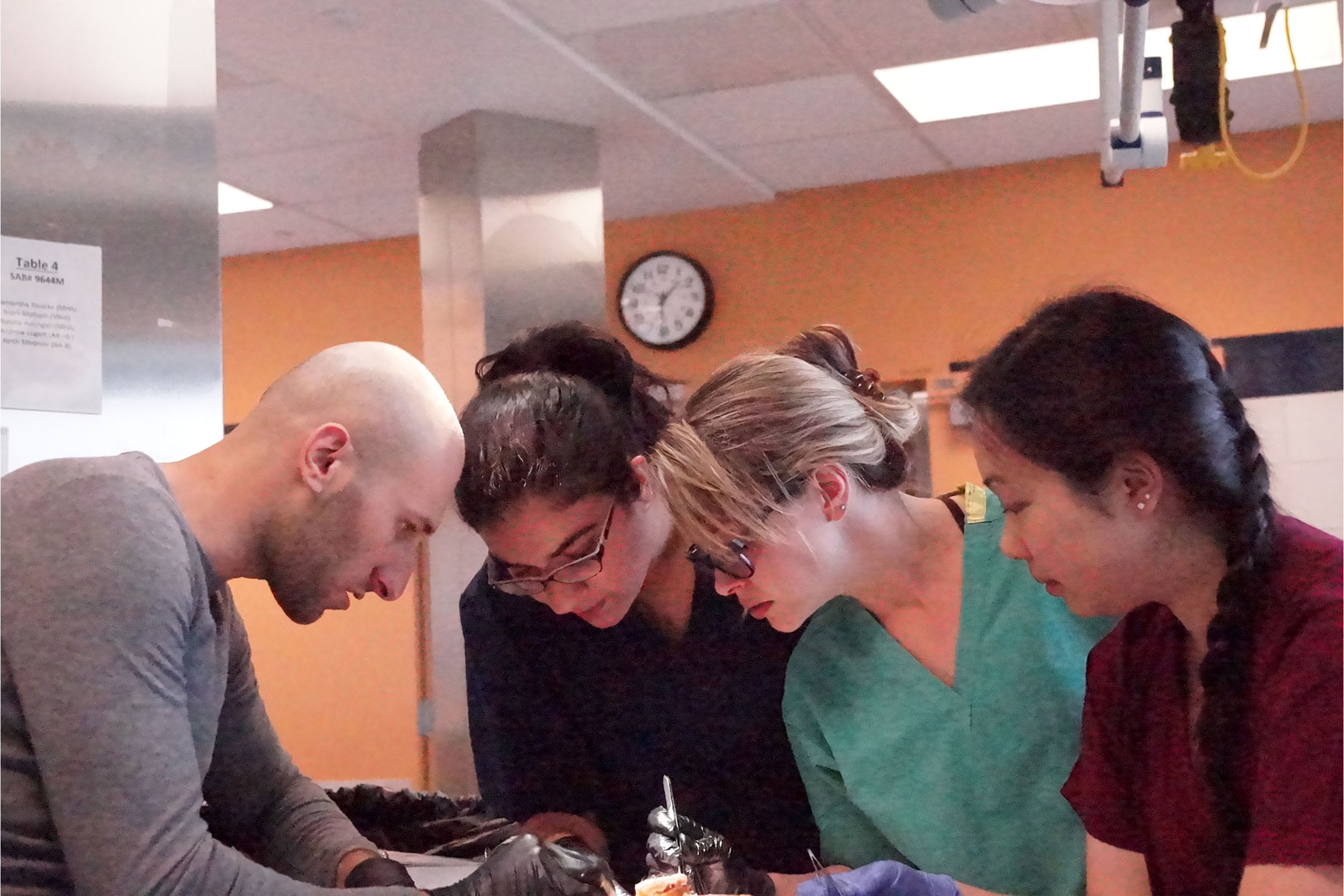
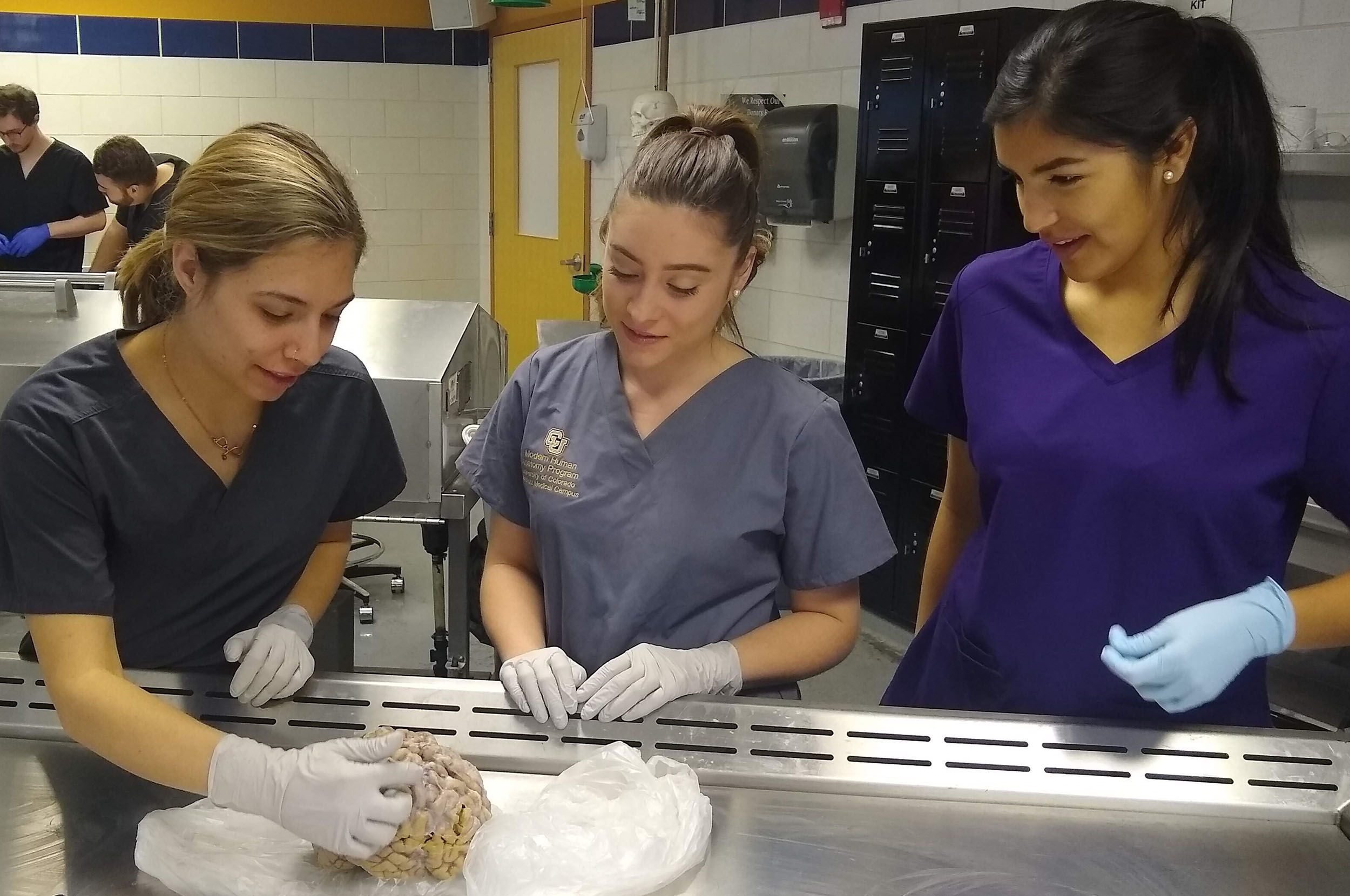
The MHA curriculum consists of 43 credits that can be completed in under 2-years. While most students follow the cohort model and take the same grouping of classes together in the first year of the program, the curriculum provides flexibility for those wishing to take fewer classes in a semester or who enroll on a part-time basis. Faculty advisors and support staff work with students to create individualized pathways for those who seeking a flexible route toward graduation.
Courses for Students Matriculating Fall 2026
Fall Semester 2026
ANAT 6205, Imaging and Modeling (4)
Summer/Fall/Spring, 2027-2028
ANAT 6600, Experimental Design & Research Methods (1) Summer 2027
ANAT 6111, Human Gross Anatomy
Course Directors: Dr. Chelsea Lohman and Dr. Caley Orr | Units: 8 | Semester: Spring | Sample syllabus
ANAT 6205, Imaging and Modeling
This course covers major medical and scientific imaging modalities with an emphasis on 3D scientific and medical visualization. Students will also receive instruction in advanced digital image processing and 3D modeling using industry-standard software
such as MATLAB and Maya.
Course Director: Dr. Ernesto Salcedo| Units: 4 | Semester: Fall | Sample syllabus
ANAT 6310, Neuroanatomy
Course Directors: Dr. Maureen Stabio and Dr. John Caldwell | Units: 4 | Semester: Fall | Sample syllabus | ANAT 6310 Course Guide by Dr. Stabio
ANAT 6321, Human Histology
Course Director: Dr. Paul Morse | Units: 4 | Semester: Fall | Sample syllabus
ANAT 6330, Human Embryology
Course Director: Dr. Cory Buenting Gritton | Units: 3 | Semester: Spring | Sample syllabus
ANAT 6412, Foundations of Teaching
This course will provide students with training, practice, and constructive feedback in effective teaching skills in order to be successful in the biomedical professions. Topics include learning objectives, the neurobiology of learning, assessments, and
effective communication within and outside the classroom.
Course Director: Briauna Blezinski Johnson | Units: 1 | Semester: Fall | Sample syllabus
ANAT 6600, Experimental Design and Research Methods
In this course, students will foster and apply strategies that enable critical evaluation of any published research (including basic, clinical, and educational), as well as develop the skills necessary to conduct and appropriately analyze their own
research data.
Course Directors: Dr. John Thompson and Dr. John Caldwell | Units: 1 | Semester: Summer | Sample syllabus
ANAT 6750, Special Topics
Course Directors: Variable | Units: 1-6 | Semester: Fall, Spring | Sample syllabus
ANAT 6840, Independent Study
Independent Study options allow students to explore study with different faculty members with each experience tailored to the individual student. Students first identify a faculty sponsor and work with
the faculty to determine the scope of the project, how many credit hours should be awarded, and the type of deliverable (paper, presentation, poster, demonstration, etc) that will be required upon completion.
Course Directors: None | Units: 1-6 | Semester: Variable
ANAT 6910, Teaching Practicum
Hands-on teaching course in which students apply pedagogical theories to practice in a professional program as a teaching assistant, lecturer, or other instructional position. 1 credit is required for all students (tuition will refunded). Tuition is not
refunded for students electing to enroll in more than the required 1 credit.
Course Directors: None | Units: 1-3 | Semester: Variable | Examples of teaching opportunities
Students are required to take 9 credits of electives. Pre-approved electives are grouped by 3 main career goals: Health professions, Teaching, and Research. These categories are suggestions to help students consider options and guide discussion with
academic advisors. Electives may be selected from any category. Electives which are not pre-approved will be considered.
Important Notes about Electives
ANAT 6910 may be taken for a maximum of 3 credits (1 required credit and 2 elective credits). Undergraduate credits are only permitted for 4000-level courses, and may be taken for a maximum of 3 credits. Courses must be graduate level when possible.