

The University of Colorado Advanced Therapies for Movement Disorders Program (CUATMD) is the most comprehensive advanced therapies program in the Rocky Mountain Region, offering the most detailed and advanced care. Movement disorders like Parkinson's disease, Essential Tremor, and Dystonia can impact daily life. Advanced therapies can offer more relief when oral medications are no longer the optimal choice for symptom relief.
Deep brain stimulation is a surgical therapy that places a small device (like a cardiac pacemaker) into certain parts of the brain. The device is called a lead, and the location of the lead is decided by what condition is being treated. This device delivers small electrical pulses to help regulate abnormal brain activity and can improve symptoms like tremor, stiffness, slowness, and dyskinesia.
DBS does not destroy brain tissue. Instead, it helps control neural circuits in the brain. DBS is reversible and adjustable. The therapy can be updated to meet each individual's needs as they change over time.
DBS is usually completed in steps or stages. The process starts with an evaluation. The patient will have a series of appointments with different providers to confirm their diagnosis and to ensure that DBS would be a good fit for the patient's needs.
Once a patient is approved for surgery, they will have an MRI and providers will plan their surgical approach, unique to the patient. They will undergo surgery for the lead placement and another surgery to place the pulse generator (battery). Around three to four weeks after the last lead is placed, patients will meet with a movement disorders neurologist to program the new device. Patients may have to come in several times to find the best settings for the device.
Patients who have been diagnosed with Parkinson's disease, Essential Tremor, or Dystonia and who are experiencing disabling motor symptoms even though they are on an optimized medication schedule. Patients must be in generally good health and be able to undergo surgery and MRI imaging. They cannot have any uncontolled psychiatric or cognitive conditions that would interfere with the treatment.
Providers should consider referring patients to the advanced therapies program if patients:
Certain medical conditions may affect a patient's candidacy and will be evaluated by our team. Referring providers will receive details about the patient's candidacy and next steps.
DBS is not a cure, but it can significantly improved quality of life for appropriately selected patients. Most patients experience substantial improvement in motor symptoms once programming is optimized.
The I DECIDE DBS decision tool was created by the faculty of the Movement Disorders Center to help patients with Parkinson's disease think through whether DBS is right for them. Patients can learn more about DBS, compare treatment options, understand the process, and clarify their own goals and priorities. This tool is meant as a guide and does not replace medical advice. Patients should consult with their medical team for personal guidance.
Read more about the guide here.
IDECIDE DBS
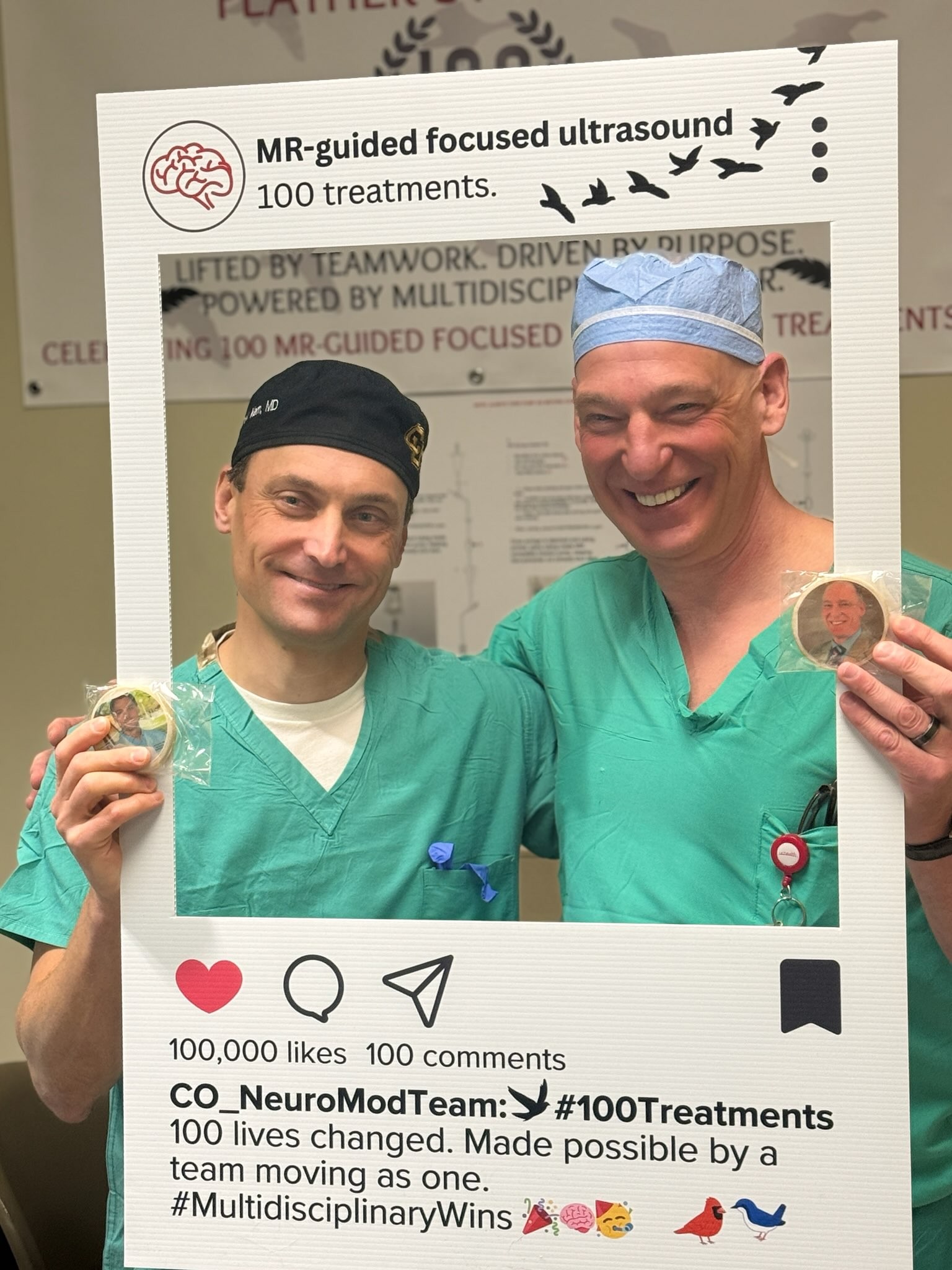
High-intensity Focused Ultrasound (HIFU) or MRI-guided Focused Ultrasound (MRIgFUS) is a new, incisionless treatment for tremors that uses sound waves guided by an MRI to treat deep structures in the brain that are responsible for tremors. The ultrasound waves are focused on a small location in the thalamus of the brain. The temperatures at the targtet rises high enough to create a small ablation or burn. This provides a therapeutic effect.
The MRI acts as the "eyes" of the treatment, enabling the physician to plan, guide, and target the treatment area. It also acts like a thermometer by providing continuous temperature monitoring to make sure that only the targeted tissue is affected.
Patients who have been diagnosed with essential tremor or tremor-predominant Parkinson's disease and who do not receive acceptable tremor relief from medications may benefit from a focused ultrasound consultation.
Focused ultrasound for tremors has been approved in Colorado for staged unilateral treatment, treating both sides of the brain with a minimum of nine months between treatments. The following patients may be eligible:

Carbidopa/Levodopa (CD/LD) infusion provides a continuous delivery of levodopa either under the skin (subcutaneous) or directly into the small intestine (gastrointestinal) to maintain dopamine levels. Both systems provide reduced "off" time and improved motor control due to more consistent drug absorption.
For subcutaneous infusions, patients have a small wearable pump. The pump delivers liquid CD/LD continuously for 24 hours. The therapy does not involve surgery, but must be started in a clinic and is maintained at home.
The gastrointestinal pump delivers an intestinal gel into the jejunum through a PEG-J tube. This system can be used for up to 16 hours daily and bypasses the gastric issues that can interfere with the effectiveness of levodopa that is taken by mouth. This procedure involves surgery to place the PEG-J tube.
Patients who are still having motor fluctuations despite being on optimized oral (taken by mouth) medications. Patients who are ineligible for or uninterested in other advanced therapies but want better symptom management.
These infusion therapies may be appropriate for patients who:
UCHealth Neurosciences Center - Anschutz Medical Campus
1635 Aurora Court
Anschutz Outpatient Pavilion
5th Floor
Aurora, CO 80045
Phone: (720) 848-2080
Email: [email protected]
Internal (Epic):
AMB REF TO NEUROLOGY
Choose option: Movement DIsorders: DBS and Advanced Therapies
External:
Fax: (720) 848-0015