

This multidisciplinary research program investigates puromycin-sensitive aminopeptidase, NPEPPS, as a central regulator of resistance to both chemotherapy and immunotherapy in cancer. The team focuses on the dual roles of NPEPPS in controlling platinum drug uptake through volume-regulated anion channels (VRACs) and modulating tumor antigen presentation, which together drive chemoresistance and immune evasion. Using integrated structural, cellular, and translational approaches in bladder and ovarian cancer models, the research team aims to define NPEPPS–VRAC mechanisms, identify therapeutic vulnerabilities, and evaluate strategies that combine NPEPPS inhibition with established treatments. Complementary efforts in biomarker development and AI-enabled drug design will support patient stratification and therapeutic optimization. Collectively, this work seeks to establish NPEPPS as a druggable target and enable rational combination therapies that enhance the effectiveness of chemotherapy and immune checkpoint inhibitors across cancer types.
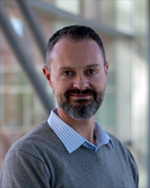 James Costello, PhD
Associate Professor, Department of Pharmacology
Co-Director, Pharmacology and Molecular Medicine PhD Program
Co-Director, Biostatistics and Bioinformatics Shared Resource
University of Colorado Anschutz Medical Campus
Dr. Costello is a Computational Systems Biologist with a balance of wet and dry research. His lab focuses on cancer genomics and pharmacology, including studying cancer development and progression in the wet lab and developing mechanistic computational models leveraging genomics data in the dry lab. The Costello lab helped to discover NPEPPS as a regulator of Volume Regulated Anion Channels to modulate chemotherapy response.
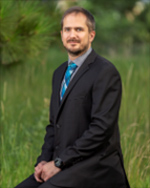 Benjamin Bitler, PhD
Kay and Thomas Dunton Endowed Chair in Ovarian Cancer Research
Benjamin Bitler, PhD
Kay and Thomas Dunton Endowed Chair in Ovarian Cancer Research
Associate Professor, Dept of OB-GYN
University of Colorado Anschutz Medical Campus
Dr. Bitler’s research program focuses on defining novel early ovarian cancer detection biomarkers, developing strategies for overcoming therapy resistance, and better understanding ovarian cancer etiology. Dr. Bitler prioritizes collaboration across disciplines, as there is tremendous potential when research questions are addressed from various perspectives and expertise.
 Dan Theodorescu, MD, PhD
Director, University of Arizona Cancer Center
Professor, Depts of Urology and Cell and Molecular Medicine
University of Arizona
Dr. Theodorescu is a pioneering cancer researcher and clinician recognized for advancing personalized oncology and transforming our understanding of bladder cancer. A visionary leader, he bridges science and medicine, driving innovation, mentoring future physicians, and championing patient-centered discovery to improve outcomes and redefine the future of cancer treatment worldwide.
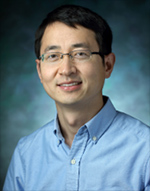 Zhaozhu Qiu, Ph.D.
Professor of Physiology, Pharmacology and Therapeutics
Johns Hopkins University School of Medicine
Dr. Qiu is dedicated to advancing the understanding of ion channels as fundamental regulators of cellular function and their roles in health and disease. His laboratory discovered two new families of chloride channels, including the volume-regulation anion channel (VRAC), and investigates their molecular mechanisms and roles in physiology and disease using electrophysiology, structural biology, animal models.
 Michael Kuhns, PhD
Professor of Immunobiology, Department of Immunobiology
University of Arizona
Dr. Kuhns' research focuses on reverse engineering the molecular mechanisms that drive T cell activation and cell fate decisions. His lab then uses the information gained from this basic research to guide biomimetic engineering of novel synthetic receptors and T cell engagers for therapeutic applications.
 John Bankston, PhD
Associate Professor, Department of Physiology and Biophysics
University of Colorado Anschutz Medical Campus
Dr. Bankston’s lab is interested in how cells sense changes in their local environment, like pH or tonicity, and convert those changes into electrical signals through the activation of ion channels.
Cognitive impairments in decision making, problem solving, and planful cognitive control – collectively known as deficits in executive function (EF) – are common across many psychiatric and neurologic conditions. Improving EF has wide-reaching consequences for enhancing quality of life, occupational functionality, and overall mental health in broad populations of patients. Current treatments, including cognitive behavioral therapy and pharmaceuticals, have limited effectiveness due, in part, to a poor understanding of EF dynamics in human brain activity. This proposal seeks to leverage the world-class research programs in human neurophysiology and neurostimulation at CU Anschutz and Boulder to pioneer a Cognitive Neuroprosthesis aimed at improving executive function. Together we will decode neural biomarkers for EF dysfunction and apply real-time neurostimulation with taVNS to improve EF. By combining these approaches into a closed-loop therapeutic system, we will develop the first treatment system based on neural biomarkers to improve EF in patients with Parkinson’s Disease and will lay the groundwork for cognitive function restoration in patients with psychiatric and neurologic conditions. This system will provide the first real-time, personalized system to restore cognitive flexibility, addressing a large and unmet clinical need.
 Cristin Welle, PhD
Professor and Vice Chair for Research
Departments of Neurosurgery and Physiology and Biophysics
Dr. Welle’s BIOElectrics Lab investigates how neurological medical devices interact with the nervous system. Our goal is to understand the dynamic interactions between devices and neural circuits in the context of translational neurotechnology.
 Daniel Kramer, MD
Assistant Professor
Department of Neurosurgery
Dr. Kramer is a Stereotactic and Functional neurosurgeon and neuroscientist who primarily treats patients with Movement Disorders, Epilepsy, and Pain. His research utilizes brain signals from human patients obtained alongside surgical interventions to study the functional role the thalamus and basal ganglia as they relate to movement, and from other cortical brain areas to study the neural execution of executive function.
 Daniel Denman, PhD
Assistant Professor
Department of Physiology and Biophysics
The Denman Lab is interested in how populations of neurons generate sensory perceptions. They use quantitative psychophysics, in vivo electrophysiology, in vivo imaging, circuit tracing, and computational methods to study the dynamics of populations of single neurons. As a developer of the novel neurotechnology, Neuropixels, Dr. Denman also explores its use in human subjects.
 Marie Banich, PhD
Distinguished Professor of Psychology and Neuroscience
Executive Director, Intermountain Neuroimaging Center
University of Colorado Boulder
Professor Banich specializes in using brain imaging techniques to understand the neural systems that allow us to control our attention and actions to prioritize, organize, and guide our behavior in a goal-oriented manner, abilities often referred to as executive function. She investigates these issues both in clinical and non-clinical populations.
 Isabelle Buard, PhD
Assistant Research Professor
Department of Neurology
Dr. Buard’s lab uses magnetoencephalography to study the neurophysiological patterns associated with cognition and movement in healthy controls and people with neurologic disorders. They also investigate whether magnetic pulses and rhythms modulate these patterns in the context of rehabilitation.