

Everything, Everywhere, All at Once? Highlights of the First Annual CU Anschutz Center for Health AI (CHAI) Symposium
Researchers, clinicians, educators and industry leaders gathered on the CU Anschutz campus to explore the state of Health AI in 2026.
David DeBonis Oct 29, 2026
The start of the film “Everything Everywhere All at Once” quickly cuts to a shot of an overwhelmed Evelyn Quan Wang sitting at a desk trying to navigate a mountain of receipts.
As a Chinese-American immigrant, Evelyn is clearly stretched thin under the pressures of life. Scenes reveal Evelyn managing a failing laundromat that is under audit by the IRS; navigating cultural differences; juggling strained relationships with her father, husband and daughter; and fulfilling the duties of caring for her family—all while switching between English and Mandarin.
As if this weren’t enough, during a meeting with an IRS agent, Evelyn is presented with the fact that there are many parallel universes (known as the multiverse). Suddenly, Evelyn is whipped up into a cacophony of strange, otherworldly encounters and situations while jumping across universes.
Although most of us don't share Evelyn’s exact experience, the modern era paints a lot of parallels with the film. The 21st century world was already changing and evolving at an exponential rate. Then, a surge of Artificial Intelligence (AI) sent groundbreaking ripples through our society. Each day, these technologies are growing among us, and they are challenging—sometimes even shattering—our notions about careers, workflows, industry practices and our future. It’s more than enough to make our heads spin.
In healthcare and the biomedical sciences, the developments of AI are a central point of conversation. To help advance the dialogue around health AI and connect stakeholders across disciplines, the Center for Health AI (CHAI) at the University of Colorado Anschutz (CU Anschutz) hosted its first annual symposium on Monday, Oct. 26, 2026.
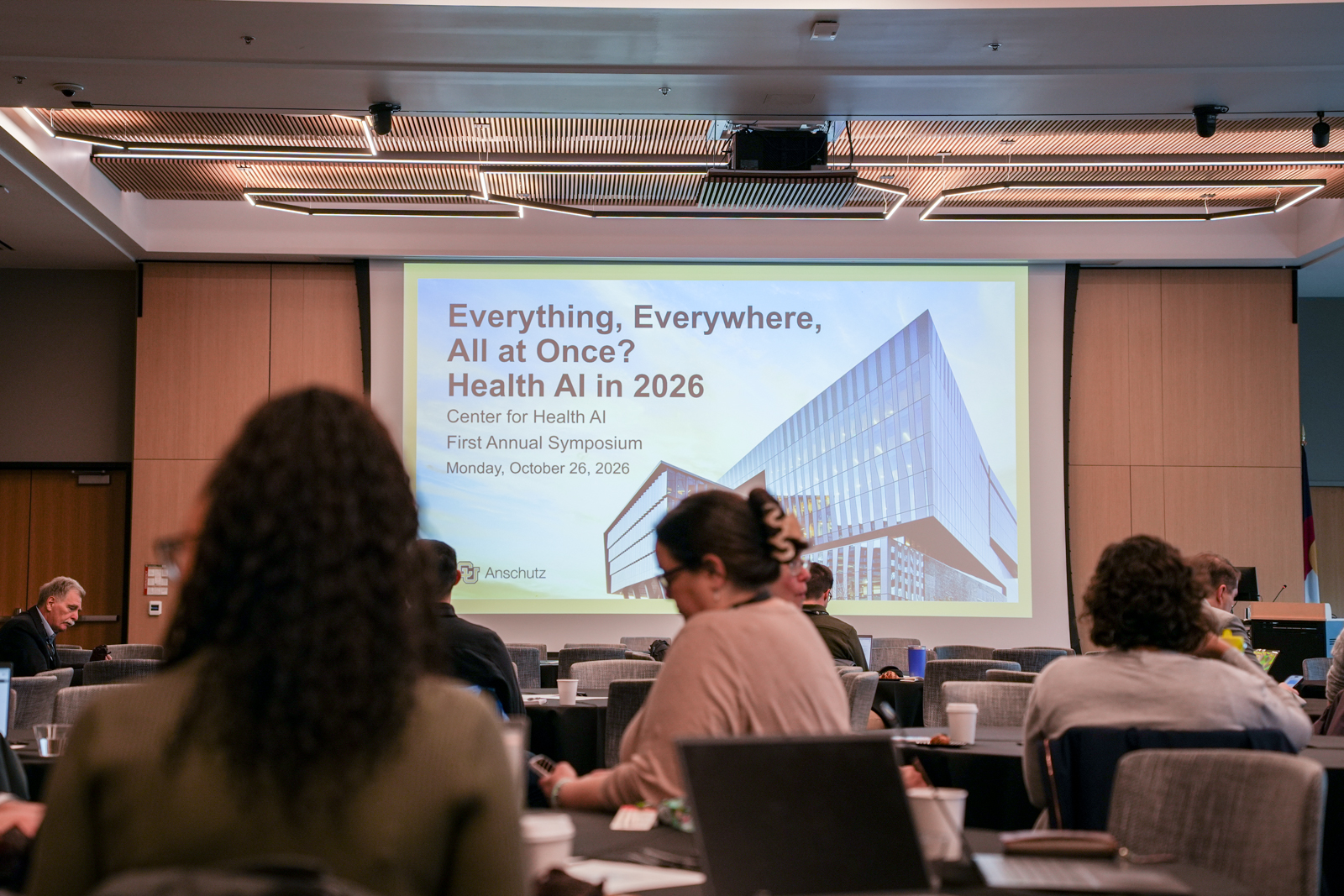
Attendees begin to take their seats to prepare for the 2026 CHAI Symposium.
The symposium opened with CHAI co-directors Yanjun Gao, PhD, and Tell Bennett, MD, explaining why they chose the apt title of Everything, Everywhere, All at Once? Health AI in 2026. The title, they explained, reflects the current state of AI in healthcare:
- Everything: AI now touches nearly every part of our lives, and our health: clinical care, research, operations, education, and the patient experience.
- Everywhere: AI is no longer only in the lab. It is in our health systems, our classrooms, and our patients’ phones.
- All at Once: Capabilities, adoption, and regulation are changing at the same time, faster than any one group can track alone.
- Question Mark (?): “The question mark is on purpose,” they explained. Many questions are still in the air: What actually works? What is still hype? What is safe? For whom? Is our data ready?
After this, Gao and Bennett set the tone for the day, inviting engagement in the form of questions and conversations. “One of our goals is to get people in a room together that don’t always have the opportunity to engage with one another—ask questions and chat with one another,” said Bennett. “This is a catalyst day.”
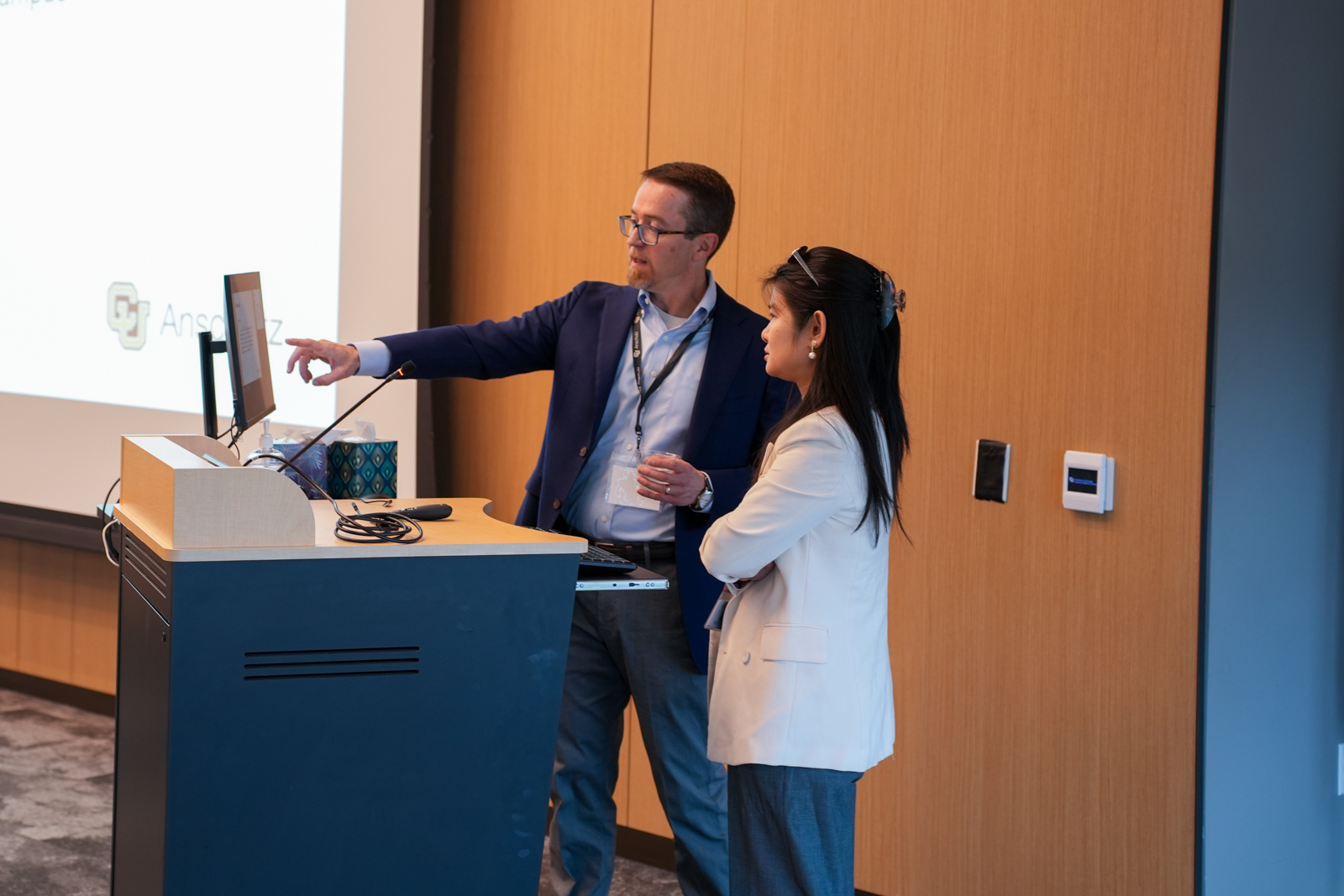 Tell Bennett, MD (left) and Yanjun Gao, PhD (right), co-directors for the CU Anschutz Center for Health AI (CHAI), make final preparations for the first annual CHAI Symposium.
Throughout the day, groups of researchers, software engineers, clinicians, healthcare leaders and other community members gathered on the CU Anschutz campus to connect, learn, share and collaborate about the state of AI in healthcare.
Presentations, panels, posters and discussions spanned across research areas, industries and disciplines—covering topics such as:
- Opportunities and challenges of integrating AI into hospitals, clinics and other healthcare systems
- The use of large language models (LLMs), AI agents and other AI tools by clinicians, patients, healthcare administrators, researchers and students
- The cloudy landscape of intellectual property and FDA approval in the era of big data and AI
- The prospects and pitfalls of AI integration in higher education
- And much more
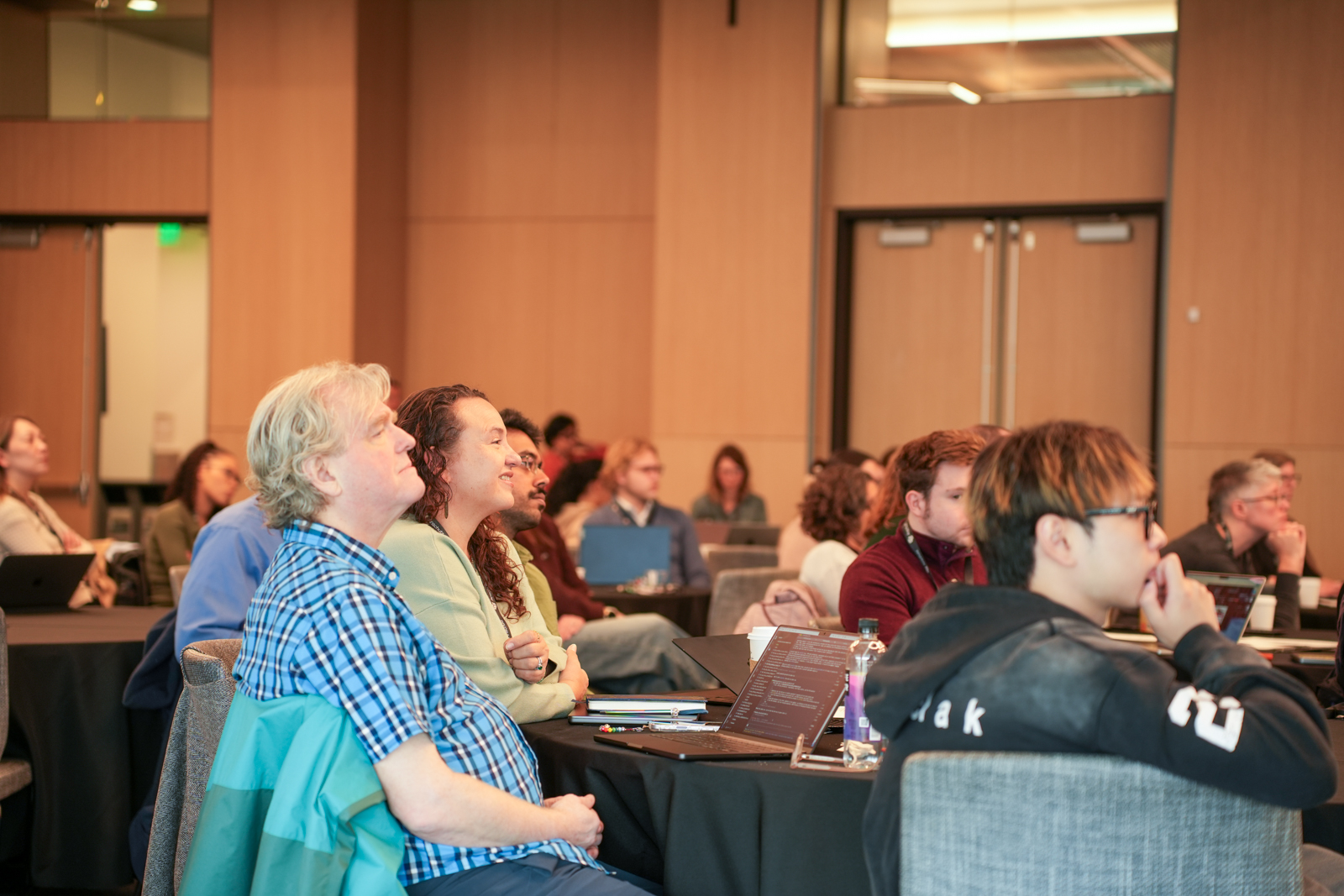 Attendees of the 2026 CHAI symposium engage with a variety of presentations.
Despite the breadth of the field of health AI, all of the sessions continuously returned to a few key questions: What’s happening with AI in healthcare? Where do we go from here? And how do we work together to ensure the best outcomes for all stakeholders?
Here, we’ve curated a brief synopsis featuring some of the main takeaways from the symposium:
1. AI has extensive use cases in biomedical research and healthcare.
As Gao and Bennett mentioned, AI now touches nearly every aspect of our lives. It’s not simply how healthcare professionals are using these tools. It’s about every aspect of healthcare—ranging from the training of clinicians and researchers to the way data is collected, stored and protected.
A variety of use cases for AI in healthcare were presented. For example, Nicholas Dwork, PhD, and Sarah Milla, MD, each shared a presentation about the integration of machine learning and AI in the field of radiology—offering both mathematical and clinical perspectives on how these technologies can support radiologists.
In another vein, Marisha Burden, MD, shared a project examining whether workload strain for clinicians can be identified through secure messages within EPIC.
Across various sessions, it was clear that these tools were being applied in a variety of settings with a shared goal: improving healthcare for all stakeholders.
2. AI has fundamentally shifted education; how do we navigate this new landscape?
One panel zeroed in on AI in education. Arjun Krishnan, PhD, Christina Baker, PhD, RN, NCSN,NI-BC, Matthew Zuckerman, MD, and Cristina Cabrera-Muffly, MD each shared unique perspectives on the integration of AI in higher education.
Although AI does pose challenges for education, leaders and educators on the CU Anschutz campus are exploring effective approaches to integrate AI in the classroom, the clinic and the laboratory without detracting from vital educational experiences.
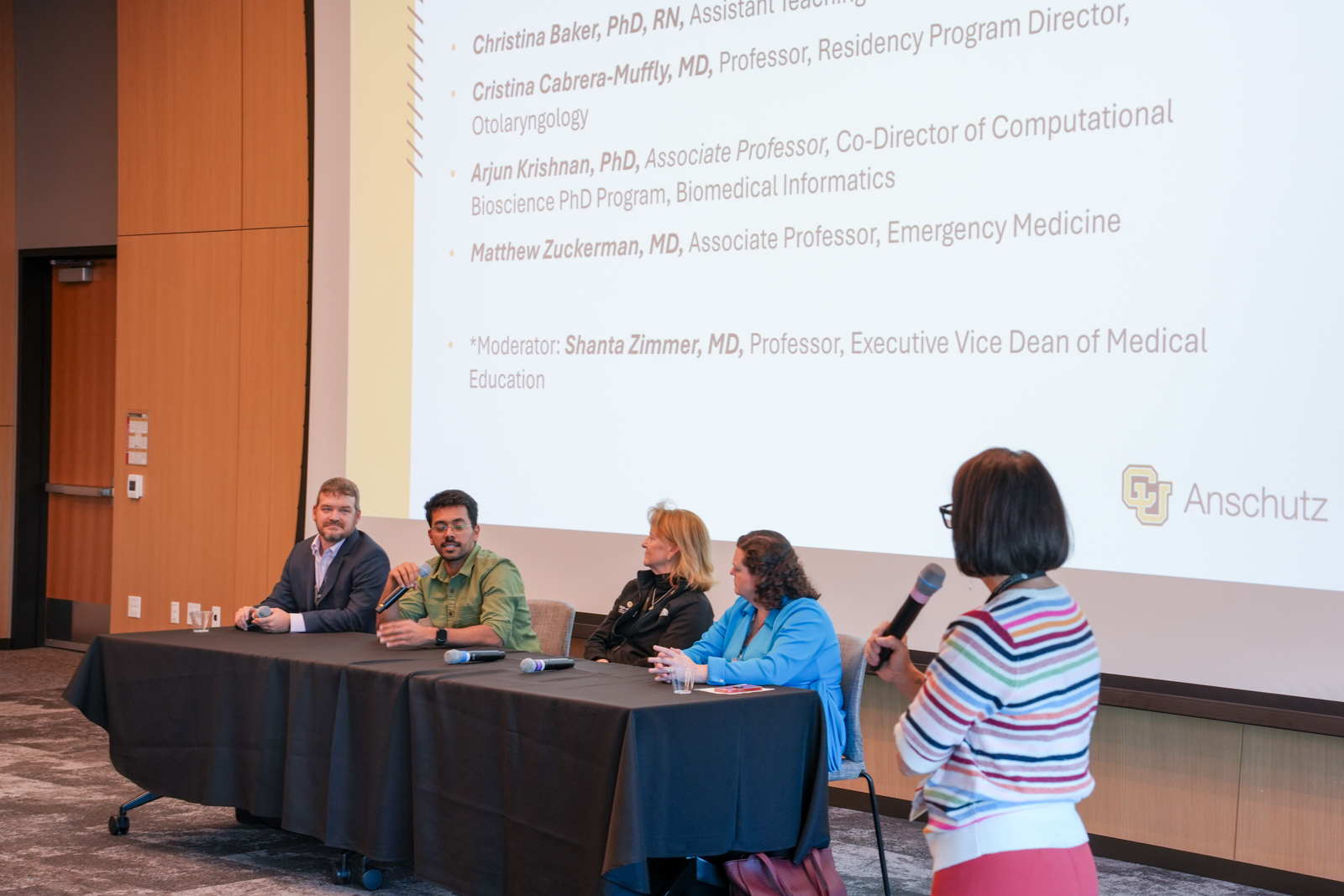
Panelists engage in discussion about AI in education on the Anschutz Campus. Panelists include (left to right): Matthew Zuckerman, MD, Associate Professor, Emergency Medicine, CU Anschutz; Arjun Krishnan, PhD, Associate Professor, Biomedical Informatics and Co-Director of Computational Biosciences PhD Program, CU Anschutz; Christina Baker, PhD, RN, NCSN,NI-BC, Assistant Teaching Professor, College of Nursing, CU Anschutz; Cristina Cabrera-Muffly, MD, Professor, Otalaryngology, CU Anschutz.
3. The conversation about health AI isn’t just about models, computation and integrations. It’s just as much about safety and trust.
Safety, ethics and trust were core themes throughout the day. Presenters, panelists and attendees investigated questions like:
- How do we ensure these models are safe, reliable and trustworthy?
- How much responsibility should AI have, and what should stay in the hands of the clinician, developer or researcher?
- How do we prepare for the possibility of cybersecurity threats?
- How much human supervision is required as these models advance?
Mónica Muñoz Torres, PhD, who works in data curation and biocuration, emphasized the need for trustworthy data. “In order to have trustworthy AI, we need trustworthy data,” she said.
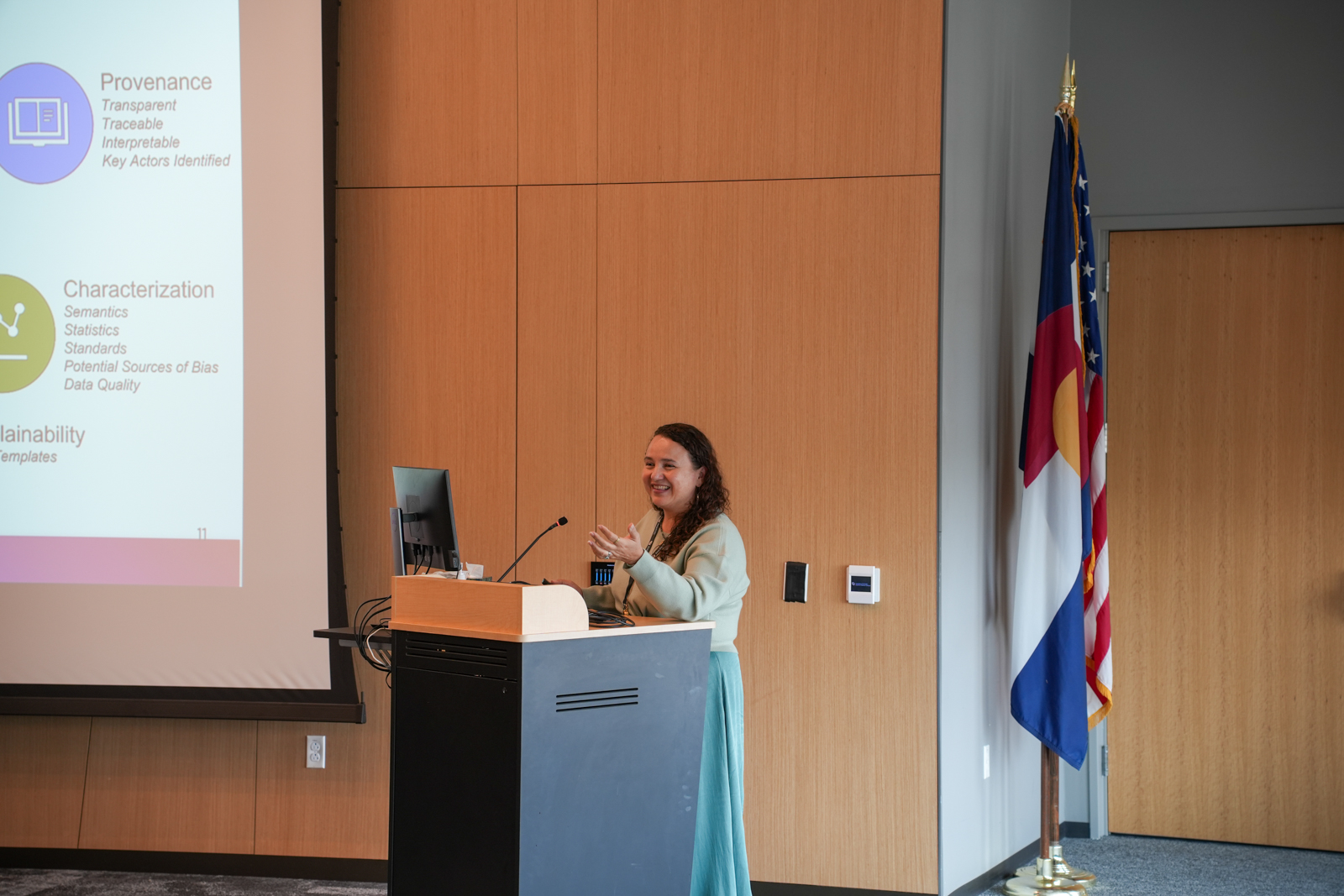
Mónica Muñoz Torres, PhD, presents about the importance of data and collaboration in health AI.
4. Interdisciplinary collaboration will be paramount for the success of health AI.
Among all of the important conversations, one topic resonated from wall to wall: the vitality of interdisciplinary collaboration.
No one really knows where we will be with health AI in five years, or even five months. But the development, integration and assessment of these systems to ensure safety and reliability requires various stakeholders from various walks of life to work together.
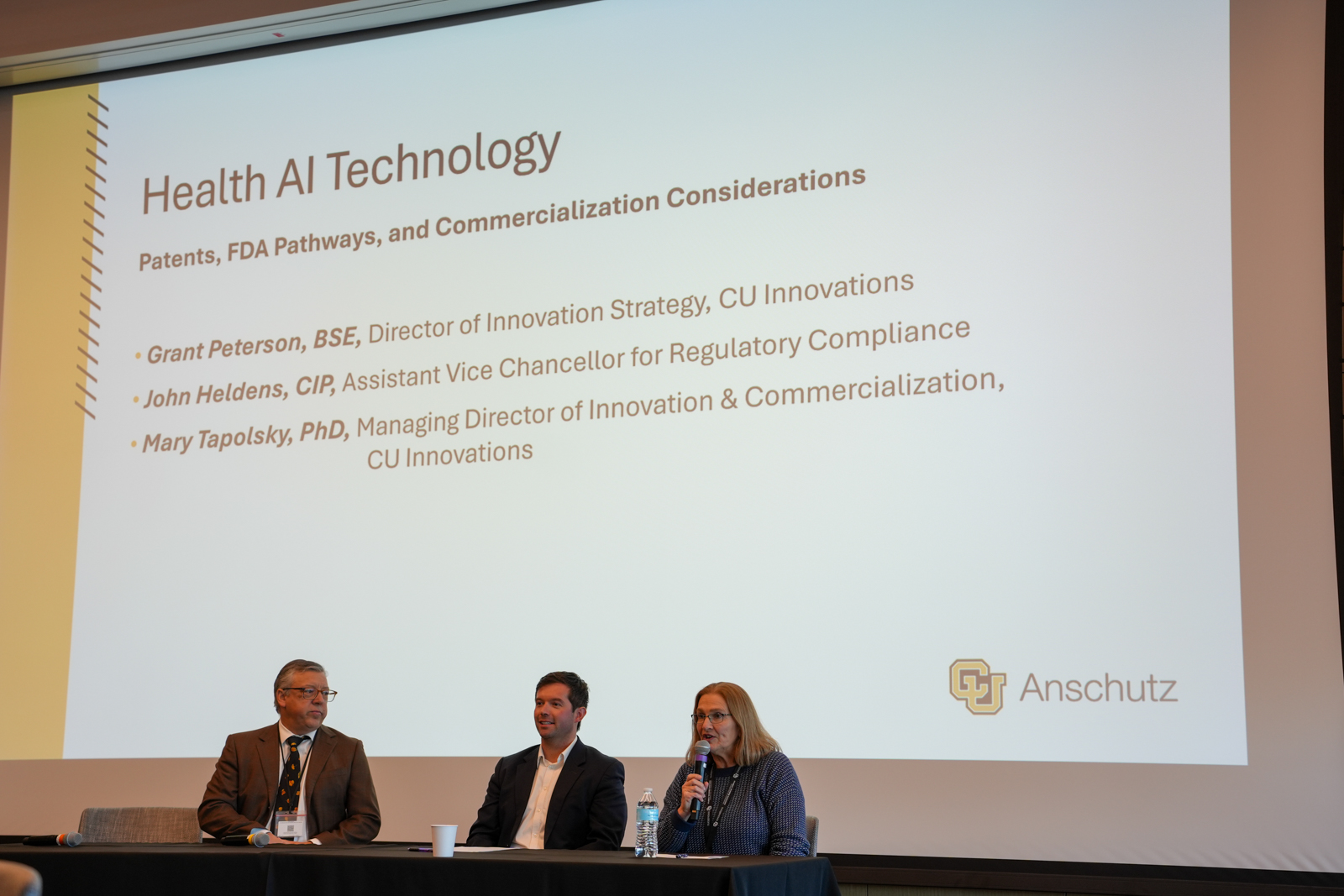
Panelists engage in discussion about AI and patents, FDA Pathways and commercialization considerations. Panelists include (left to right): John Heldens, CIP, Assistant Vice Chancellor for Regulatory Compliance, CU Anschutz; Grant Peterson, BSE, Director of Innovation Strategy, CU Innovations, CU Anschutz; Mary Tapolsky, PhD, Managing Directory of Innovation & Commercialization, CU Innovations, CU Anschutz.
CHAI is working to facilitate these collaborations. For example, CHAI created the Biomedical Informatics and Emergency Medicine Dyad Grant Program, an initiative that offers funding for projects that involve collaboration between the CU Anschutz Department of Biomedical Informatics (DBMI) and Department of Emergency Medicine.
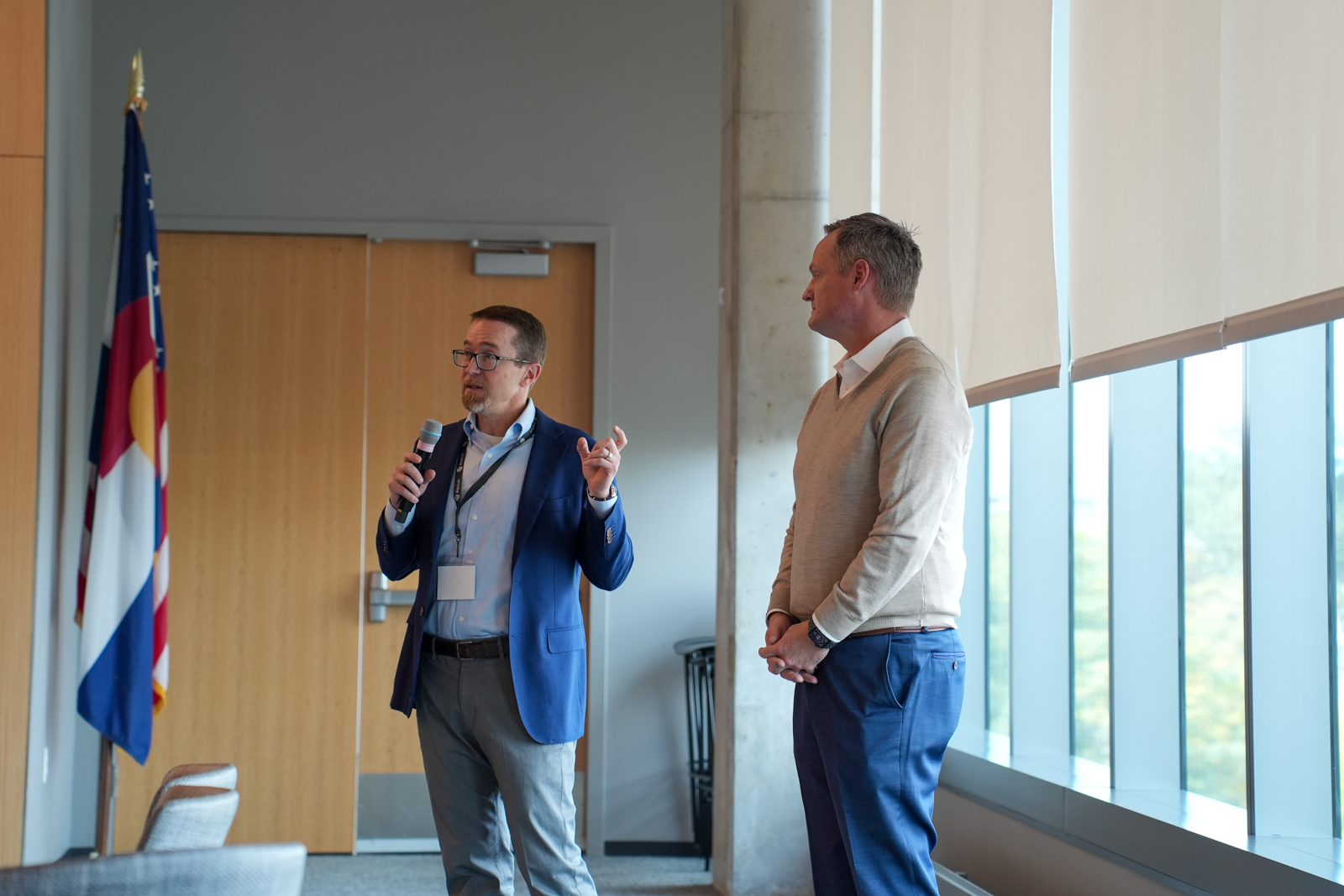
Tell Bennett, MD (left) and Daniel Lindberg, MD (right) introducing presenters.
At the symposium, a few of the awardee teams shared their projects. For example, Janani Ravi, PhD, and Corey Bills, MD, shared a project they’re working on using machine learning to help identify antimicrobial resistance.
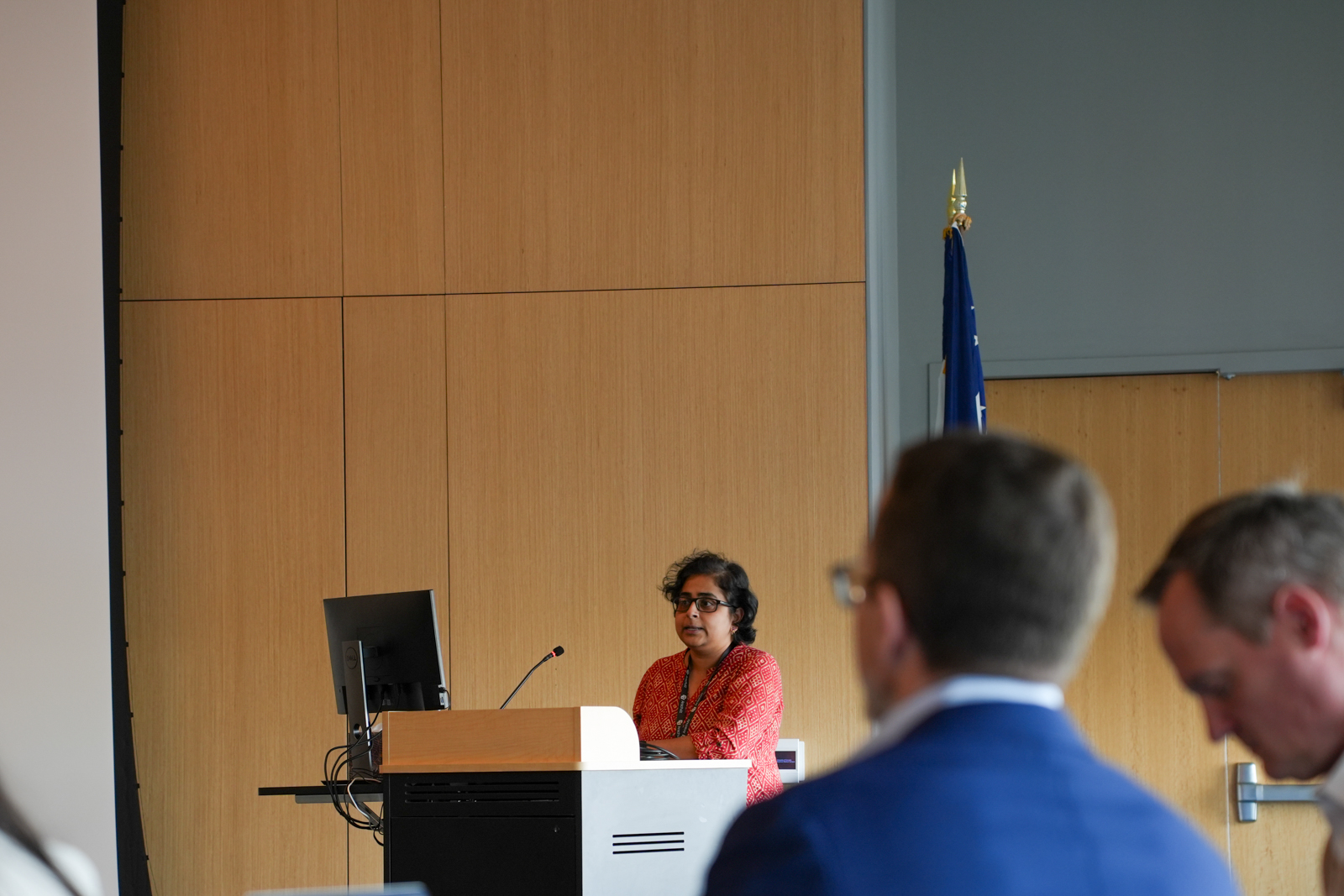
Janani Ravi, PhD, presents at the CHAI Symposium.
CHAI has also developed the Cup of CHAI podcast, a series that explores topics, advancements and events in health AI. James Mitchell, PhD, who will direct and host the podcast, announced the inaugural episodes at the event. This podcast shows promise to improve the communication of science in this field, which could help facilitate collaboration across disciplines.
Gao and Bennett began the day with a hope that the event would facilitate interdisciplinary collaboration. In the end, their hope was fulfilled. The CHAI symposium itself turned out to be an important opportunity for conversation, contemplation and connection.
The State of Health AI
Many questions are still up in the air. Some questions are best answered with further questions.
Even though the outlook is still foggy and AI and technology are evolving at unprecedented speeds, the 2026 CHAI symposium illuminated how the people involved in bringing these technologies into science and technology are collaborating to ensure the best outcomes for healthcare and society as a whole.
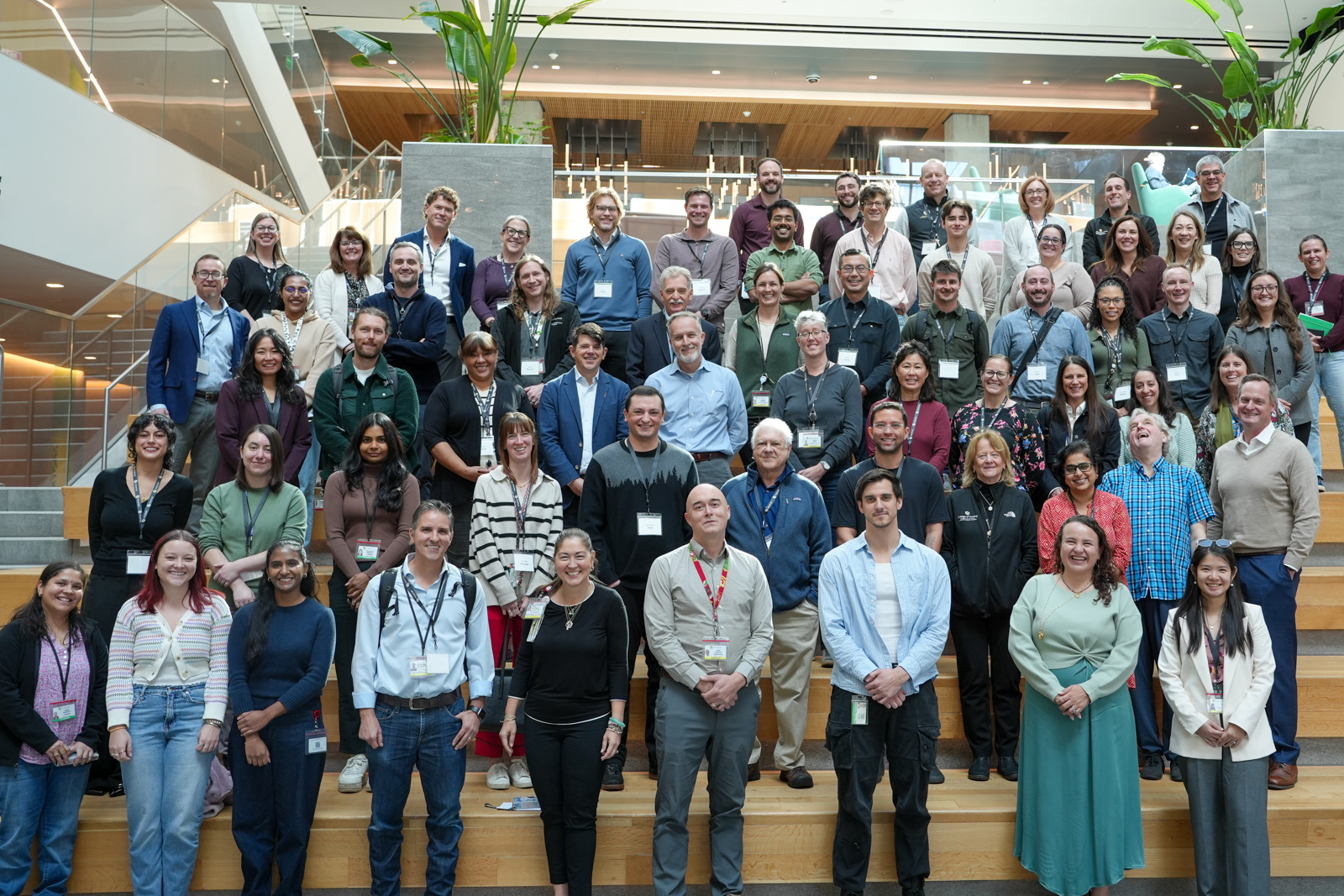
Attendees of the 2026 CHAI Symposium gather on the steps for a group photo before lunch.