


Amanda Piquet, MD
Director, Autoimmune Neurology Program
Céline Dion Foundation Endowed Chair in Autoimmune Neurology
Professor of Neurology
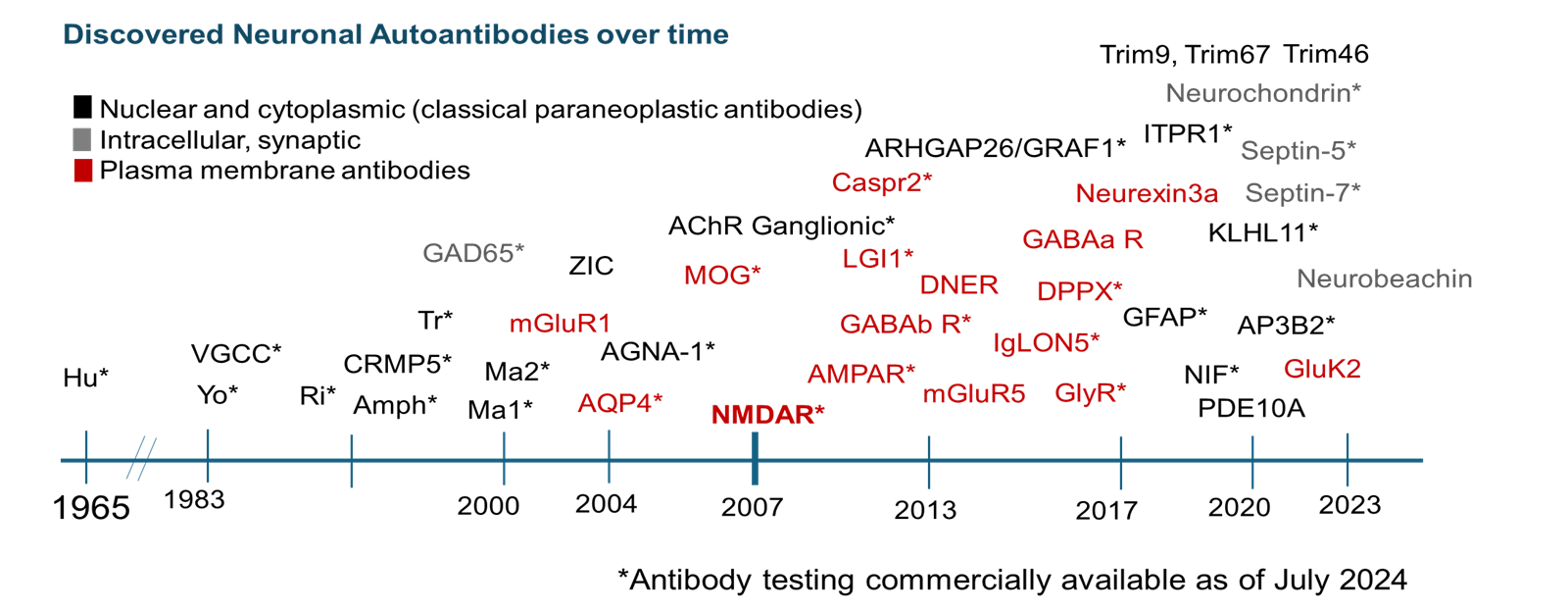 The concept of immune-mediated neurological syndromes linked to cancer dates back to the 19th century. In 1965, Dr. Josep Wilkinson's team first discovered neuronal antibodies in small-cell lung cancer patients with sensory neuronopathy. The identification of disease-specific neuronal antibodies accelerated in the 1980s, with notable discoveries including Purkinje cell antibodies in ovarian cancer (Greenlee & Brashear, 1983) and expanded descriptions of paraneoplastic syndromes (Posner et al., 1985). In 2004, Dr. Vanda Lennon characterized neuromyelitis optica (NMO) through aquaporin-4 antibodies (AQP4). The field grew rapidly after Professor Dalmau’s group described N-methyl-D-aspartate (NMDA) receptor encephalitis (NMDARE) in 2007, initially in young women with ovarian teratomas but later in a broader population, including men, women, and children. Beyond just NMDARE, other antibodies against cell-surface and synaptic antigens have been identified with increasing frequency (identified in red). The discovery of these cell-surface antibodies has shaped the landscape of Autoimmune Neurology, as it is now recognized that many of these antibody syndromes can be readily treatable with immunomodulatory therapy.