
New Buzz in Chikungunya Virus Research
A CU Anschutz lab leads the way on understanding a chronic form of the disease.
Kara Mason Oct 29, 2026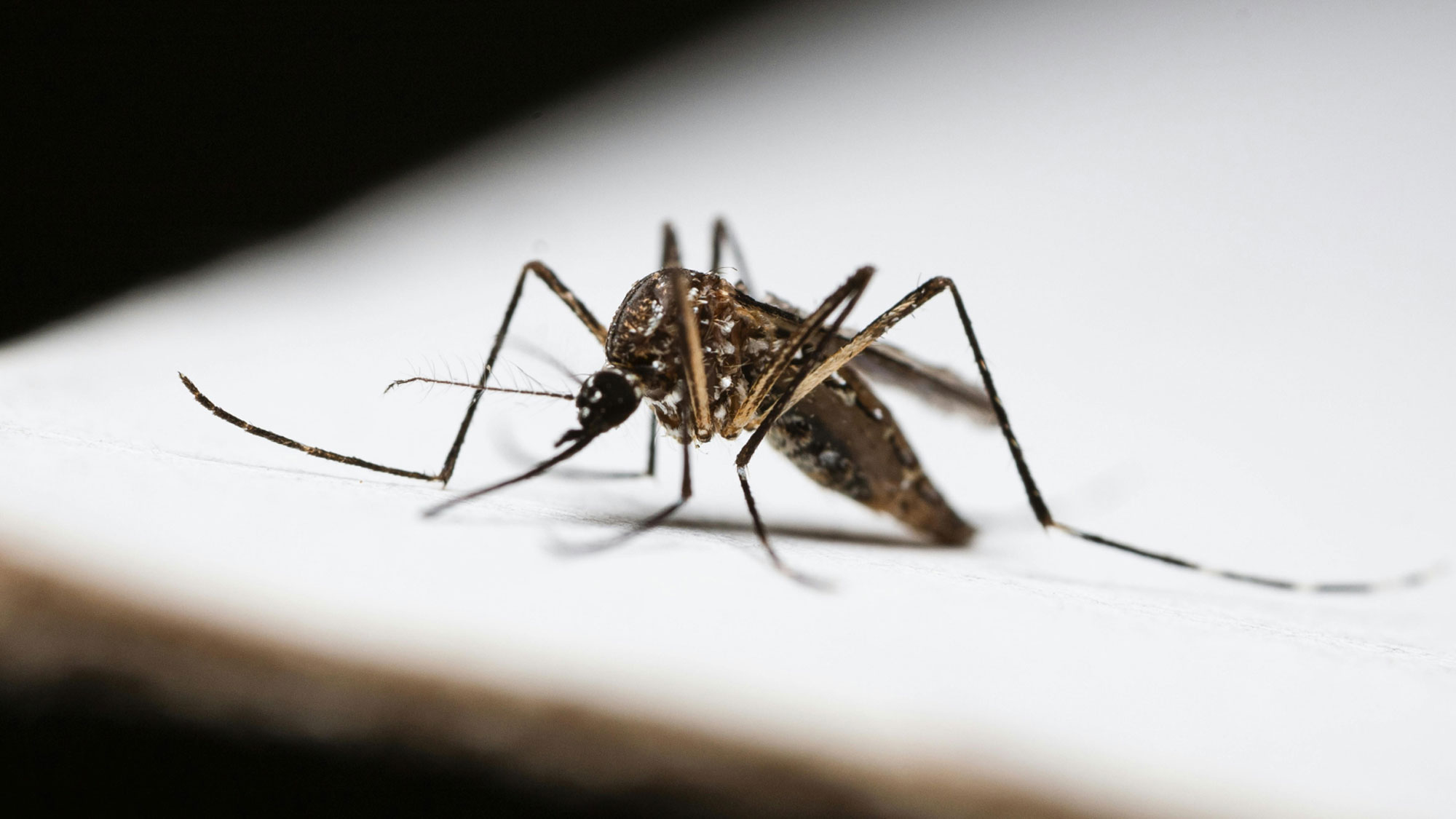
A small lab located in semi-arid Colorado is helping to solve the mysteries of a virus most often transmitted by mosquitos in subtropical regions outside of the U.S.
Identified in more than 100 countries, chikungunya virus is most common in places like Brazil and Argentina. Infected Aedes mosquitoes transmit the virus, which is characterized by high fever and joint swelling and pain. About half of cases progress to a chronic form of the disease. Patients experience relapsing arthralgia and arthritis that can span years.
For a long time, researchers haven’t known what causes some cases to turn chronic and why.
“We’ve been interested in trying to better understand how this infection leads to chronic symptoms,” says University of Colorado Anschutz immunologist Thomas “Tem” Morrison, PhD, professor of Immunology and Microbiology. “Mosquito-transmitted viruses are significant problems in resource-limited regions of the world where many people rely on physical work for their financial wellbeing. Having chronic musculoskeletal pain is a big problem for people who contract the virus.”
Morrison and his team of researchers — including Kristen Zarrella, PhD; Ryan Sheridan, PhD; and Brian Ware — now say they’ve made a substantial step forward that could lead to treatments that would be significant for public health in regions hit hardest by the virus.
In research published in Nature Microbiology earlier this year, the Morrison Lab says they’ve discovered that chikungunya virus, an arthritogenic alphavirus, persists in joint-associated macrophages, a specialized type of white blood cell that helps the body defend against pathogens.
Macrophages act as a ‘sanctuary’
Chikungunya virus symptoms typically occur four to eight days after exposure and include headache, nausea, fatigue, rash, high fever, and joint pain and swelling. For some, those symptoms subside within a few weeks. For others, intense joint pain ensues for years.
Morrison’s research, which found macrophages in joints harbor the virus, utilized single-cell RNA sequencing, spatial transcriptomics, and flow cytometry to investigate tissues in alphavirus-infected animal models.
Previously, researchers hypothesized that the virus triggered an autoimmune response, causing symptoms similar to rheumatoid arthritis. Supporting research for this theory has so far been inconclusive.
Another hypothesis, which is what Morrison and his lab have been exploring, is that there is long-term persistent infection. When a person acquires the virus and experiences the acute infection, an immune response to control that infection fails to eliminate the virus from some tissues.
“This is known to occur in virus infections where the immune response can clear the infection from some parts of the body but struggles or fails to clear the infection from other parts of the body,” Morrison explains. “So, this is a virus that gets into a lot of tissues. The idea here is that the immune response is unable to clear it from certain tissues, and in this case, those are the joint-associated tissues.”
For years, the Morrison Lab has been able to detect long-term infection in joint-associated tissues. In their latest study, they dived deeper and used advanced techniques including single cell RNA sequencing and spatial transcriptomics — together these methods allowed the researchers to map gene activity in tissue sections and profile individual cells — to better understand precisely where in the tissue which cell types are harboring the virus.
The lab also asked whether the detection of persistent infection was actually contributing to the disease and chronic symptoms or if it was some other mechanism.
“We hadn’t had a way to really answer that question for a while, until this study, which was supported by the development of small molecule antivirals that can inhibit viral replication,” Morrison says. “Using those sequencing techniques, we found the virus in specific cell populations — which include macrophages — present in the joint-associated tissue. This means that macrophages seem to act like a sanctuary.”
Moving toward treatment
In the study, the small molecule inhibitor — which can stop the virus’s ability to replicate — reduced chronic viral RNA and joint inflammation. This signaled to Morrison and the research team that the macrophage sanctuary contributed to sustained inflammation.
Researchers were able to take joint tissue, digest it into single cells, and study it. Analyzing each cell with single cell RNA sequencing, researchers could distinguish cell types and then determine if the cell had the viral RNA causing chronic disease.
Answering the question of what is driving chronic symptoms has opened new doors for additional research. Morrison says his team are now interested in how the virus is able to persist in macrophages and why these cells become a “safe reservoir” for the virus.
Most important, the findings highlight a path toward treating people with chronic pain from the virus.
“Our data signals that antiviral therapy may be useful to prevent the development of or to resolve chronic disease.”
Featured In This Article: