Pre-Clinical Rheumatoid Arthritis and Rheumatoid Arthritis


What is rheumatoid arthritis (RA)?

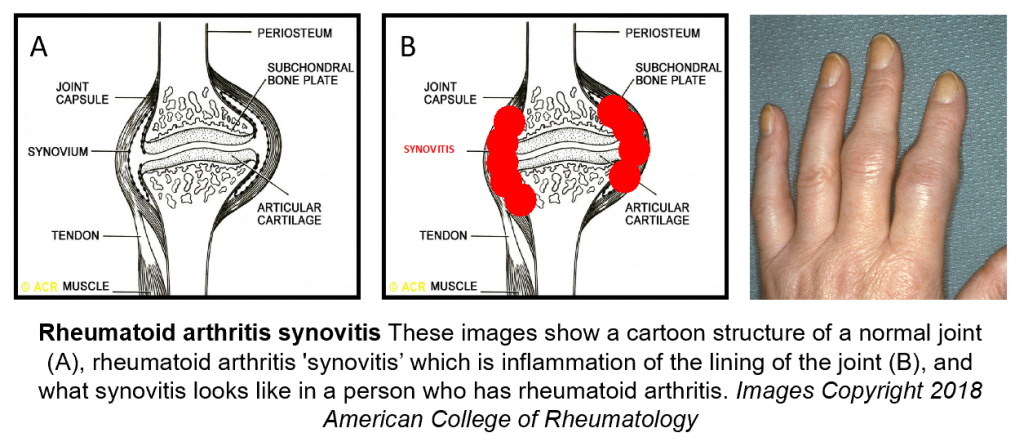
Rheumatoid Arthritis (RA) is a disease in which the immune system attacks the joints, leading to joint inflammation called synovitis. When a person has the synovitis or RA, their joints can feel painful, stiff and swollen.

Who gets RA?

RA is present in approximately 1% of the general population, and around 3 million people in the USA have RA. A higher rate of RA (~5%) may be seen in people who have a relative with RA. RA is also more common in women.

How is RA diagnosed?

RA is diagnosed when a person has a combination of joint symptoms, synovitis on a joint examination, x-ray findings, and abnormal blood tests.

What blood tests are used to diagnose RA?

The most common blood tests used to diagnose RA are called ‘autoantibody tests’. Normally, antibodies are proteins made by your body to help attack things that your body thinks are foreign or threatening, like infections. Sometimes, however, ‘autoantibodies’ develop that attack parts of your own body. In RA, a common autoantibody found in the blood is called ‘anti-CCP’. If a blood level of anti-CCP is abnormal in the setting of synovitis, a diagnosis of RA can be made.

What does it mean to have a positive anti-CCP test but no synovitis?

Studies have shown that anti-CCP can be present in the blood on-average 3 to 5 years before the first synovitis of RA appears. The time between when anti-CCP is detected in the blood and the first synovitis of RA is called Preclinical RA. This means that blood levels of anti-CCP can be used to predict if someone may get RA in the future. Current research shows that people with high levels of anti-CCP have a greater than 50% chance of developing RA within 3-5 years.

Can RA be prevented?

Currently, there are a range of medications used to treat RA once someone develops the synovitis of RA, although there are not yet any proven ways to prevent RA. However, it is important to learn more so we can look at future prevention.
How can you participate in research studies to learn more?

You can participate in StopRA:National by first getting your blood tested for anti-CCP. Then, if your blood level of anti-CCP is high, you could participate in the follow-up part of StopRA:National. StopRA:National will test anyone 18 years or older for anti-CCP.

RA can run in families, so StopRA:National is particularly interested in testing anti-CCP in family members of people who have RA.

Division of Rheumatology

Autoimmune Disease Prevention Center

CU Anschutz

Barbara Davis Center for Diabetes

1775 North Aurora Court

3102F

Aurora, CO 80045


303-724-6896

CMS Login